Part of our sliding window series — see the full aluminum sliding windows specification guide.
When an aluminum sliding window starts sticking, sweating, or letting in drafts, the problem is almost never “the window” as a whole. It is one or two parts — rollers, seals, a lock, a blocked drain — that have worn or been asked to work without maintenance. Knowing the aluminum sliding window parts by name, what each one does, and which ones actually wear out is what turns a vague complaint into a correct repair order or a fair replacement quote.
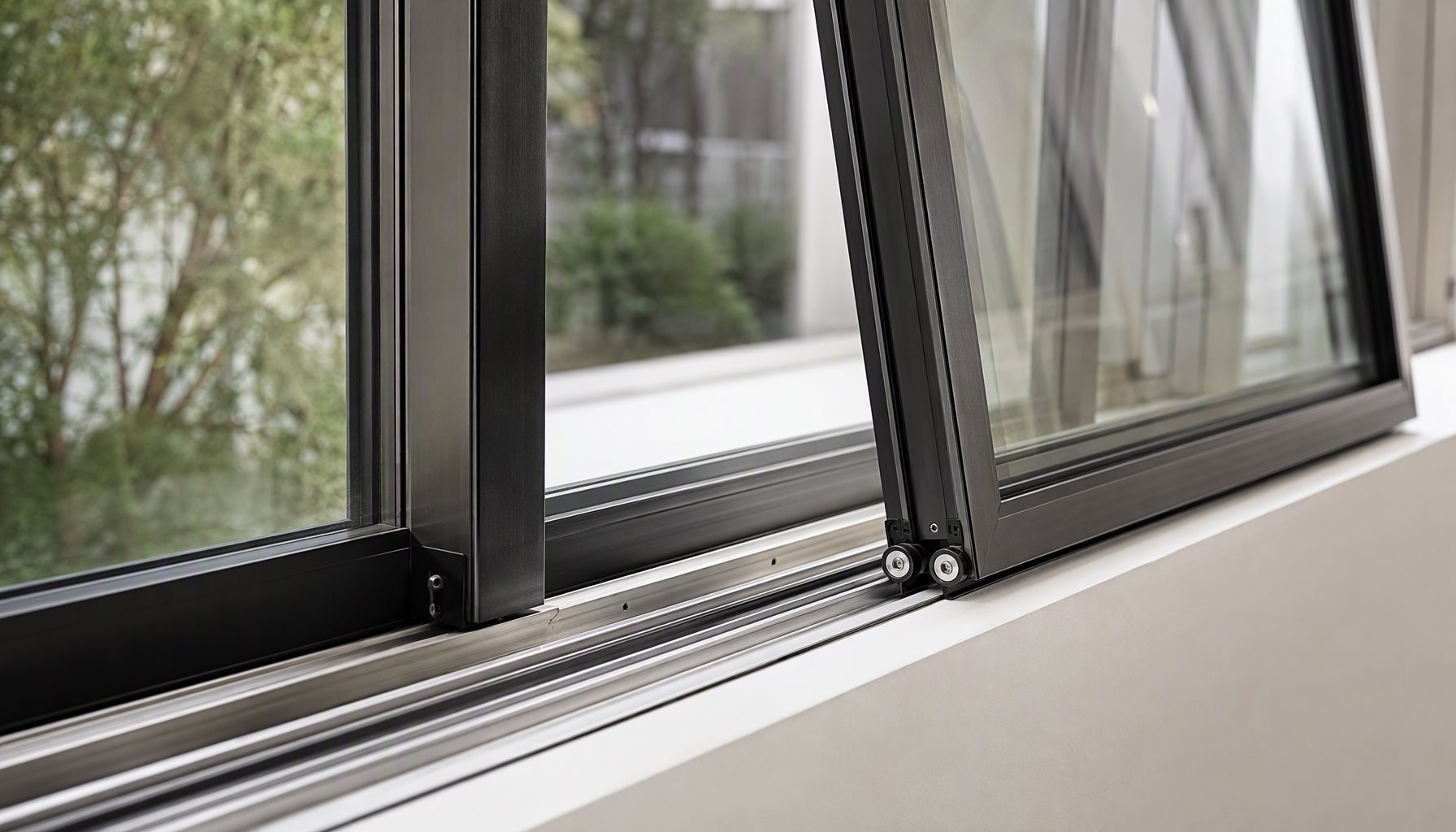
This guide walks through the component anatomy of a two-track sliding window, which parts fail first on project work, and how to order replacements that fit the profile you actually have.
Quick Summary
| Question | Short answer |
|---|---|
| What parts make up the window? | Frame, sash, glass, rollers, track, seals, locks, weep vents |
| What wears out first? | Rollers, brush pile seals, and lock mechanisms — not the frame |
| Can parts be replaced in place? | Usually yes; the sash lifts off the track and most hardware is serviceable |
| Biggest ordering mistake? | Buying by look-alike instead of by profile series and measured dimensions |
| When is replacement the answer? | Bent frame, failed IGU on a discontinued series, or repeated leak calls |
The anatomy: what parts make up an aluminum sliding window
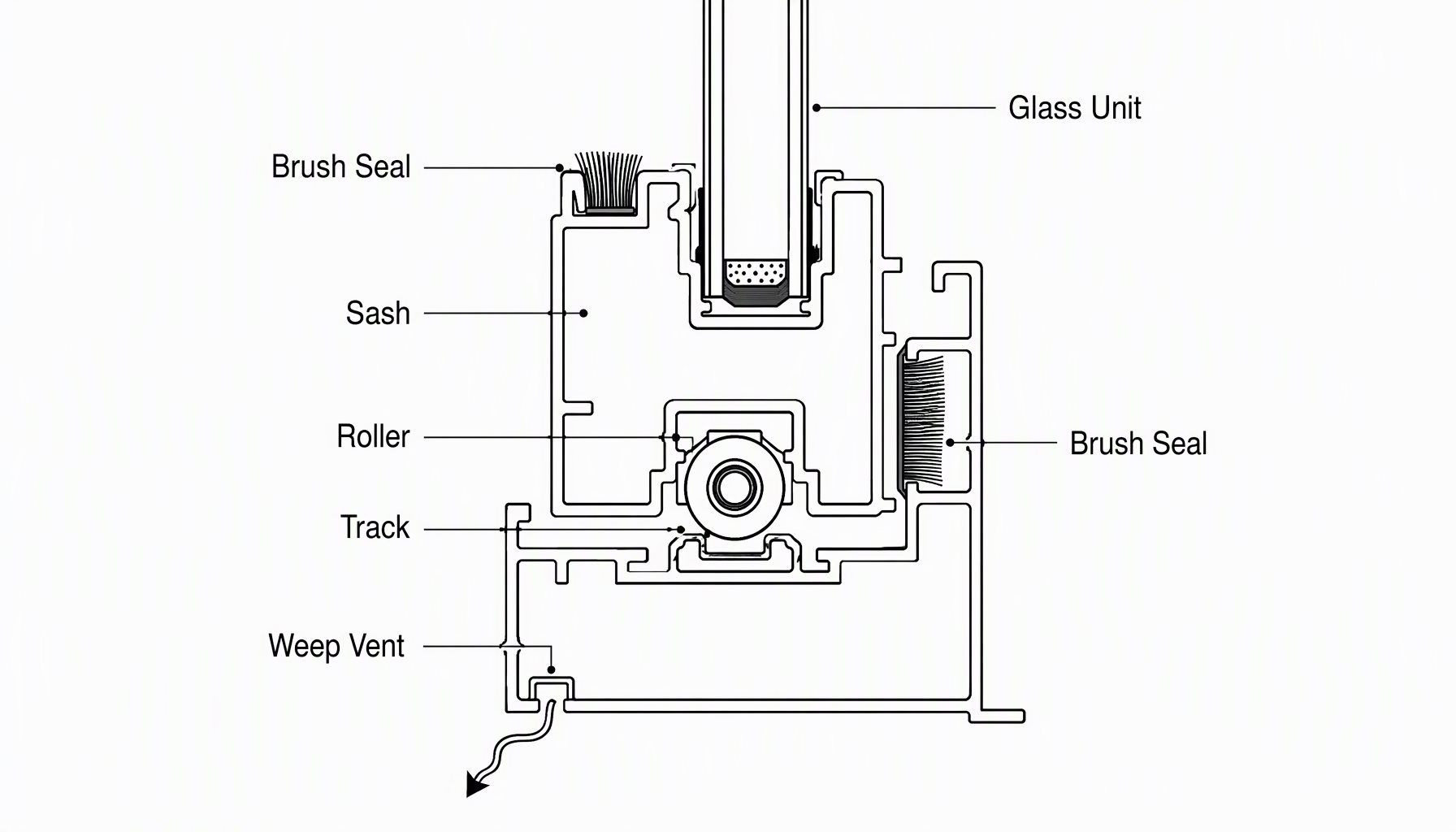
A conventional two-track sliding window is a short list of components, and each one has a distinct failure mode:
- Main frame. The fixed outer profile anchored into the rough opening. It carries the tracks and, with correct shimming, keeps the sashes square. Aluminum frames do not rot or warp the way wood can, but a poorly installed frame can be bent or pushed out of plane.
- Sash. The moving panel(s) that slide. The sash profile houses the glass pocket, the roller brackets at the bottom, and the interlock at the meeting stile.
- Glass or IGU. The sealed insulating glass unit. Edge desiccant failure shows as fogging between the lites — the unit is replaced, not repaired.
- Rollers / carriages. Small wheeled assemblies at the bottom of each sash. They carry the full weight of the panel during every slide cycle and are the single most-loaded wear item.
- Track. The stainless or aluminum running surface in the frame. Debris, dents, or a sagging frame turn a good roller set into a hard-to-open window.
- Brush pile / weatherseals. Fin seals in the meeting rails and brush strips along the top and bottom of the sash. They control air movement and dust, and they flatten out over years of friction.
- Cam lock and handle. The meeting-stile lock that pulls the sash against the seals and doubles as the security device. Cams seize with grit; handles crack with UV exposure.
- Weep vents and end caps. The drainage path and closure pieces that keep tracked water moving out. Blocked weeps are a common cause of interior water.
For how this anatomy differs across operating styles, our aluminum window types guide compares sliding, casement, awning, fixed, and tilt-turn systems.
Which aluminum sliding window parts wear out first
On maintained projects, the frame, glass, and profile hardware can serve for decades; it is the cycling components that need attention. Three groups account for most service calls:
Rollers come first. Every open-and-close cycle rolls the sash weight across the same few contact points. Grit from coastal air or construction dust accelerates bearing wear, and a worn roller lets the sash sit low in the frame, which then drags the corner hardware along the track. If the sash is stiff, heavy, or scrapes before it moves, inspect the rollers and the track before assuming the window is finished.
Seals come second. Brush piles and fin seals degrade from friction and UV. Flattened seals let air and dust move through the meeting rail — the usual explanation when a sliding window feels drafty even though nothing looks broken. Air infiltration is measured in a lab per ASTM E283, but on an existing window the practical test is simple: feel for movement at the meeting rail on a windy day.
Locks and operators come third. Cam locks seize with grit, and a sash that no longer pulls tight against its seals will draft even after new brushes are installed. Where a window is hard to open for reasons beyond rollers — a jammed operator or a dropped sash — the diagnosis is covered in our guides on hard-to-open windows and dropping sashes.
Drainage: the part that is not supposed to wear
Weep vents do not wear out; they simply get blocked. Paint overspray, construction debris, and insect nests plug the path, and the tracked water that the design was supposed to eject starts standing in the frame channel — then spilling inside during wind-driven rain. This is the same failure chain we break down step by step in why aluminum windows leak. Clearing the weeps and confirming the end caps seat correctly is the cheapest maintenance task in the whole assembly, and it belongs in any handover or facilities checklist.
Repair or replace: sourcing parts that actually fit
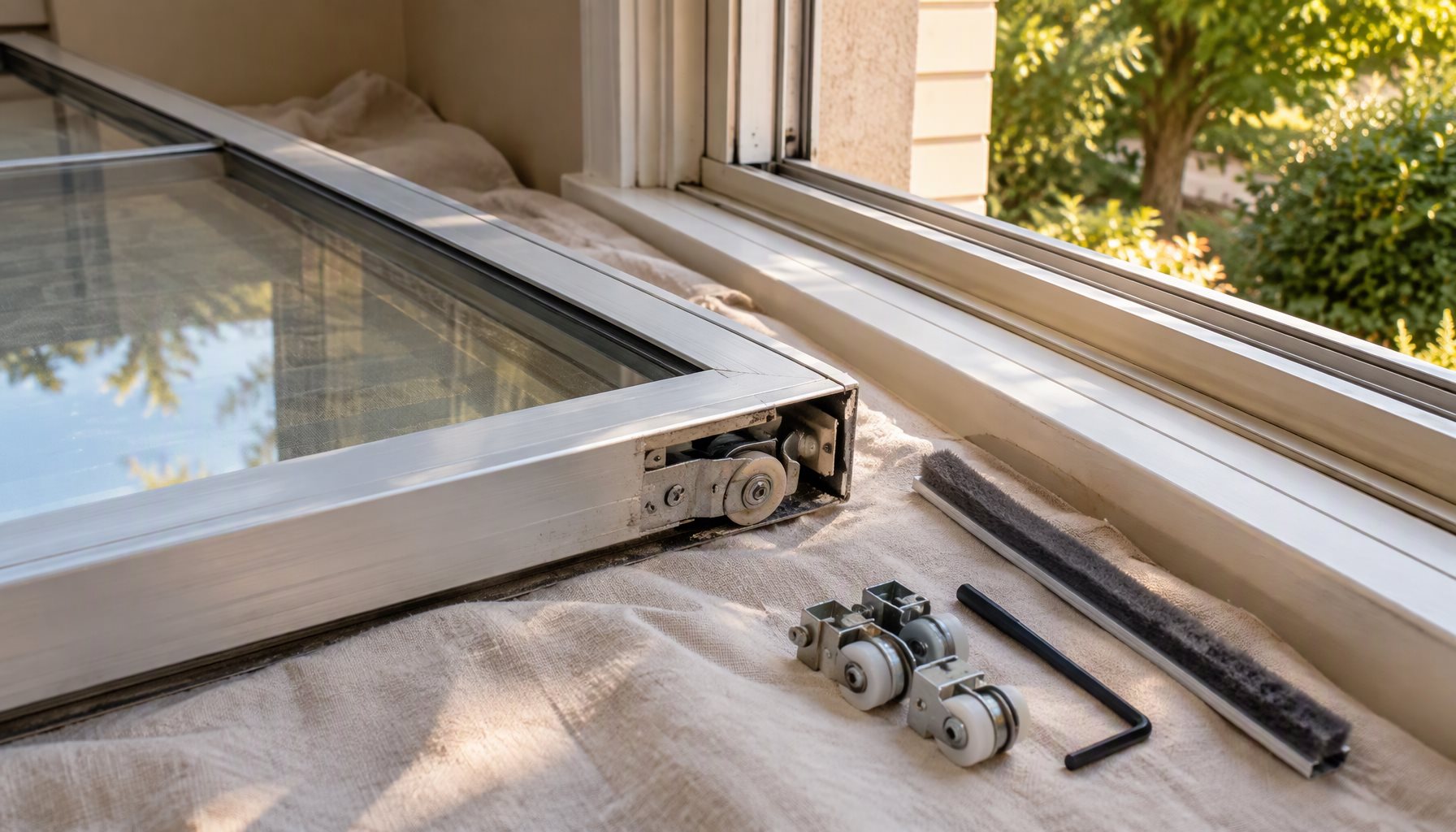
Ordering replacement hardware is where project teams lose the most time. Sliding window hardware is profile-specific: roller height, wheel material, bracket geometry, and cam throw differ between series, and two windows that look identical can take nothing from each other. Before ordering anything, capture the facts a supplier needs:
- Series or model name from the original schedule or spec — not just “aluminum slider, 600 × 900 mm.”
- Measured roller cut-out dimensions and sash weight class.
- Track condition: dents, wear grooves, or a frame out of level.
- Quantity per floor and per series, so a factory can ship matched batches.
For matched OEM hardware at project scale, this is exactly the information our OEM production team needs to check compatibility against the original extrusion. On one-off residential repairs where the series is unknown, universal low-profile roller kits can be a workable compromise — but confirm the cut-out size before assuming, because “universal” parts are often wrong by a few millimeters that decide whether the sash rides at the right height.
Decision guide: which path fits your situation
| Project Requirement | Recommended Choice | Why |
|---|---|---|
| Stiff or scraping sash, sound frame | Replace rollers + clean track | Highest-load wear item; hours of work, no glass disturbance |
| Draft or dust at meeting rail | Replace brush pile / fin seals + adjust cam lock | Seals are consumables; locks restore compression |
| Fogged IGU, current series | Replace glass unit only | Seal failure is a unit-level fault, not a frame fault |
| Water inside during storms | Clear weeps, check end caps, verify sill slope | Blocked drainage is the most common slider leak |
| Bent frame or obsolete series | Replace the window | Parts can’t correct a distorted opening |
Size and fit questions tie directly into replacement decisions; our window sizing reference covers how rough openings relate to ordered unit dimensions.
Frequently asked questions
What are the most common aluminum sliding window parts to replace?
Rollers, brush pile seals, and cam locks. These are the cycling and friction components; frames, profiles, and glass rarely need replacement on a properly installed window.
How do I know if my sliding window rollers are bad?
The sash is hard to move, drifts to a stop, or the bottom corner drags the track. Lift the sash slightly — if it moves easily when raised but binds at rest, the rollers are carrying the panel too low.
Are replacement aluminum sliding window parts universal?
Not reliably. Hardware is profile-specific, and universal kits only fit when the cut-out geometry happens to match. Order by series and measurements, and treat look-alike parts as a last resort.
Can I replace the glass in an aluminum sliding window?
Yes. A fogged or cracked IGU can be measured and replaced without touching the frame, as long as the series is current enough that gaskets and beads are available. For replacement units rather than units of glass, the NFRC certification label is how you compare thermal and optical ratings across suppliers.
Why does my sliding window leak when it didn’t before?
Usually blocked weep vents or a failed end-cap seal after repainting or construction. Clear the drainage path first before assuming a gasket fault.
How often should sliding window hardware be serviced?
For most projects, inspect and clean tracks and weeps at least once a year, and more often in coastal or dusty settings. Wear parts such as rollers are replaced on condition, not on a fixed schedule.
Is it cheaper to repair or replace a sliding window?
Part replacement — rollers, seals, locks, an IGU — is typically far cheaper than a new unit. Replacement becomes the economic answer when the frame itself is distorted or the series can no longer be serviced. Note that a full unit replacement can trigger the local energy code path: the ICC publishes the IECC, which sets fenestration performance minimums that adopted jurisdictions apply when windows are replaced.
Get the right parts the first time
Send us your window schedule, photos of the hardware cut-outs, and the symptoms you are seeing. Our engineering team can identify the likely wear component, confirm roller and seal compatibility, or quote matched replacement units where a repair no longer makes sense — start at contact and we will review it before anything ships.