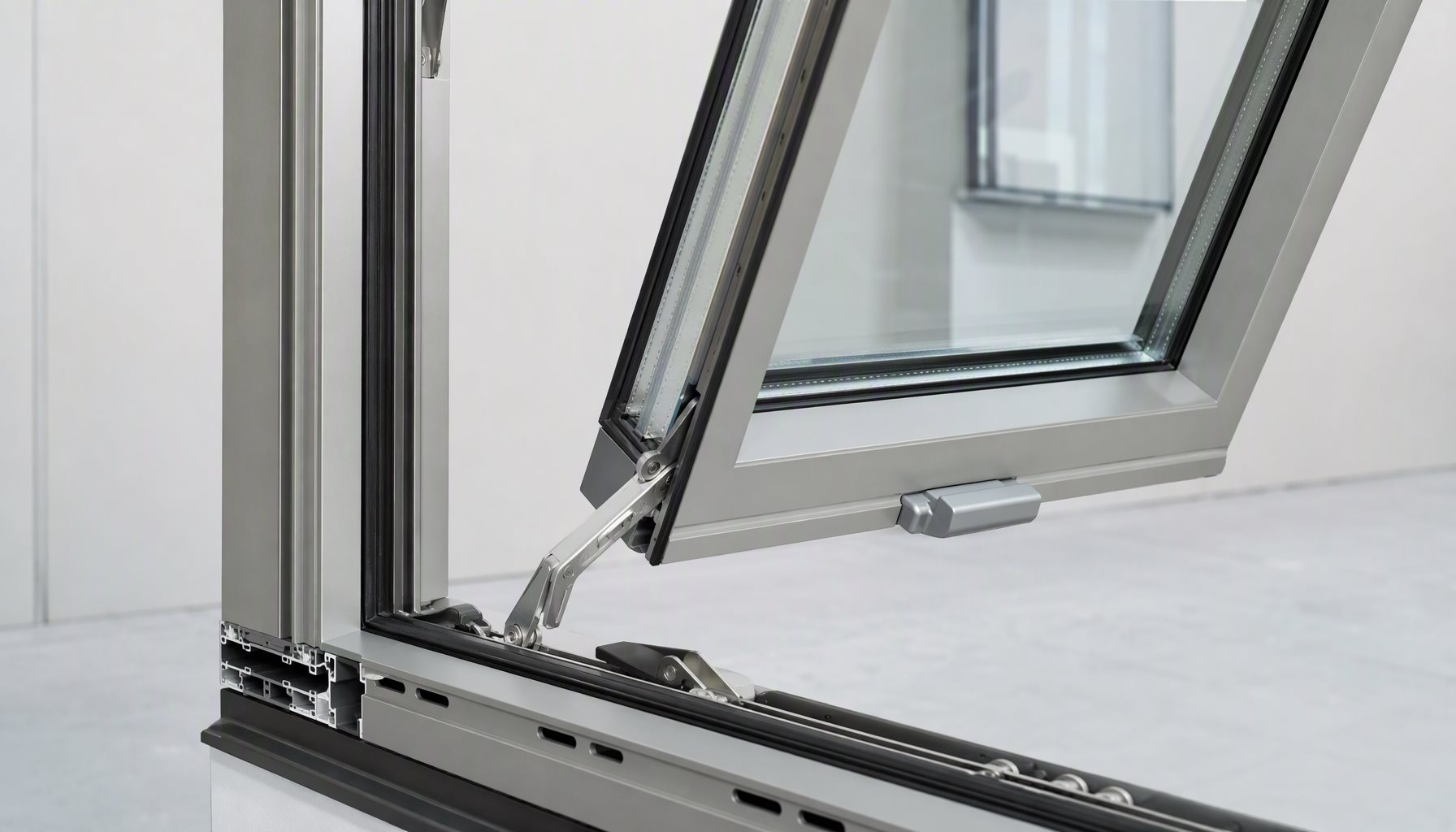
An aluminum window is not one component with one lifespan. It is a frame, a sash, an insulating glass unit, a set of gaskets, a hardware kit and a drainage path, and those layers age on different clocks. When buyers ask how long do aluminum windows last, the useful answer is a failure sequence rather than a number: the consumable parts reach the end of their service life first and can be replaced, while the extruded frame is normally still sound long after them.
The Assembly Sets the Answer, Not the Frame Alloy
Aluminum does not rot, swell, creep or split the way hygroscopic frame materials do, and it holds its shape under load — which is why a frame can stay in service through several rounds of maintenance on the parts built into it. The window’s performance, however, is governed by its weakest serviceable element.
Thinking in layers changes what is bought as a replaceable item, what is documented at handover, and what is inspected on a schedule instead of waiting for a failure.
| Assembly Layer | What Drives Its End of Service | Replaceable In Place? |
|---|---|---|
| Frame and sash profiles | Coating breakdown and, at fixings or dissimilar-metal contact, localized corrosion rather than bulk material loss | Rarely; usually repaired or re-finished |
| Operators, hinges, locks, rollers | Mechanical wear, grit ingress, lubricant breakdown, fatigue at load points | Yes, in most systems |
| Gaskets and sweep seals | Compression set, UV and ozone exposure, repeated flexing | Yes where the system provides a replacement gasket |
| Insulating glass unit edge seal | Primary and secondary seal degradation, desiccant saturation | Yes; the glazed unit is a separate line item |
| Perimeter sealant joint and drainage path | Joint movement, dirt blocking weep openings, incompatible sealant | Yes; maintenance items |
Hardware and Moving Parts Fail First
The first complaint on an aluminum window in service is almost always operational rather than structural. A crank operator develops play, a friction stay loses its friction, a multipoint lock cam stops engaging cleanly, or a slider roller flattens and the panel drags on its track. These are wear mechanisms: repeated cycling, airborne grit working into a bearing surface, and lubricant that dries out or collects dust.
The consequence is a window that becomes a maintenance item while its frame is still sound. A sash that is hard to move is usually an operator, stay or roller problem; a sash that no longer sits square is usually a hinge or stay problem, as covered in our guides to hard-to-open windows and window sash drops. On sliding assemblies the wear inventory is a specific, orderable list, set out in aluminum sliding window parts.
For a specification, that is the point: hardware should be selected as a serviceable component with a replacement path, not as an accessory that arrives with the profile. Ask which operator, which stay, which roller — and whether those items remain orderable after the first supply.
Gaskets and Seals Drift Before They Break
Elastomeric seals age quietly. Compression set is the mechanism: a gasket held under deflection for years, warmed by solar gain on a dark frame and flexed every time the sash closes, gradually loses the recovery that made it a seal. Air and water infiltration then drift upward even though nothing has visibly failed.
This matters when reading test data. A method such as ASTM E283 measures the air leakage of a specific specimen in a specific condition; a low measured value for a new assembly says nothing about that assembly after years of gasket recovery loss. A test method is not a lifetime rating.
Seals are also damaged by the wrong maintenance chemistry: solvent cleaning and oil-based dressings attack many elastomers. Water already inside, by contrast, is a diagnosis question rather than an aging one, covered in why aluminum windows leak.
The Glass Unit Has Its Own Clock
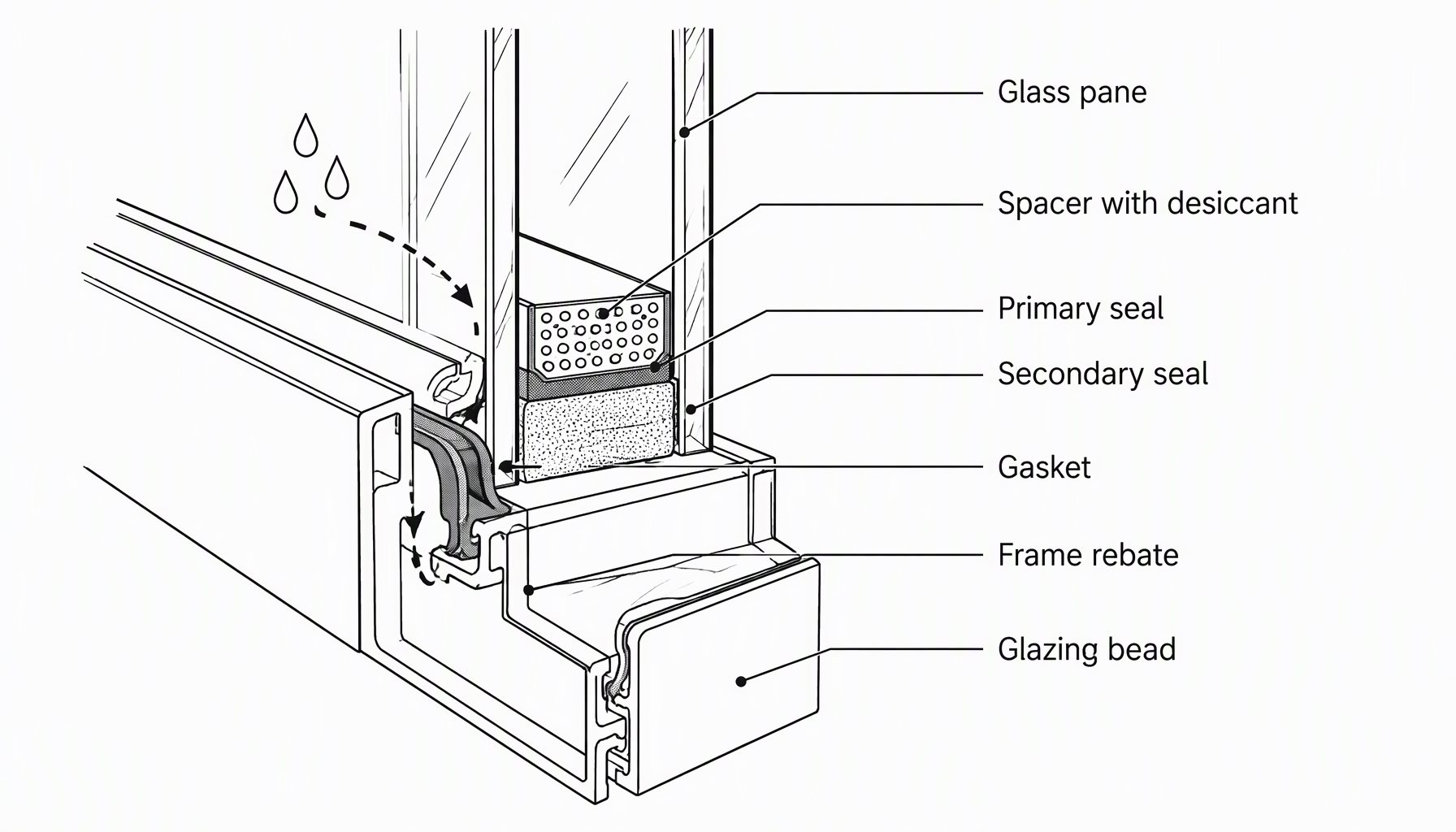
An insulating glass unit is assembled from separate technologies: panes, a spacer, a desiccant inside that spacer, a primary seal and a secondary seal at the edge. Its service life is decided at the edge, not on the open glass. Once the edge seal is breached, moist air enters the cavity, the desiccant saturates, and the unit shows fog between the panes that cleaning on either face cannot remove. Gas fill is lost by the same route, diffusing gradually through the seal.
For a buyer, the engineering point is that this failure does not condemn the window. The unit is a replaceable component and the frame and sash around it are unaffected. It does change the energy balance of the opening, and the visible symptom is explained in condensation inside double glazing.
The rating label on a window describes the energy performance of the rated product as tested and calculated — a scope set out by NFRC for rated fenestration products. It is not a durability warranty on the edge seal, and nobody should read a rating number as a service-life promise.
What Usually Outlives Everything Else
The frame is normally the survivor. A properly finished, properly drained extruded frame keeps its shape and load capacity for a very long time. Where a frame does reach the end of useful life, the cause is usually specific: a coating that stopped protecting the substrate, or localized corrosion where dissimilar metals, alkaline contact or a blocked drainage path created a persistent wet condition. Those are separate subjects, covered in powder coated aluminum windows durability and how to prevent aluminum window corrosion.
Read together with this article, they explain the pattern seen on older installations: a sound frame, a replaced glass unit, new gaskets and a rebuilt operating mechanism.
Which Parts Fail First Is a Design Decision
Two identical systems age very differently depending on choices made before the order and maintenance after handover. Exposure is the obvious variable — coastal salt load, high solar gain on dark finishes, heavy commercial cycling — and all of it lands on the consumables before the frame. Design narrows or widens that gap.
- Drainage that stays clear: weep openings positioned so they can be inspected and cleaned, because a blocked path turns a nominal detail into standing water.
- Seals that can be bought again: gasket profiles and hardware that remain orderable, so a repair is a parts order rather than a replacement project.
| Symptom on Site | Usually the Component Behind It | Check Before Assuming the Frame Failed |
|---|---|---|
| Fog between the panes | Insulating glass unit edge seal and desiccant | Whether the unit alone can be replaced in the existing rebate |
| Draft at the sash edge | Gasket compression set, or a sash no longer closing square | Hardware adjustment before any conclusion about the frame |
| Panel drags or sticks | Roller wear, track contamination | Whether the roller is a stocked part |
| Water at the interior sill after rain | Blocked drainage, failed joint, or leaked operation | Weep clearance and joint condition, not frame age |
How Long Do Aluminum Windows Last? Choosing for Service Life
There is no honest single figure for how long do aluminum windows last, because the answer depends on which components a project is willing to maintain. What can be specified is a maintenance path across the aluminum window systems selected at design stage.
| Project Requirement | Recommended Choice | Why |
|---|---|---|
| Longest service with in-house maintenance capability | Serviced hardware, replaceable gaskets and a unit that can be re-glazed in the existing frame | Wear items become parts orders instead of projects |
| Minimal maintenance over the ownership period | Heavier-duty hardware, high-performance finish and sealed units specified to the supplier’s tested configuration | Delays the first round of consumable replacement |
| Coastal or high-exposure site | Finish and pretreatment specified first, drainage and dissimilar-metal isolation detailed | Exposure attacks the protective systems before the aluminum itself |
| Existing frames with failed glass units | Re-glaze rather than replace, after checking rebate, frame condition and drainage | Retains the component with the longest remaining life |
Frequently Asked Questions
How long do aluminum windows last on average?
A single average is a marketing figure, not an engineering one. The frame is typically the last element retired, while hardware, seals and sealed units are maintenance items along the way. The planning question is which consumables a system makes replaceable and purchasable, and who is expected to do it.
Which part of an aluminum window fails first?
Usually a moving part or a seal: an operator, a friction stay, a lock cam, a slider roller, or a gasket that has lost compression. Edge seal failure tends to appear later than hardware wear on used openings, and earlier on units under heavy solar load.
Do aluminum frames rot or corrode?
They do not rot, and they do not rust like steel, but aluminum can corrode in aggressive conditions. The controlling factors are finish and pretreatment, drainage, and contact with dissimilar metals or alkaline substrates.
Can a fogged double-glazed unit be fixed without replacing the window?
Yes in most framed systems: the sealed unit is a discrete component seated in a rebate and held by beads, so replacing it restores the glazing without touching the frame or sash. Fogging is the symptom of a breached edge seal, which cleaning cannot solve.
Does the finish determine service life?
The finish decides when the frame starts looking old and whether the substrate stays protected; it does not decide the life of the hardware or the glass unit.
Is an old aluminum window worth repairing or replacing?
It depends on whether the frame, rebate and drainage are sound and whether parts are still obtainable. Where they are, a re-glaze plus new hardware and gaskets restores performance at a fraction of a replacement scope. The cost side of that comparison belongs to the aluminum window cost guide.
Do climate and orientation change service life?
They change the order in which parts fail. Salt load and high UV shorten coating and hardware life, solar gain on dark frames ages seals faster, and frequent cycling wears operators. The frame itself is the least climate-sensitive element.
What should I request from a manufacturer when comparing service life?
Documentation, not a number: the tested configuration behind any performance claim, hardware duty selection for your leaf sizes, the gasket and unit replacement path with part availability, the coating system and its warranty terms for your exposure, and the drainage detail as drawn. Test reports describe specimens; a certificate describes a program; neither is a lifetime promise. FGIA standards resources and the DOE guidance for windows frame those questions properly.
Specify the Maintenance Path, Not a Promise
If you are assembling an aluminum window schedule and want the consumables to be genuine line items rather than surprises, send us your drawings, opening schedule, location and performance requirements. We can review hardware duty selection, glazing build-up, gasket and drainage details and the replacement parts list before production. Start at our contact page and attach the schedule.