Searching double hung vs casement windows usually lands you in a vinyl-and-wood conversation: tilting sashes, warp balance, colonial aesthetics. That conversation barely applies to an aluminum spec. The double-hung mechanism – two vertically sliding sashes riding side channels with a counterbalance hidden in the frame – is a hallmark of vinyl and wood product lines; aluminum manufacturers build almost their entire operable range around cranking, sliding, and hinged sash types instead. So the real question in double hung vs casement windows for an aluminum project is narrower: what does casement operation deliver that a balance-and-sash design cannot, and when is the double-hung shape genuinely worth leaving the aluminum line for? One axis of the operable-family decision is already covered in fixed vs operable windows; this post handles the two operable layouts that stay in the conversation.
Double Hung vs Casement Windows: Two Different Mechanisms
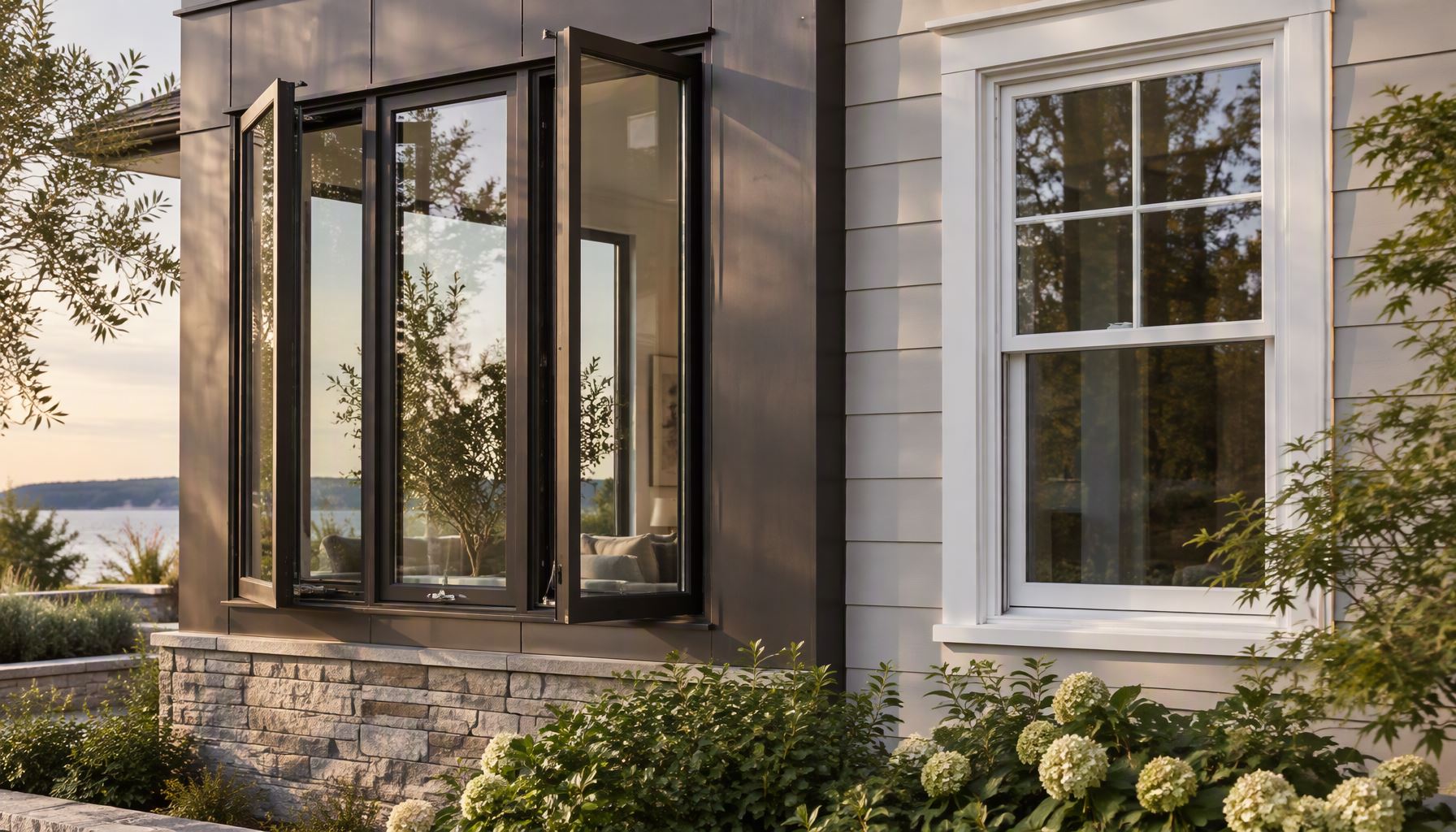
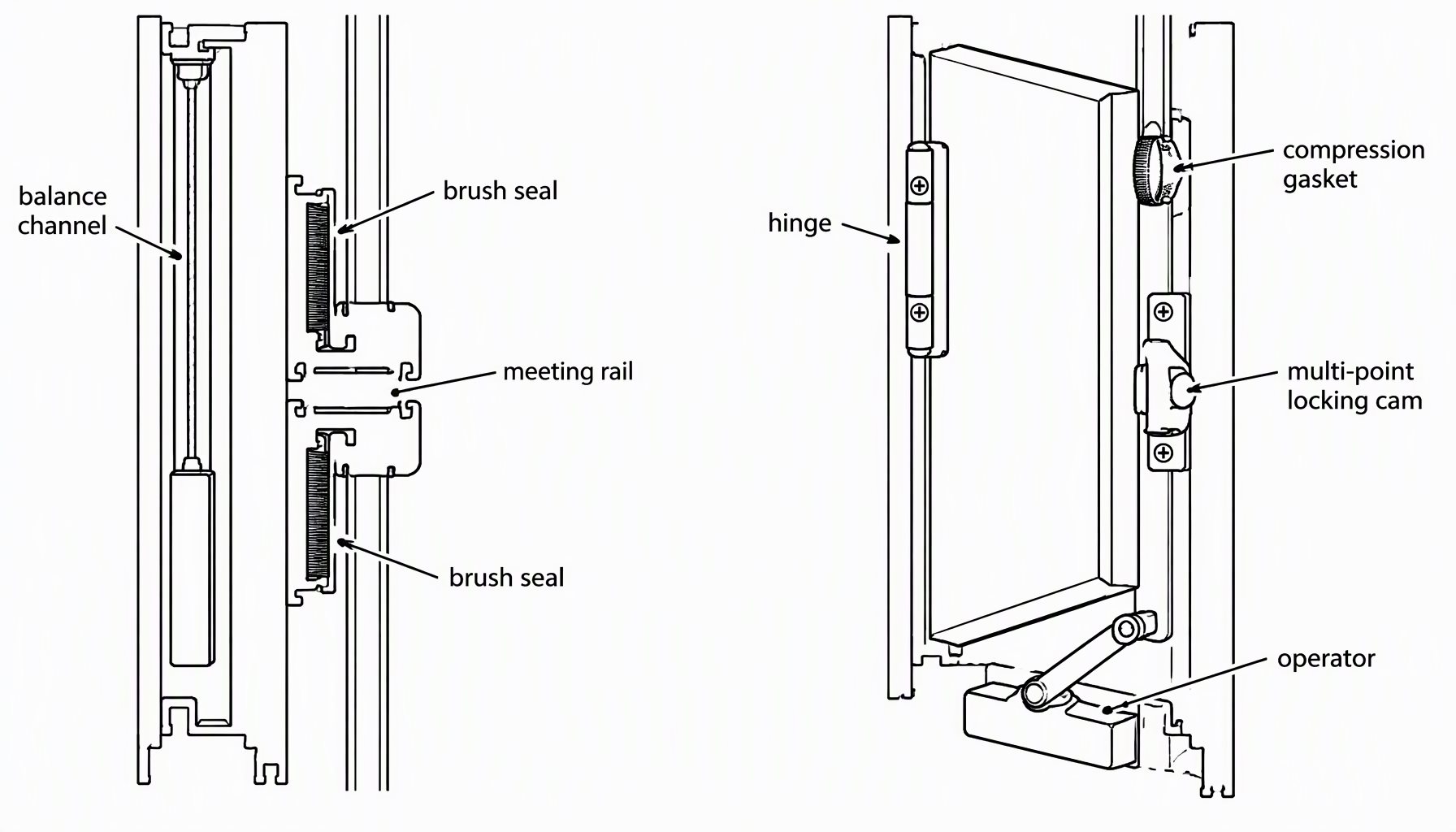
A double hung window is a rectangular frame carrying two vertically sliding sashes, one above the other, each held and offset by an internal balance system – springs or weights in the jamb channels. Opening is by hand on the sash rail; either the top sash, the bottom sash, or both slide. A casement is a hinged sash – side-hung like a door – that swings outward on hinges, usually cranked open by a handle-driven operator that engages multi-point locking along the sash edge. The double hung vs casement windows comparison is about mechanisms before styles, and each mechanism has downstream consequences for sealing, size limits, and hardware.
| Feature | Double hung | Casement |
|---|---|---|
| Movement | Sash slides vertically in side channels | Sash swings out on side hinges via crank or handle |
| Free opening area | Half the sash area at a time (top or bottom) | Nearly the full sash area |
| Sealing method | Brush or fin weatherstrip sliding against the sash | Compression gasket, sash pressed onto it by hardware |
| Typical materials | Vinyl and wood dominate; aluminum versions are niche | Native to aluminum, also common in wood and vinyl |
Why the Aluminum Product Line Skews Casement
Aluminum extrusions make strong, thin, rigid frames – excellent for hinged sash panels that carry large glass and transfer wind load into the hinge and lock line. The double-hung design asks the opposite of a frame: deep side channels to house balances, enough sash depth to keep sliding surfaces stiff, and a slim-line aesthetic that aluminum’s structural advantage can’t exploit because the channels dominate the profile. Vinyl solves this with multi-chambered frames extruded around the balance; aluminum product lines mostly don’t chase it. The practical consequence: if your project is specified on thermally broken aluminum casements, the operable menu is casements, awnings, sliders, and tilt-turns – not double hungs. Within the casement family itself, the leaf-count decision is treated in single vs double casement windows, and the adjacent hinge-direction question in casement vs awning windows.
The same structural logic explains why sliders took the place of double hungs in much of the aluminum market: both slide, but a horizontal slider keeps its load path through the sill rather than through vertical balance channels, which fits extruded aluminum better. For a tour of what does exist in aluminum fenestration, our aluminum window types pillar maps the full operating-style family.
Sealing, Weathertightness, and Drafts
A casement sash closes onto a continuous compression gasket; the crank and multi-point locks pull the sash evenly against it. Weatherstrip compression is the reason casements are generally regarded as the tighter operable layout in aluminum – and why air leakage complaints on a casement usually trace to hardware out of adjustment or a hardened gasket, both diagnosable without replacing the window. The drafty aluminum windows guide walks that diagnosis path. A double hung seals along sliding channels instead, where brush or fin weatherstrip wears with every cycle and the interlock between the two sashes stays a natural weak line – vinyl designs mitigate this with bulb seals, but the geometry never matches a compression seal.
Water management follows the same split: a closed casement presents a continuous face to wind-driven rain, while a double hung’s channel joints are built-in collection points that rely on weep discipline. Whole-assembly air leakage is a rated property, verified per configuration and labeled through the NFRC rating program – so the style decision can be checked against rated numbers instead of folklore.
Sizing, Ventilation Area, and View
Because a casement sash is a single rigid panel hinged at the jamb, it can be built taller and wider than a sliding sash of comparable stiffness, and it clears nearly its full area for air when open – a crank-out sash also acts as a wind deflector, pushing ventilation up or across the facade when positioned deliberately. A double hung always blocks half its opening with a fixed-position sash at any moment, and its proportions read as two stacked panes because the meeting rail has to sit somewhere; the classic look is a feature, not a given. Neither style automatically wins on egress: both can meet emergency-outlet sizing where the layout allows, and the governing dimensions come from the adopted code – the IRC building-planning chapter sets the residential opening area and sill-height limits – so confirm the edition your jurisdiction enforces before assuming either shape qualifies.
Honest trade-off: double hungs win on screens (screens mount on the exterior face and the sash still slides behind them) and on the traditional two-over-two proportion so many retrofit neighborhoods expect. Casements win on unobstructed glass when open, on ventilation per square foot of opening, and on sizes that stop being reasonable as sliding sashes get large.
Hardware Wear, Repair, and Ownership
The mechanisms fail differently. Casement hardware – operators, hinges, locking cams – wears predictably and is individually replaceable; a sash that has become hard to crank is usually an adjustment or operator part, not a window problem, as covered in why windows are hard to open. Double hung balances are hidden in the frame, and failure shows up as a sash that won’t stay up or a draft through the channel – repairable, but often by a service person who works on vinyl and wood product lines, not on your aluminum supplier’s casement catalog. Energy performance follows the same split: the DOE Energy Saver window guidance is explicit that infiltration and assembly quality drive real savings, which is where a compressed-seal casement holds its advantage over time. If you are weighing the material decision before the style decision, aluminum vs vinyl windows reframes the question from the frame side.
Decision Matrix: Which Style Fits Which Requirement
| Project Requirement | Recommended Choice | Why |
|---|---|---|
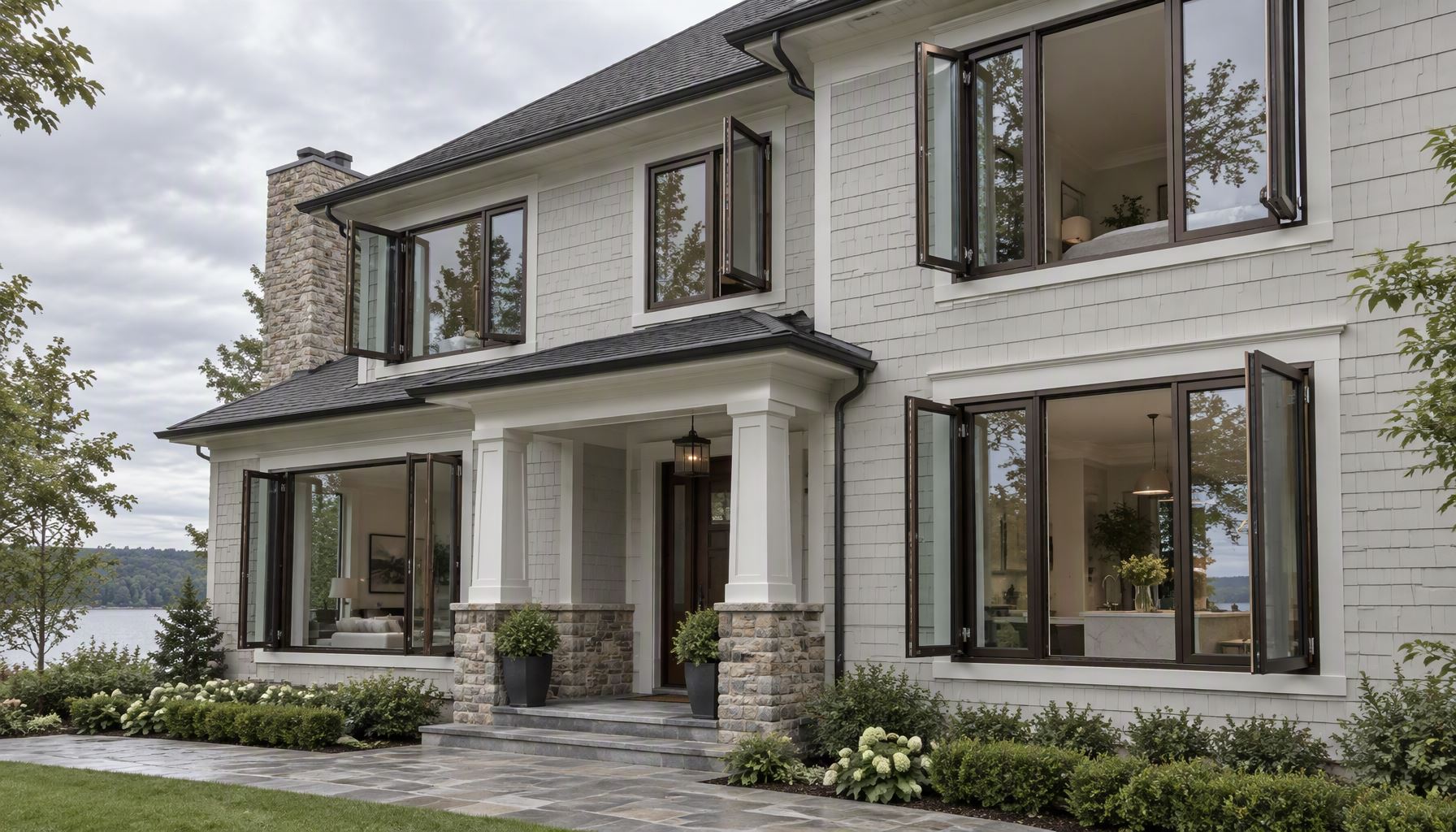
| Project specified on thermally broken aluminum | Casement (or awning / slider / tilt-turn) | The double-hung balance design is essentially a vinyl and wood product; aluminum lines rarely carry it |
| High wind-driven-rain exposure or coastal site | Casement with compression sealing | Continuous compressed gasket and no sliding channel joints to collect water |
| Maximum ventilation from a modest opening | Casement | Nearly full sash area opens; a double hung opens half at a time |
| Historic neighborhood requiring two-sash proportions, standard vinyl replacement | Double hung in vinyl or wood | The style and its screens are native to that product world; forcing aluminum here buys nothing |
| Large openings with full clear glass and an operable option | Casement or fixed-with-vent pair | Rigid hinged sash scales where a sliding sash of the same height must fight its own channels |
Frequently Asked Questions
In the double hung vs casement windows decision, which wins for an aluminum project?
For aluminum, effectively the casement: hinged operation is native to extruded aluminum frames and delivers compression sealing and full-area opening, while the double-hung layout is a vinyl and wood mechanism that aluminum product lines rarely carry.
Do aluminum double hung windows exist at all?
A few manufacturers make them, but they are niche, parts are harder to source, and the thermal-break and sealing advantages that make aluminum worth specifying live mainly in hinged and sliding layouts.
Which style is more energy efficient?
It depends on the whole assembly, not the shape. A well-made double hung with modern seals can rate closely to a casement of the same glass package; where casements usually win is infiltration – compression sealing versus wearing channel weatherstrip.
Which blocks more outside noise?
Casements again by mechanism: a compressed seal has fewer flanking paths than a sliding channel. Laminated glass, cavity width, and installation quality dominate the difference – the window acoustics mechanism is explained in our soundproof aluminum windows guide.
Do double hung windows have better resale acceptance?
In many US retrofit markets the two-sash look is the familiar default, so buyer recognition favors it. That is a style argument, not a performance one, and it points back to vinyl rather than aluminum product lines.
Which style works with exterior screens?
Double hungs mount screens cleanly on the exterior face; casement screens usually sit inside the frame or on a separate bracket because the sash swings through the screen plane.
Can either style serve as a bedroom egress opening?
Both can, subject to sill height, clear opening dimensions, and operating hardware in the adopted code edition. Verify against the residential code your jurisdiction enforces – layout and size decide, not the style name.
Send Your Window Schedule for a Fabrication Review
Lansen fabricates custom thermally broken aluminum casement, awning, tilt-turn, and sliding window systems. Send your window schedule, elevations, project location, and performance requirements through the contact page, and our engineering team can confirm which operating style fits each opening before you lock the order. Browse the family first in the windows hub.