Tudor windows are one of the most requested looks on residential and hospitality projects, yet they are frequently specified in a way that costs more, leaks more, and needs more maintenance than it should. The defining feature is not the frame material but the divided-light pattern: a large opening broken into many smaller panes by glazing bars, usually with a heavier sill and head than a modern picture window. When that traditional pattern is built in aluminum, the specification decisions — grille type, glazing build-up, finish and operation — are what separate a durable reproduction from a period-costume window that fails early.
What Makes a Window a Tudor Window
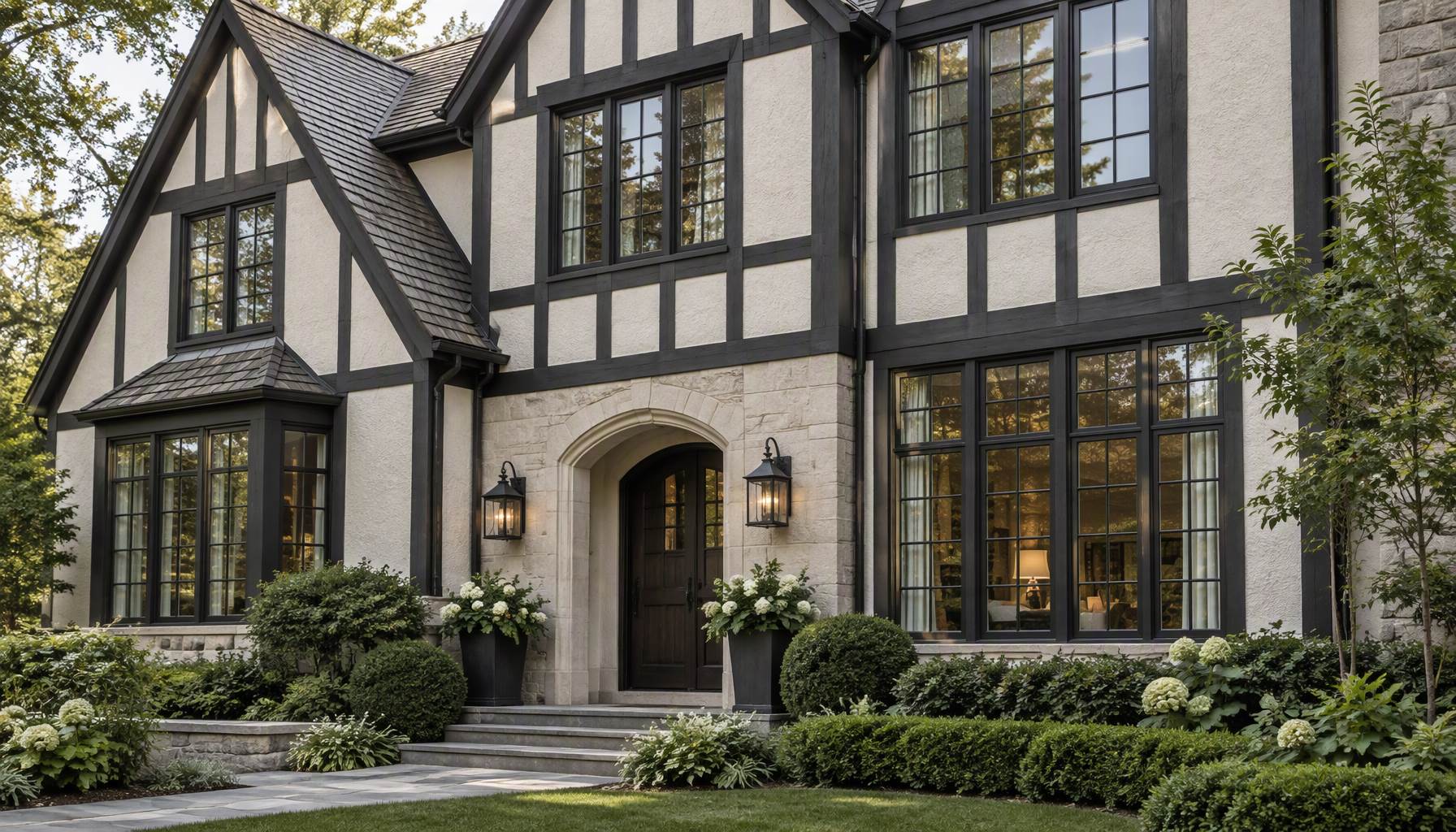
The style borrows from English Tudor and Tudor-revival architecture: small rectangular panes in a grid, often with a taller vertical proportion and a projecting head or hood mould. On a real historic building the glazing was individual panes held by lead or timber bars. On a modern aluminum reproduction, the same visual language is recreated either by true divided lights or by a grille applied to an insulated glass unit. Both look like Tudor windows from the street; they perform very differently and cost very differently.
Because the pattern is a style overlay rather than a new operating principle, the underlying frame choices still follow the standard categories in our aluminum window types guide. A Tudor look can sit on a casement, an awning, a fixed light or a sliding panel.
True Divided Lights vs Simulated Divided Lights
This is the decision that most affects performance, price and cleaning.
| Grille Type | What It Is | Practical Effect |
|---|---|---|
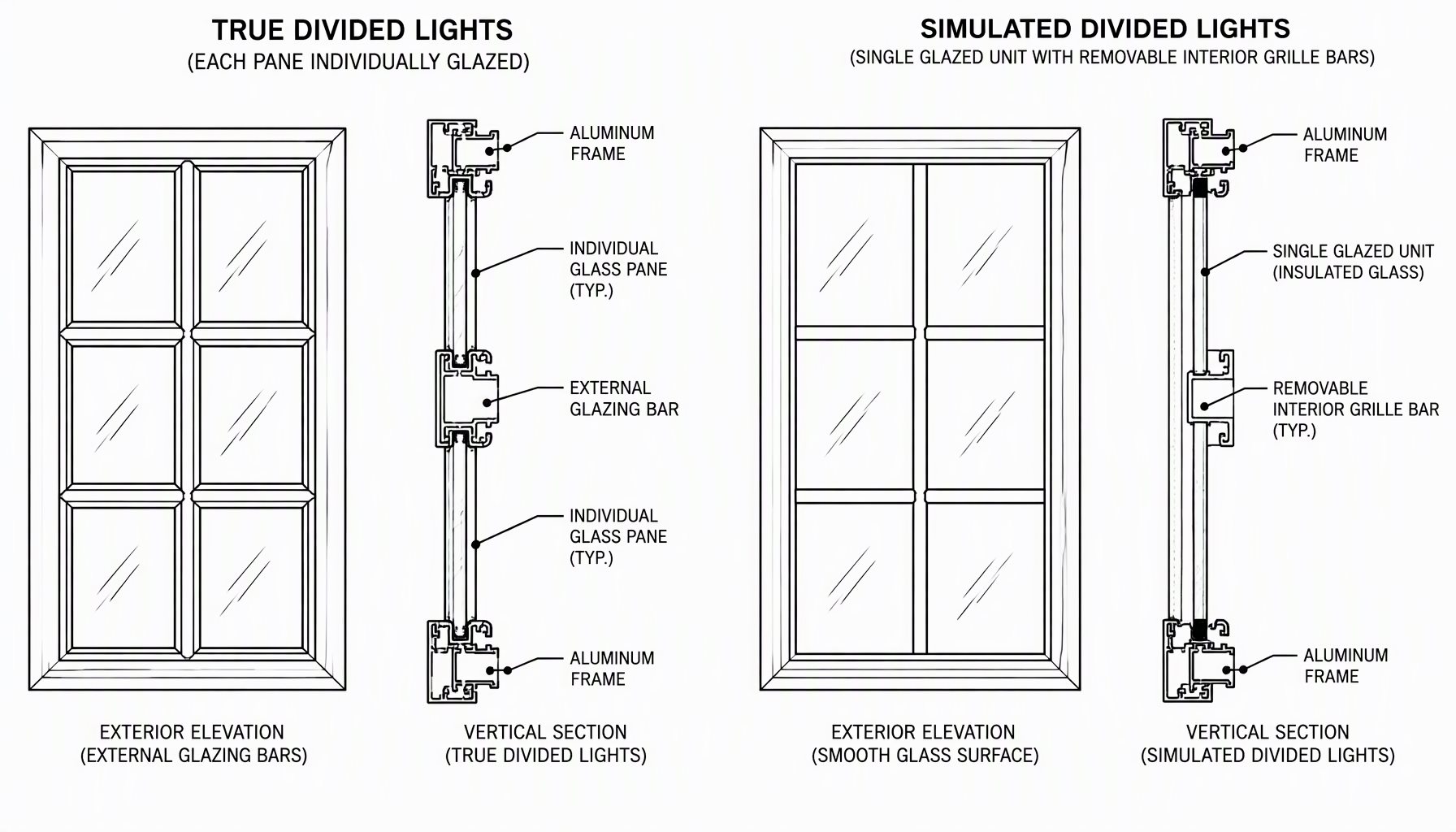
| True divided lights (TDL) | Each small pane glazed separately through the bar | Most authentic shadow line and exterior sightline, but many glass edges and more points for condensation and seal failure |
| Interior applied bars on insulated glass (SDL) | One double-glazed unit with removable grilles inside and fixed grilles bonded outside | Authentic exterior look, single sealed unit, easier cleaning and better thermal behaviour |
| Grilles-between-the-glass (GBG) | Aluminium bars sealed inside the cavity | Lowest maintenance and cleanest, but a flatter exterior profile that purists read as less period-correct |
For most specifiers, simulated divided lights on an insulated unit strike the best balance: the exterior reads as a genuine Tudor pattern while the assembly stays a modern, thermally predictable double-glazed window. Grilles-between-the-glass wins wherever cleaning and lifecycle cost dominate, such as upper floors or rental stock.
Glazing Build-Up Behind the Pattern
Divided-light patterns are dense with frame and bar, which reduces the clear-glass area and changes how much light and heat the window passes. Two glazing decisions matter most. First, pane count and cavity: a small-grid unit behaves thermally less like a big picture window and more like a wall of edges, so a warm-edge spacer and a sensible cavity width are worth specifying. Second, coating placement — a low-emissivity coating in the cavity is what keeps a many-paned unit from becoming a cold, condensing surface; the mechanics are the same as those in our Low-E argon glass guide, and the way coatings shift solar gain is described in the federal building-energy guidance at Energy.gov.
Because a grid multiplies the number of glass edges and bar interfaces, the assembly tolerances that keep a sealed unit dry over decades are the same ones the fenestration industry documents; the FGIA technical resources cover the glazing and sealant practices that apply to divided-light insulated units.
Where a project must also meet egress or safety-glazing requirements, remember that the visible pattern is separate from the code role of the opening. Residential code requirements for escape openings and hazardous-location safety glass are maintained through the International Codes; the International Code Council publishes the residential code family your authority having jurisdiction applies, and each project should be checked against the adopted local edition rather than a generic assumption.
Operating Style: Casement, Awning or Fixed
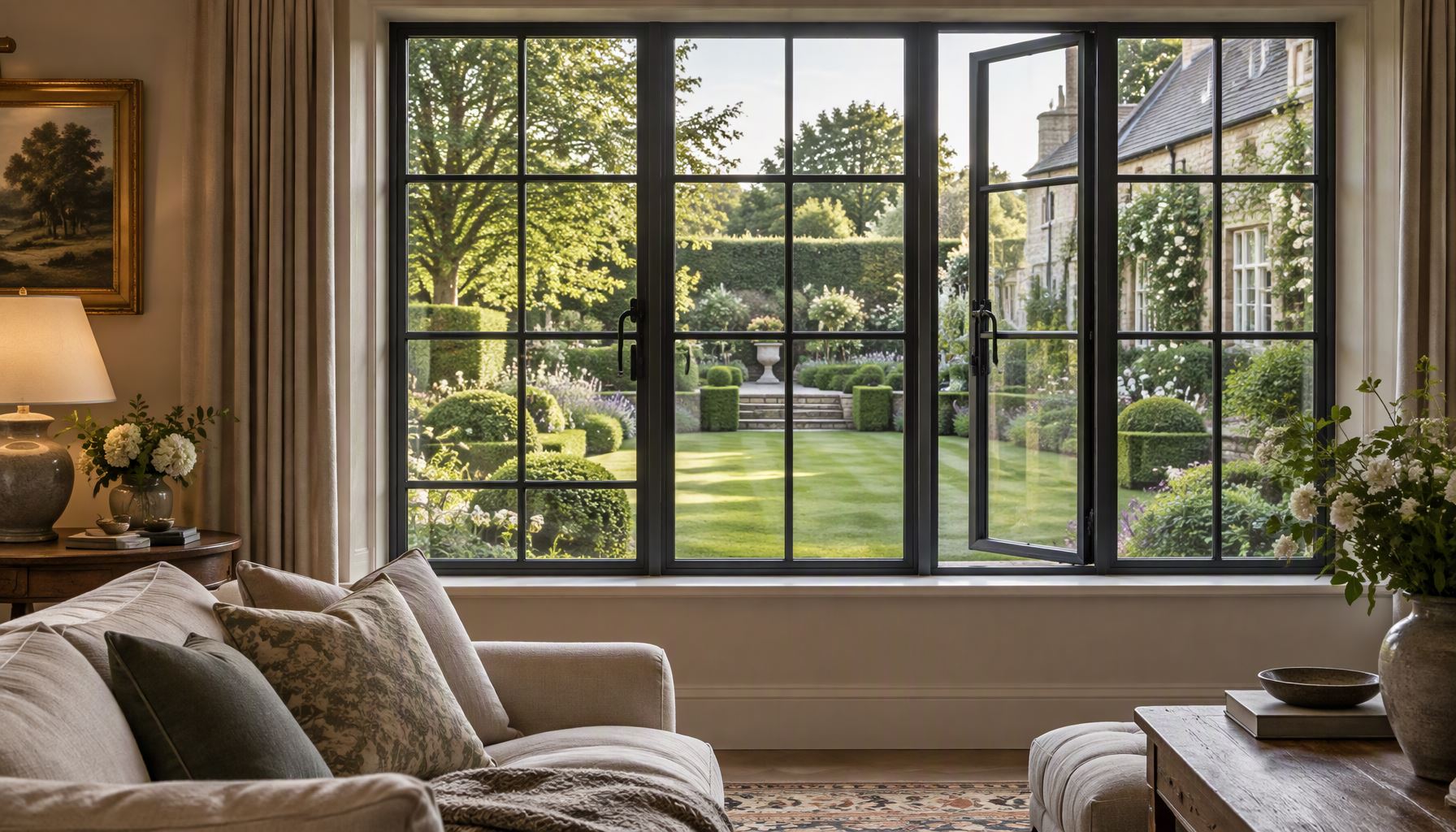
A Tudor pattern is usually hung as a casement or as a casement-and-awning combination, because a vertical grid looks natural on a side-hung sash and the fixed upper light over an operable lower sash is a classic arrangement. If your project trades on that look, the choice between a side-hung casement and a top-hung awning is an operating decision first and a style decision second, laid out in our casement vs awning windows comparison. For projects that lean European, a tilt-turn sash can carry the same divided pattern with a different ventilation behaviour.
Finish and Frame Colour
Authenticity is largely a colour and sightline question. Dark frames — black or deep bronze — read as traditional timber glazing bars, so the finish sits inside the same family as our black aluminum windows guidance: a durable, consistent coating over aluminum rather than a paint that must be maintained like wood. Where a lighter wall surrounds a dark frame, the frame-and-grid contrast is what sells the Tudor effect on elevation, so fix the finish sample before the grid spacing is finalised.
A Specification Matrix
| Project Requirement | Recommended Choice | Why |
|---|---|---|
| Historic-looking elevation, modern performance | Simulated divided lights on a double-glazed unit, dark powder-coat | Authentic exterior sightline with a single sealed, thermally predictable unit |
| Low maintenance, high floors or rental | Grilles-between-the-glass insulated unit | No loose bars, nothing to clean between, longest service interval |
| Purist true-divided appearance | True divided lights with individual panes | Exact shadow-line and depth, accepted for the added edge and seal count |
| Ventilation in the classic upper-fixed / lower-operable layout | Fixed upper Tudor light over a casement or awning sash | Keeps the period pattern while meeting fresh-air and, where required, egress function |
Frequently Asked Questions
What exactly are Tudor windows?
Windows whose design language comes from Tudor and Tudor-revival architecture: a large opening divided into many small rectangular panes by glazing bars, generally with a heavier head and sill. The pattern, not the frame material, defines the style.
Can Tudor windows be made in aluminum?
Yes. Aluminum reproduces the fine grid with slimmer bar profiles than timber would allow and avoids wood maintenance. The glazing bars are applied as true, simulated or between-the-glass grilles depending on the target.
Are true or simulated divided lights better?
Simulated divided lights on an insulated unit usually win for performance and cleaning while matching the exterior look; true divided lights are chosen when the exact historic depth of the shadow line is the priority.
Do many small panes hurt energy performance?
A dense grid increases edge and frame area, which reduces clear-glass performance relative to a single pane. A warm-edge spacer, a proper cavity and a low-E coating recover most of that, which is why the glazing build-up matters more than the pane count alone.
Can a Tudor window be a working casement?
Frequently it should be. The look is commonly built as a side-hung casement or a fixed-over-awning pair, so the divided pattern can both operate and ventilate.
Do grilles affect cleaning and upkeep?
Between-the-glass grilles never need cleaning; exterior fixed bars on a true or simulated unit do, and the choice is largely a maintenance decision.
Are Tudor windows more expensive?
The added grille work, extra glazing edges and small-pane handling raise cost over a plain fixed light of the same size. Whether a style like this fits a project is a cost and scope question we cover under the broader aluminum window buying guidance.
Specify the Pattern Precisely
A period look fails when the grille, glazing and finish are left to the site. Send your elevation, the grid spacing you want, the operating layout, and your energy or egress requirements, and the Lansen team can confirm a build-up that reads as an authentic Tudor window and behaves like a modern aluminum assembly.
Send your drawings to our engineering team for a divided-light and glazing review.