There is no such thing as an “ENERGY STAR aluminum window.” There is a specific configuration — this frame, this sash type, this glass package, this spacer — that has been rated under NFRC procedures and then checked against the ENERGY STAR threshold for one climate zone. Change any of those variables and the qualification may no longer apply, even though the extrusion is identical.
So when an importer or dealer searches for ENERGY STAR aluminum windows, the useful reading of that phrase is: a configuration, a climate zone, and a document that ties the two together. That is the whole qualification.
ENERGY STAR is a voluntary labeling program, and the qualification requirements are versioned. The current major version is 7.0, and its criteria are set separately from its predecessors. Thresholds are not only zone-dependent, they are version-dependent, so a product that qualified under an earlier version is not automatically qualified under the current one.
For an importer or dealer, the practical question is narrower than the marketing question. Not “is this factory ENERGY STAR certified,” but: for the exact configuration I am buying, for the zone I am selling into, which document proves the rating, and where does that document come from? This article covers the four rated values the program checks, why the same window passes in one zone and fails in another, and the documentation an importer should demand before a purchase order is issued.
What ENERGY STAR actually checks on a window
The program does not test products. It does not operate a laboratory and it does not generate performance data. It takes NFRC-rated values for a specific product configuration and applies pass/fail thresholds that differ by climate zone. That single fact explains most of the confusion in export conversations.
Four values sit behind a qualification.
U-factor is the whole-window rate of heat transfer. Lower is better, and it is the value most closely tied to heating energy use. It comes from NFRC 100 (simulation) or the corresponding test procedure for the product type. If the Uf / Ug / Uw distinction is not already clear in your own spec sheet, read how an aluminum window U-factor is built first.
Solar heat gain coefficient (SHGC) is the fraction of incident solar radiation admitted through the assembly. Lower means less solar heat. It comes from NFRC 200.
Air leakage is the volumetric rate of air passing through the assembly under a pressure differential. It is measured under NFRC 400, which references ASTM E283, and it is reported on the NFRC label for products where the program requires it.
Visible transmittance (VT) is the fraction of visible light transmitted. It is a design value, not usually a pass/fail gate, and it comes from NFRC 200 as well.
The threshold structure is what matters: in heating-dominated zones the binding value is normally U-factor; in cooling-dominated zones the program also gates SHGC; and where a version includes air leakage, the assembly has to be rated for it rather than assumed tight.
| Rated value | What it measures, and where the number comes from | Role in qualification |
|---|---|---|
| U-factor | Whole-window heat transfer rate, rated under NFRC 100 | Primary gate in heating-dominated zones |
| SHGC | Fraction of solar heat admitted, calculated under NFRC 200 | Gated in cooling-dominated zones |
| Air leakage | Air flow through the assembly under pressure, measured under NFRC 400, which references ASTM E283 | Included where the current version requires it; verify per version |
| VT | Visible light transmitted, calculated under NFRC 200 | Design tradeoff, not normally a gate |
Two things are easy to get wrong here. First, ENERGY STAR references whole-window values, not center-of-glass values. Center-of-glass ignores the frame and edge, so it always looks better and never describes the product that gets installed. Second, all four values belong to a rated configuration. AIR leakage and U-factor are properties of an assembly, not of an aluminum alloy.

Why the same window passes in one zone and fails in another
For ENERGY STAR aluminum windows the zone decides which value governs. The program defines climate zones across the United States and Canada, and each zone carries its own threshold set. Heating-dominated zones put the weight on U-factor, because the energy story there is heat escaping. Cooling-dominated zones put a cap on SHGC as well, because the energy story is solar gain that the air conditioner then has to remove. Mixed zones carry requirements on both.
That produces the outcome importers notice first: a unit specified for Miami is not the same unit that qualifies in Minneapolis. Not a cosmetic difference — a different glass package, a different spacer, sometimes a different frame depth or a different sash series.
| Zone character | Value that normally dominates | What the factory has to change, and what fails most often |
|---|---|---|
| Heating-dominated (northern) | U-factor | Higher-performance glazing, warm-edge spacer, deeper thermal break, often triple glazing. What fails: a glass package chosen for solar control only. |
| Mixed / north-central | U-factor with an SHGC ceiling | Frame upgrades plus a coated glass that holds SHGC in range. What fails: deep U-factor upgrades that push VT down and SHGC out of range. |
| Mixed / south-central | Both U-factor and SHGC | Coating selection becomes the critical decision. What fails: a northern package shipped south on price. |
| Cooling-dominated (southern) | SHGC, with a U-factor floor | Higher SHGC control, often a different tint or coating. What fails: a “high performance” coating that blocks heat but also blocks daylight. |
Canada is handled separately from the US zone map, and Canadian requirements generally push harder on U-factor than the corresponding US zones. A product qualified for a northern US zone is not automatically qualified north of the border.
Two structural points follow from this. The thresholds themselves change between program versions and between zones, so no number should be lifted from a supplier’s brochure and treated as the requirement. Confirm the current published threshold for your zone and window type on the ENERGY STAR program documentation before you commit to a specification.
And treat figures you see in proposals as descriptions of compliant product, not as requirements. Typical compliant aluminum units land in roughly U-factor 0.25–0.35 Btu/h·ft²·°F and SHGC 0.25–0.40 depending on zone, glazing package, and frame depth. Those ranges are illustrative of what a qualifying aluminum window usually looks like — they are not the program threshold, they do not transfer between zones, and they must never be substituted for the published criteria.
The configuration is the rated product
An NFRC rating covers a defined configuration, and the definition is granular. The frame series and depth, the thermal break construction, the glazing make-up, the Low-E coating position, the gas fill, the spacer material, the sash type, the operator hardware, and the tested size all participate in the result. Two windows that look the same in a catalog photograph can carry different ratings because one uses a crimped thermal break and the other a poured-and-debridged one, or because one ships with a warm-edge spacer and the other with an aluminum box spacer. For ENERGY STAR aluminum windows this counts twice: the configuration is what gets qualified, and the climate zone is what it is qualified against.
This is why swapping glass to hit a price target is not a neutral decision. A Low-E and argon glazing package carries specific center-of-glass values, but qualification is decided on the whole-window number, which also carries the frame and edge contribution. A thermal break design sets how much of the frame penalty you pay in the first place. The two have to be developed together against one target, per zone.
Size matters too. Rating reports are tied to tested or simulated dimensions. A report for one width does not certify the whole product line, and it does not extend to a unit with a different sash configuration. If your program includes a wide sliding window and a narrow fixed unit from the same extrusion family, they are two different products for compliance purposes.

What Documentation to Demand for ENERGY STAR Aluminum Windows
This is the section worth keeping. The core trap in aluminum window sourcing is a document that proves the wrong thing: a certificate covering a product family, presented as though it were a rating for the configuration on your purchase order. A family certificate confirms that the manufacturer participates in a certification program and that some configurations in the line were rated. It does not confirm that your frame depth, your glazing, your spacer, and your sash type hold the values your zone requires.
Ask for four things, and check that they agree with each other.
| Document | What it proves | What it does not prove |
|---|---|---|
| NFRC label for the exact configuration | Rated U-factor, SHGC, VT, and air leakage for the product as defined on the label | Anything about a different size, glass package, or sash type |
| The underlying NFRC report | Which frame, spacer, glazing, gas fill, and size were rated | Performance of untested sizes or optional upgrades |
| Component certification coverage | Finish performance (AAMA 2605 for high-exposure coatings), and that air leakage testing referenced ASTM E283 and NFRC 400 procedures | The whole-window thermal rating, which comes from NFRC 100 |
| ENERGY STAR qualification listing | Which zones the configuration qualifies in | Zones or versions not listed, and configurations not rated |
Then verify independently rather than trusting a screenshot. NFRC maintains a public certified products directory, ENERGY STAR publishes a qualified product listing, and FGIA publishes certification directories for finish and structural programs. Look the product up, confirm the configuration matches your purchase order, and confirm the listing reflects the program version that applies in your market.
Three questions will surface most problems:
1. Which zone was this configuration qualified for? If the answer is a single blanket claim, the documentation is not sufficient. Qualification is per zone.
2. Which glazing and spacer were rated? If the rated build differs from the quoted build, you are buying an unqualified product with a qualified product’s paperwork.
3. Which version is the listing against? Version changes move thresholds, so a listing against a superseded version tells you a product was qualified once, not that it is qualified now.
Add the ordinary commercial checks on top. Because air leakage and water performance claims rest on test reports rather than brochures, ask for the report that names the assembly, the size, and the laboratory, and confirm that the components behind those reports carry coverage. A manufacturer that runs its own documented inspection and traceability system will produce these documents without friction; see how quality control is documented when a factory is asked for evidence rather than a promise.
One further caution for anyone building a dealer program on this: the qualification depends partly on the glass supplier’s product, not only on the fabricator’s frame. Coating performance and gas retention are the glazing supplier’s responsibility, and the fabricator’s rating inherits them. When a coating changes, the configuration has to be re-evaluated. That is a structural risk in long supply chains, and it belongs in your supplier agreement as a notification obligation, not in a footnote.
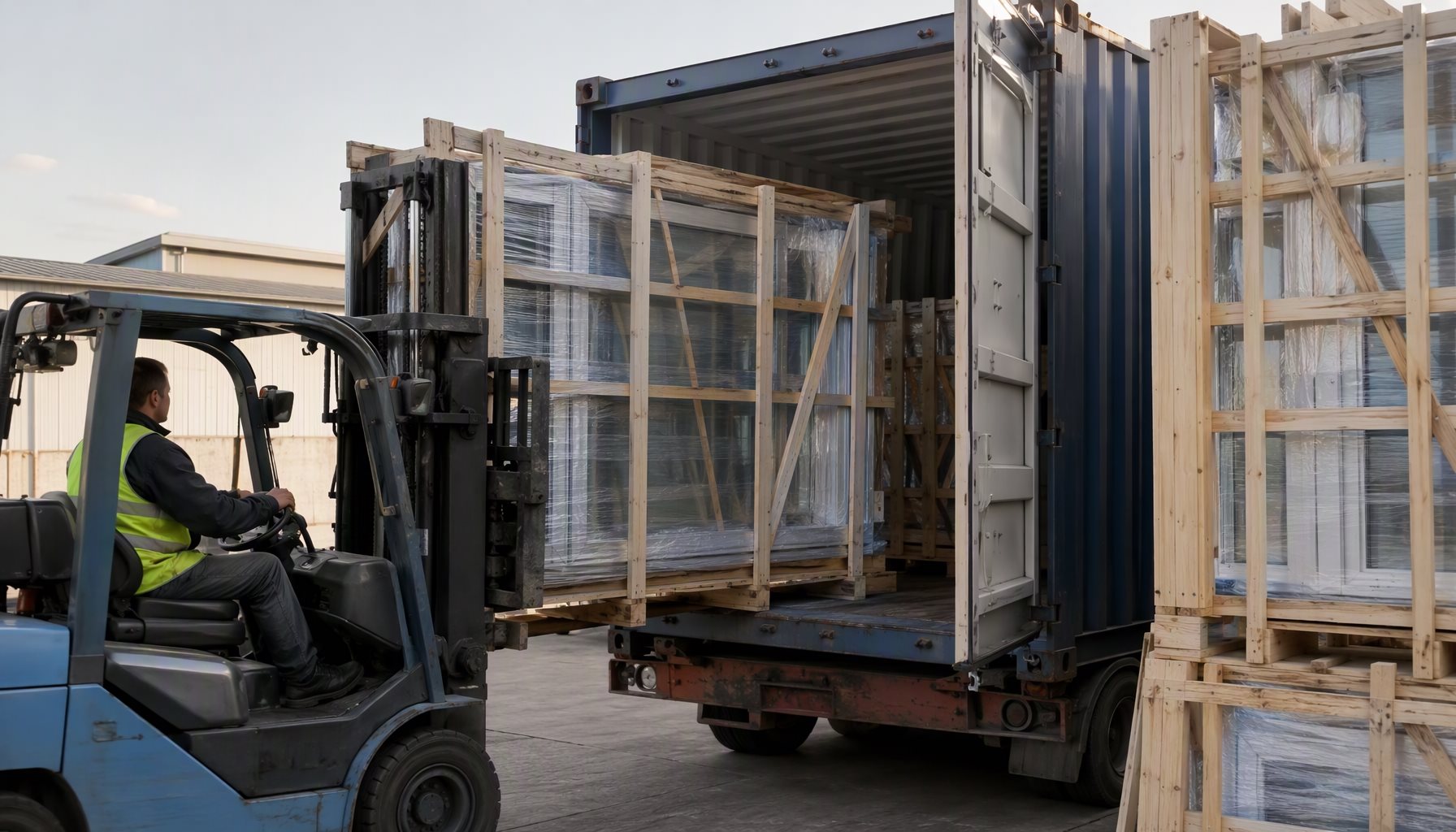
A verification sequence for a purchase order
Run the same four steps on every order for ENERGY STAR aluminum windows rather than once per supplier relationship, because glass packages and component sources change quietly.
- Confirm the destination zone and the program version that applies there, from the official program documentation.
- Pull the NFRC label and report for the exact configuration and size being ordered.
- Match the rated configuration against the quote line by line: frame series, glazing make-up, spacer, gas fill, sash type, size.
- Verify the listing independently in the certification and program directories, and keep the documents on file with the shipment records.
If any step fails, the window is not qualified for that zone, whatever the certificate says. That conclusion is worth more than any efficiency claim a supplier can make verbally.
Frequently Asked Questions
Does the ENERGY STAR label on a brochure mean the window I am buying qualifies?
No. Qualification applies to a specific rated configuration and a specific climate zone. The brochure may show a label produced for a different size, glass package, or spacer. Ask for the rating document tied to the configuration on your purchase order.
What is the difference between ENERGY STAR 7.0 and earlier versions for aluminum windows?
Each major version is a separate criteria set, and thresholds move between versions and between zones. A product qualified under a previous version is not automatically qualified under 7.0. Confirm the current version and the published threshold for your zone rather than relying on prior paperwork.
Why does the same window qualify in one state and fail in another?
ENERGY STAR applies different thresholds by climate zone. Heating-dominated zones test the U-factor hardest, while cooling-dominated zones also cap SHGC. A glass package tuned for one zone typically will not hold both values in another, so the same frame with different glazing is effectively a different product.
Is an NFRC rating the same as ENERGY STAR qualification?
No. NFRC supplies the rated values — U-factor, SHGC, air leakage, and visible transmittance — for a defined configuration. ENERGY STAR applies the pass/fail threshold for a climate zone to those values. An NFRC-rated window is the input to qualification, not proof of it.
What should I do if my supplier cannot produce a rating for my exact configuration?
Treat the window as unqualified for that zone and do not build a rebate or code argument on it. Either move the specification to a configuration the factory can document, or have the configuration rated before the order is placed. Verbal assurances and center-of-glass values are not substitutes.
Next step
If you are specifying aluminum windows for a North American program, send the destination zones, the opening schedule, and your performance targets. We will tell you which configurations can be documented for the zones you sell into, and which documents you should expect with the order — contact Lansen to start that review.