Tag: sourcing-from-china

Posts about sourcing from china on Lansen aluminum windows and doors.

  • How Long Do Powder Coated Aluminum Windows Last?

    How Long Do Powder Coated Aluminum Windows Last?

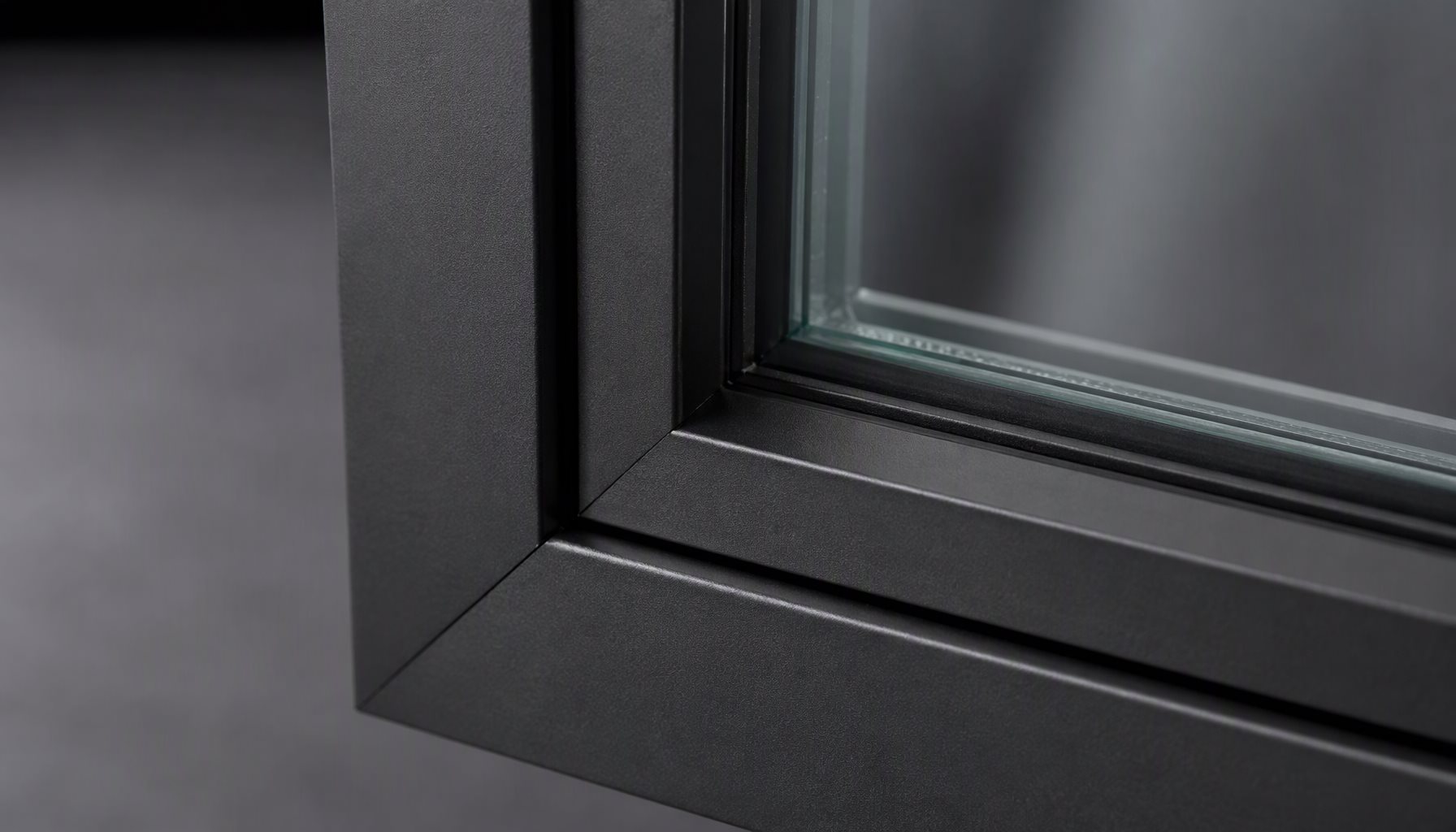
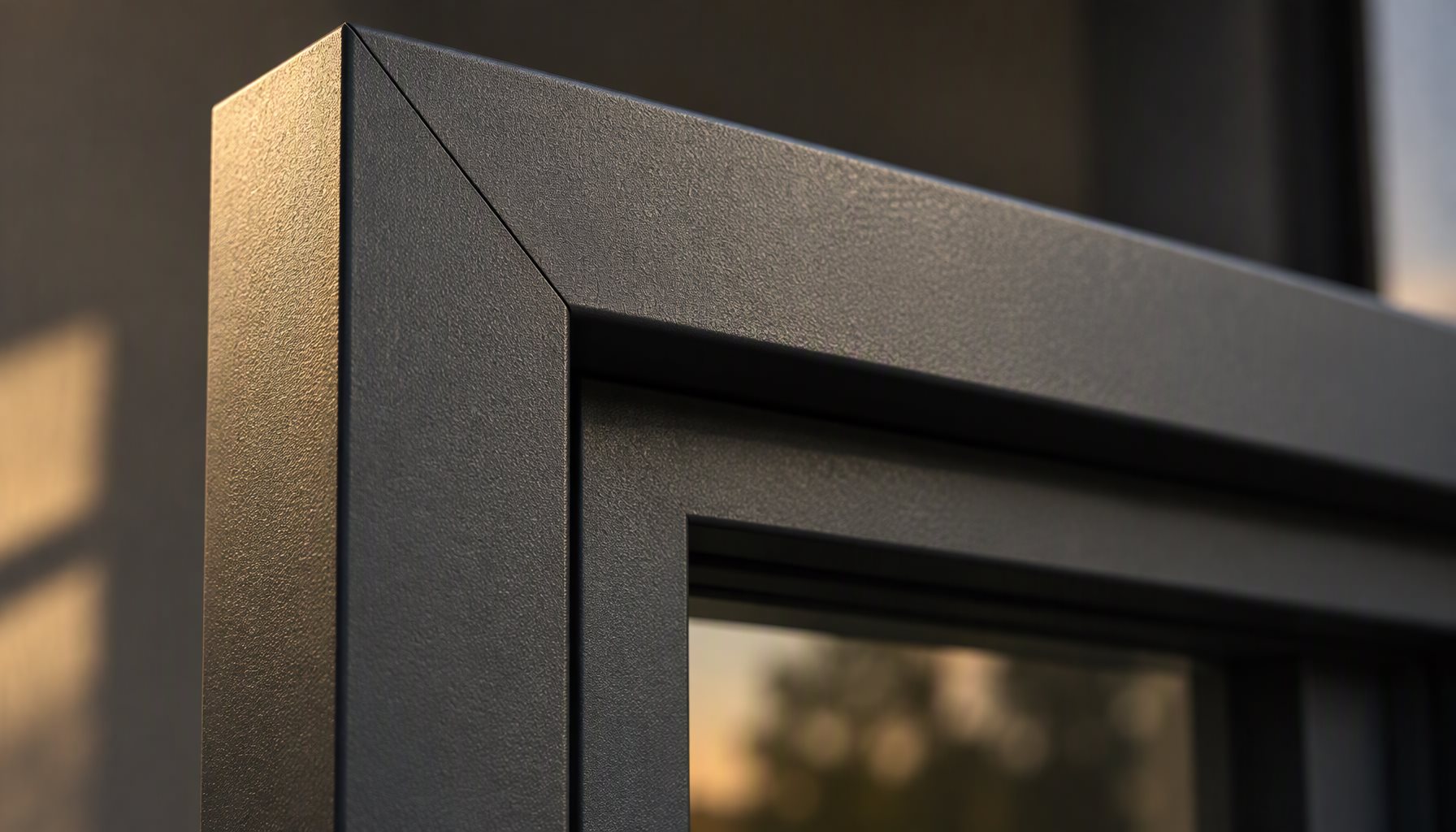
    Mitred corner of a dark grey powder coated aluminum window frame in raking afternoon sun

    Powder coated aluminum windows commonly hold their appearance for 15-25 years in a mild inland exposure and 10-15 years in a coastal or high-UV exposure, and less in salt spray, heavy industrial fallout, or unbroken sun on a dark colour. Those are typical planning ranges, not guarantees. The spread inside each range is driven far more by how the coating was specified and applied than by the powder brand on the box.

    The class number on a specification sheet tells you what a finish was designed to survive, not what a particular coater achieved. A quote can state AAMA 2605 and still ship windows that chalk within a few years if the pretreatment line drifted, the film went on thin, or the cure oven ran cold. That gap is where cheap quotes differ, and it is worth verifying before the container leaves rather than after the first warranty claim.

    This article is about service life: what determines how long a powder coat lasts on an aluminum window profile, how it fails, and what to put in writing at order. Appearance and colour selection are covered separately in our notes on black aluminum window finishes.

    Why Powder Coated Aluminum Windows Are Not One Product

    “Powder coated” describes a deposition method, not a performance level. Powder is sprayed electrostatically onto a grounded aluminum extrusion, then melted and crosslinked in an oven. Everything that determines service life sits in that sequence: resin, pretreatment, film thickness, and cure completeness.

    Resin chemistry is the first variable, and it sets the ceiling on UV performance. Two coaters can both write “polyester powder coat” on a quote and ship finishes with materially different expected lives.

    Qualicoat licenses and audits coaters against a controlled process, so it speaks to process discipline as much as to product; QUALANOD is its equivalent for anodizing. Neither substitutes for the AAMA class.

    The substrate and window design matter too. The aluminum window systems we manufacture at Lansen use 6xxx-series extrusions, and frame drainage and weep paths determine how long the finish on those surfaces survives. A coating cannot outlast standing water. For substrate choice, see our aluminum vs vinyl window comparison.

    The AAMA Coating Classes Compared

    The AAMA organic coating classes are a ladder of exterior performance, defined by progressively longer exposure testing and tighter thresholds for colour retention, gloss retention, chalking, and corrosion at a scribe. The class documents are maintained through FGIA / AAMA, and where a jurisdiction adopts them by reference it is usually through the model codes and standards.

    ClassTest basis and typical service environmentExpected retention and cost tier
    AAMA 2603Baseline organic coating; exterior exposure with modest thresholds. Interior, sheltered exterior, soffits and low-UV inland work.Noticeable chalking and gloss loss sit inside the class basis; colour shift likely over a long exterior life. Lowest cost tier.
    AAMA 2604High-performance organic coating; longer exposure and tighter thresholds. Residential and light commercial exteriors in moderate UV and inland climates.Moderate gloss loss across the class basis; colour shift limited but visible over time. Mid cost tier.
    AAMA 2605Superior-performing organic coating; longest exposure basis and tightest thresholds. Coastal, high-UV, high-visibility and high-specification commercial work.Highest colour and gloss retention of the three under the same exposure. Highest cost tier.
    Qualicoat / QUALANODCoater approval and process-control schemes (Qualicoat for organic coatings, QUALANOD for anodizing), used alongside AAMA classes rather than instead of them.Not a retention specification; a signal of process discipline. Cost varies with the coater.

    Cost tier reflects powder price, pretreatment discipline, cure control, and testing burden. The finish is rarely the dominant line item on a window programme, so trading a class down to save a small percentage of unit cost is usually poor value. Figures behind each class depend on the exact product: confirm against the finish supplier’s test data for the class specified.

    What Actually Determines How Long the Finish Lasts
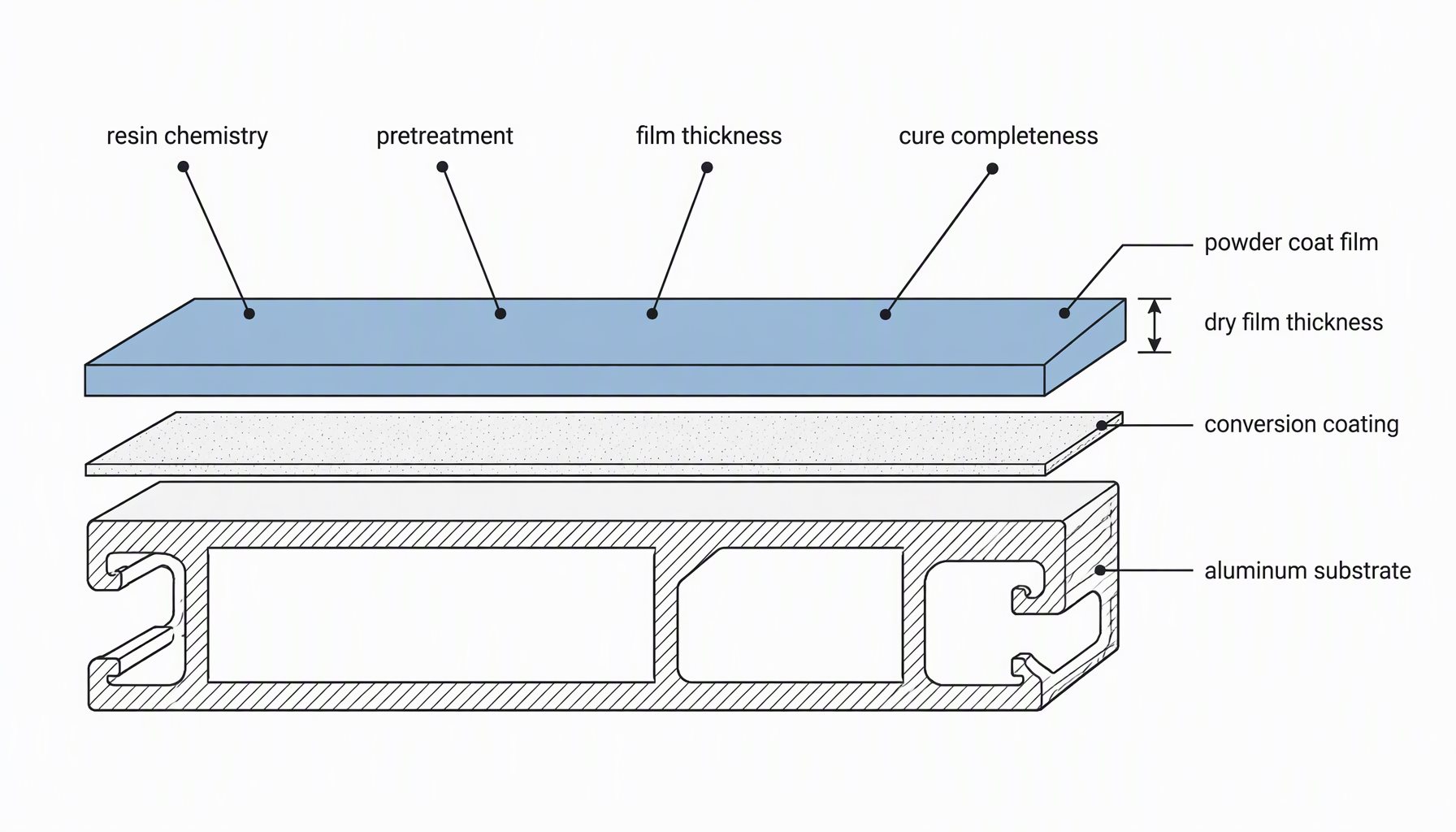
    Exploded cross-section of a powder coated aluminum window profile showing substrate, conversion coating and powder film

    Pretreatment quality

    Pretreatment is the step nobody photographs and the one that ends most finish warranties early. The aluminum is etched, rinsed, desmutted, and given a conversion coating for the powder to bond to. Get cleaning or conversion wrong and adhesion fails long before the class suggests it should: a 2605 powder on a badly pretreated extrusion behaves worse than a 2603 powder on a good one.

    The choice between chromate and chrome-free conversion coatings matters here. Trivalent chrome systems tolerate wider variation in bath concentration, pH, temperature, and contact time. Chrome-free systems, usually zirconium or titanium based, are where the industry has moved, but they run in a narrower window. A coater that switched to chrome-free without re-validating line parameters can pass a flat-panel salt spray test per ASTM B117 or ISO 9227 and still fail at a cut edge or fastener hole in the field, because a flat panel does not test the geometry where real windows corrode.

    Film thickness and its measurement

    Architectural powder films are commonly specified between roughly 60 and 100 µm (about 2.4 to 4.0 mils), with the exact minimum set by the system and the class. Thickness is measured with a magnetic or eddy-current dry film gauge, and how it is measured matters as much as the number: readings shift with substrate alloy, curvature, and calibration, so a single reading on a flat face proves little. Require a documented sampling plan with multiple readings per rack, including recesses and returns.

    Recesses are where thickness quietly drops. Electrostatic deposition is weakest in inside corners and deep channels because of the Faraday cage effect, so a frame reading above minimum on the exterior face can be thin at the glazing pocket and interior corner, where water and fasteners sit. Over-thick films are also a defect: past a point the coating becomes brittle, loses impact resistance per ASTM D2794, and fails cohesively.

    Cure schedule

    Powder cures when the aluminum itself reaches the specified metal temperature for the specified time, not when oven air does. That is where under-cure hides: a heavy extrusion and a thin one on the same line at the same speed do not reach temperature together, so one profile family can be starved while another is over-baked.

    Under-cured powder looks fine on the rack and fails in service: crosslinking is incomplete, so adhesion is weak, chalking starts early, and the film resists impact and chemicals poorly. Over-cure embrittles the film and can yellow light colours. The control is a documented metal temperature profile per profile family, recorded with profile tags or data loggers, not an oven setpoint.

    Standard polyester versus fluoropolymer-rich systems

    Standard polyester powder suits interior, sheltered, and mild-climate exterior work; superdurable grades are the usual architectural exterior choice, and fluoropolymer-rich powder raises gloss and colour retention further under intense UV, earning its cost on high-visibility facades, coastal work, and dark colours in strong sun. Metallics and micas deserve caution: flake orientation varies with application, so colour can differ between batches, touch-up rarely matches, and what reads as colour shift is often pigment- and orientation-related rather than a coating failure.

    What the building actually sees

    Exposure is not one number. UV dose varies enormously with latitude, altitude, and orientation, so a west-facing elevation in the desert Southwest receives a very different dose from a north-facing elevation in the Pacific Northwest; the orientation and solar-exposure logic behind that is set out in the Energy Saver guidance. Airborne chloride drives corrosion within a coastal band and on elevations exposed to prevailing onshore wind, and industrial fallout holds moisture against the film. Rain washing helps, while sheltered soffits and recesses stay wet longer. Washing frequency, alkaline run-off from stucco or concrete, and contact with dissimilar metals or treated timber leachate all shorten or lengthen life in ways the class number cannot capture.

    How Powder Coated Aluminum Windows Fail, and What Gets Misdiagnosed

    Visible symptomRoot causeWhat in the specification prevents it
    White powdery film on the surface (chalking)Binder degradation at the film surface under UV, accelerated by under-cureState the AAMA class for the actual UV exposure and require documented cure verification
    Uniform gloss loss, dullingSurface micro-etching of the binder; expected to some degree, rate is resin-dependentSpecify a class with a defined gloss retention basis and state the resin family
    Colour shift, especially on reds and organicsPigment degradation; chalking can lighten the apparent colourA class with colour retention thresholds; verify with measured colour difference per ASTM D2244
    Thread-like filaments creeping from a scribe, cut edge, or fastener holeFiliform corrosion: moisture and chloride ingress along the coating-metal interfaceProper conversion coating, adequate edge coverage, a class with a scribe corrosion requirement, sealed cut ends
    Blistering or liftingContamination, soluble salts, or moisture trapped under the film causing adhesion lossPretreatment control records, verified dry-off, adhesion tested per ASTM D3359
    Cracking, peeling, or cohesive film failureUnder-cure, over-cure, or excess film thicknessDocumented metal temperature profiles per profile family, and a maximum as well as a minimum thickness
    Chips and scuffs at corners after installationSite handling, abrasion, and contact with other tradesPackaging spec, protective film with a defined removal window, and a touch-up provision

    Most of these have more than one possible cause, and the cause is usually the process rather than the product. Chalking is the most commonly misread, blamed on the powder supplier when the real driver is an under-cured film or a class never appropriate for the UV dose on that elevation. Gloss loss per ASTM D523 is measurable and gradual, and some loss is normal for any organic coating, so the question is rate, not presence. Filiform corrosion is the most commonly missed, because it starts at a scribe, cut end, or fixing hole and creeps under a film that still looks sound from a metre away, and it is chloride-driven. Where the driver is the metal rather than the film, see preventing aluminum window corrosion in salt air.

    Mechanical damage is the failure mode buyers cause themselves. Windows are handled several times between the coating line and final fixing, and protective film left on through a summer of sun can bake on and leave residue harder to remove than the damage it prevented. Field touch-up is cosmetic only: it does not restore corrosion protection at a cut edge.

    Inspection: What a Buyer Can Actually Verify
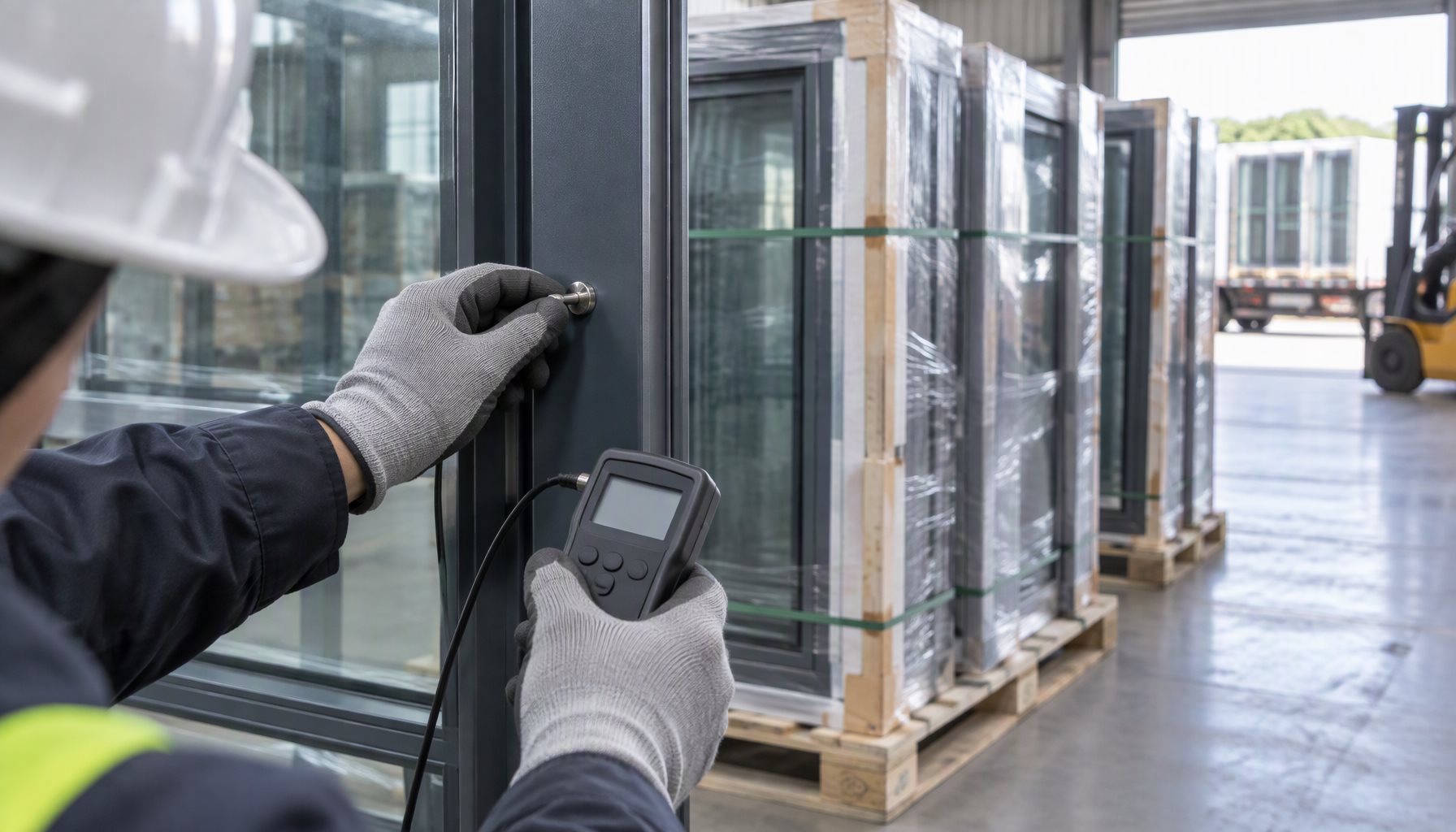
    Buyer checking dry film thickness on a powder coated aluminum window frame at a receiving dock

    Verification is a paperwork exercise, and it belongs before shipment.

    Ask for the pretreatment system type and its control records, cure records as metal temperature profiles per profile family rather than oven settings, and film thickness records with the sampling plan and readings from recesses, plus adhesion results per ASTM D3359 on production parts. Where salt spray is offered, read what was tested: a flat panel result per ASTM B117 or ISO 9227 is a floor, not evidence of edge performance. Vetting the supplier that produces those records, and telling a factory from a trader, is covered in how to evaluate aluminum window manufacturers.

    Then verify at your dock: check colour against an approved master under a defined light source, spot-check dry film thickness with your own gauge, run a tape adhesion test on a sacrificial part, and inspect cut ends, fastener holes, and glazing pockets for coverage. Confirm protective film is within its removal window. The same discipline applies on our lines; see quality control.

    What to Require on the Purchase Order

    Put the following in writing, on the order, not in a brochure:

    • The AAMA class stated by name for exterior surfaces, and separately for interior or concealed surfaces.
    • The film thickness range in writing, with minimum and maximum, the measurement method, and the sampling frequency.
    • The cure verification method: metal temperature, documented, per profile family.
    • The pretreatment type (chrome-free or trivalent chrome) and the control parameters that will be recorded.
    • A finish certificate per batch, traceable to the powder lot and to the process records.
    • The resin family, if the UV exposure on the project justifies naming it.
    • A touch-up provision: quantity, batch matching, application instructions, and confirmation that touch-up is cosmetic, not a corrosion repair.
    • Handling, packaging, and protective film requirements, including a removal window.
    • Test data for the specific product, confirmed against the finish supplier’s test data for the class specified.

    Drainage is part of finish durability: specify that frames drain and cut ends are treated or covered, because water standing at a sill will end the finish’s life whatever the class. Then define what the warranty covers. Chalking, colour, adhesion, and corrosion at a scribe are different failures with different thresholds, and a warranty that names none of them is not a durability commitment.

    Frequently Asked Questions

    How long do powder coated aluminum windows last?

    Commonly 15-25 years in a mild inland exposure and 10-15 years in coastal or high-UV conditions, with shorter service in salt spray, industrial fallout, or continuous sun on dark colours. These are typical planning ranges rather than guarantees. Delivered life depends mainly on pretreatment, film thickness, cure, resin family, and the exposure the building actually sees.

    Is AAMA 2605 worth the extra cost over AAMA 2604?

    On coastal, high-UV, or high-visibility elevations, usually yes, because the class sets a longer exposure basis and tighter colour and gloss retention thresholds. On a sheltered inland project the return is smaller and AAMA 2604 may be adequate. The deciding factor is the UV and chloride dose at the actual elevation, not the building type. Confirm against the finish supplier’s test data for the class specified.

    Does a thicker powder coat last longer?

    Only up to a point. Adequate thickness protects the substrate, but excess film becomes brittle and fails cohesively, which is why specifications set a maximum as well as a minimum. Thickness also has to be verified in recesses and returns, where electrostatic deposition is weakest.

    Can chalking or colour shift be repaired on site?

    Not properly. Field touch-up and overcoating are cosmetic, adhesion to a degraded or contaminated film is unreliable, and a repaint will not match the factory finish or restore corrosion protection at cut edges. Where appearance has failed across a facade, recoating or replacing the affected units is the realistic remedy.

    How do I know the coater actually achieved the class on my order?

    Require process records with the shipment: pretreatment control data, metal temperature cure profiles, dry film thickness readings with the sampling plan, and adhesion results per ASTM D3359 from production. Ask for a finish certificate per batch, traceable to the powder lot. Then spot-check thickness and adhesion yourself on arrival, because a class statement on a quote is a claim, not evidence.

    Talk to Us About Finish Specification

    If you are specifying powder coated aluminum windows for a North American project, send us the elevations and exposure conditions. We will tell you which AAMA class the project justifies, what the film thickness and cure records will show on your order, and where a lower class is adequate. Contact our export team to start the conversation.
  • ENERGY STAR Aluminum Windows: An Importer Checklist

    ENERGY STAR Aluminum Windows: An Importer Checklist

    There is no such thing as an “ENERGY STAR aluminum window.” There is a specific configuration — this frame, this sash type, this glass package, this spacer — that has been rated under NFRC procedures and then checked against the ENERGY STAR threshold for one climate zone. Change any of those variables and the qualification may no longer apply, even though the extrusion is identical.

    So when an importer or dealer searches for ENERGY STAR aluminum windows, the useful reading of that phrase is: a configuration, a climate zone, and a document that ties the two together. That is the whole qualification.

    ENERGY STAR is a voluntary labeling program, and the qualification requirements are versioned. The current major version is 7.0, and its criteria are set separately from its predecessors. Thresholds are not only zone-dependent, they are version-dependent, so a product that qualified under an earlier version is not automatically qualified under the current one.

    For an importer or dealer, the practical question is narrower than the marketing question. Not “is this factory ENERGY STAR certified,” but: for the exact configuration I am buying, for the zone I am selling into, which document proves the rating, and where does that document come from? This article covers the four rated values the program checks, why the same window passes in one zone and fails in another, and the documentation an importer should demand before a purchase order is issued.

    What ENERGY STAR actually checks on a window

    The program does not test products. It does not operate a laboratory and it does not generate performance data. It takes NFRC-rated values for a specific product configuration and applies pass/fail thresholds that differ by climate zone. That single fact explains most of the confusion in export conversations.

    Four values sit behind a qualification.

    U-factor is the whole-window rate of heat transfer. Lower is better, and it is the value most closely tied to heating energy use. It comes from NFRC 100 (simulation) or the corresponding test procedure for the product type. If the Uf / Ug / Uw distinction is not already clear in your own spec sheet, read how an aluminum window U-factor is built first.

    Solar heat gain coefficient (SHGC) is the fraction of incident solar radiation admitted through the assembly. Lower means less solar heat. It comes from NFRC 200.

    Air leakage is the volumetric rate of air passing through the assembly under a pressure differential. It is measured under NFRC 400, which references ASTM E283, and it is reported on the NFRC label for products where the program requires it.

    Visible transmittance (VT) is the fraction of visible light transmitted. It is a design value, not usually a pass/fail gate, and it comes from NFRC 200 as well.

    The threshold structure is what matters: in heating-dominated zones the binding value is normally U-factor; in cooling-dominated zones the program also gates SHGC; and where a version includes air leakage, the assembly has to be rated for it rather than assumed tight.

    Rated valueWhat it measures, and where the number comes fromRole in qualification
    U-factorWhole-window heat transfer rate, rated under NFRC 100Primary gate in heating-dominated zones
    SHGCFraction of solar heat admitted, calculated under NFRC 200Gated in cooling-dominated zones
    Air leakageAir flow through the assembly under pressure, measured under NFRC 400, which references ASTM E283Included where the current version requires it; verify per version
    VTVisible light transmitted, calculated under NFRC 200Design tradeoff, not normally a gate

    Two things are easy to get wrong here. First, ENERGY STAR references whole-window values, not center-of-glass values. Center-of-glass ignores the frame and edge, so it always looks better and never describes the product that gets installed. Second, all four values belong to a rated configuration. AIR leakage and U-factor are properties of an assembly, not of an aluminum alloy.

    Importer reviewing ENERGY STAR rated aluminum window quote data against an NFRC label

    Why the same window passes in one zone and fails in another

    For ENERGY STAR aluminum windows the zone decides which value governs. The program defines climate zones across the United States and Canada, and each zone carries its own threshold set. Heating-dominated zones put the weight on U-factor, because the energy story there is heat escaping. Cooling-dominated zones put a cap on SHGC as well, because the energy story is solar gain that the air conditioner then has to remove. Mixed zones carry requirements on both.

    That produces the outcome importers notice first: a unit specified for Miami is not the same unit that qualifies in Minneapolis. Not a cosmetic difference — a different glass package, a different spacer, sometimes a different frame depth or a different sash series.

    Zone characterValue that normally dominatesWhat the factory has to change, and what fails most often
    Heating-dominated (northern)U-factorHigher-performance glazing, warm-edge spacer, deeper thermal break, often triple glazing. What fails: a glass package chosen for solar control only.
    Mixed / north-centralU-factor with an SHGC ceilingFrame upgrades plus a coated glass that holds SHGC in range. What fails: deep U-factor upgrades that push VT down and SHGC out of range.
    Mixed / south-centralBoth U-factor and SHGCCoating selection becomes the critical decision. What fails: a northern package shipped south on price.
    Cooling-dominated (southern)SHGC, with a U-factor floorHigher SHGC control, often a different tint or coating. What fails: a “high performance” coating that blocks heat but also blocks daylight.

    Canada is handled separately from the US zone map, and Canadian requirements generally push harder on U-factor than the corresponding US zones. A product qualified for a northern US zone is not automatically qualified north of the border.

    Two structural points follow from this. The thresholds themselves change between program versions and between zones, so no number should be lifted from a supplier’s brochure and treated as the requirement. Confirm the current published threshold for your zone and window type on the ENERGY STAR program documentation before you commit to a specification.

    And treat figures you see in proposals as descriptions of compliant product, not as requirements. Typical compliant aluminum units land in roughly U-factor 0.25–0.35 Btu/h·ft²·°F and SHGC 0.25–0.40 depending on zone, glazing package, and frame depth. Those ranges are illustrative of what a qualifying aluminum window usually looks like — they are not the program threshold, they do not transfer between zones, and they must never be substituted for the published criteria.

    The configuration is the rated product

    An NFRC rating covers a defined configuration, and the definition is granular. The frame series and depth, the thermal break construction, the glazing make-up, the Low-E coating position, the gas fill, the spacer material, the sash type, the operator hardware, and the tested size all participate in the result. Two windows that look the same in a catalog photograph can carry different ratings because one uses a crimped thermal break and the other a poured-and-debridged one, or because one ships with a warm-edge spacer and the other with an aluminum box spacer. For ENERGY STAR aluminum windows this counts twice: the configuration is what gets qualified, and the climate zone is what it is qualified against.

    This is why swapping glass to hit a price target is not a neutral decision. A Low-E and argon glazing package carries specific center-of-glass values, but qualification is decided on the whole-window number, which also carries the frame and edge contribution. A thermal break design sets how much of the frame penalty you pay in the first place. The two have to be developed together against one target, per zone.

    Size matters too. Rating reports are tied to tested or simulated dimensions. A report for one width does not certify the whole product line, and it does not extend to a unit with a different sash configuration. If your program includes a wide sliding window and a narrow fixed unit from the same extrusion family, they are two different products for compliance purposes.

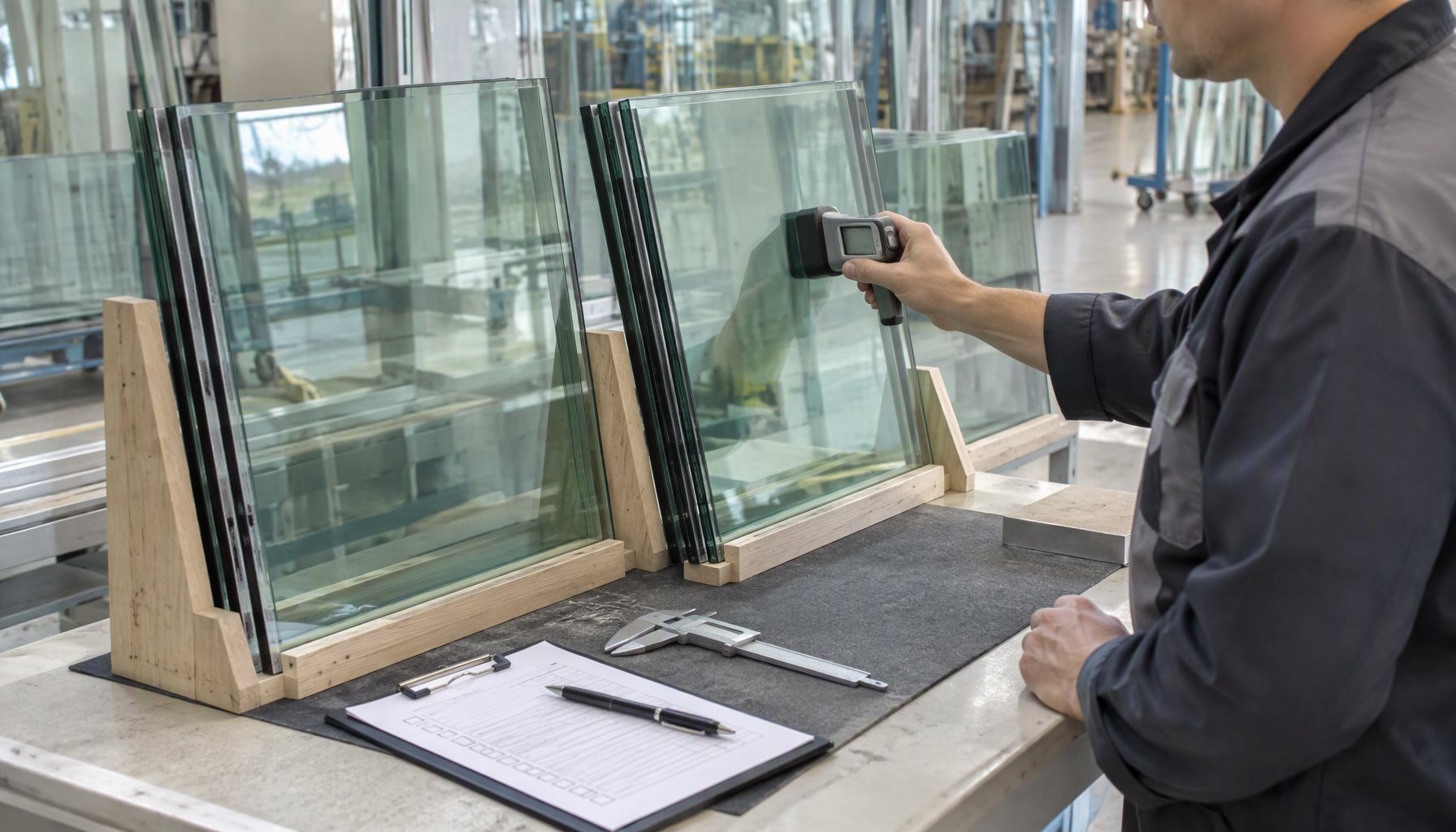
    Quality check of Low-E coated insulating glass units before shipment

    What Documentation to Demand for ENERGY STAR Aluminum Windows

    This is the section worth keeping. The core trap in aluminum window sourcing is a document that proves the wrong thing: a certificate covering a product family, presented as though it were a rating for the configuration on your purchase order. A family certificate confirms that the manufacturer participates in a certification program and that some configurations in the line were rated. It does not confirm that your frame depth, your glazing, your spacer, and your sash type hold the values your zone requires.

    Ask for four things, and check that they agree with each other.

    DocumentWhat it provesWhat it does not prove
    NFRC label for the exact configurationRated U-factor, SHGC, VT, and air leakage for the product as defined on the labelAnything about a different size, glass package, or sash type
    The underlying NFRC reportWhich frame, spacer, glazing, gas fill, and size were ratedPerformance of untested sizes or optional upgrades
    Component certification coverageFinish performance (AAMA 2605 for high-exposure coatings), and that air leakage testing referenced ASTM E283 and NFRC 400 proceduresThe whole-window thermal rating, which comes from NFRC 100
    ENERGY STAR qualification listingWhich zones the configuration qualifies inZones or versions not listed, and configurations not rated

    Then verify independently rather than trusting a screenshot. NFRC maintains a public certified products directory, ENERGY STAR publishes a qualified product listing, and FGIA publishes certification directories for finish and structural programs. Look the product up, confirm the configuration matches your purchase order, and confirm the listing reflects the program version that applies in your market.

    Three questions will surface most problems:

    1. Which zone was this configuration qualified for? If the answer is a single blanket claim, the documentation is not sufficient. Qualification is per zone.

    2. Which glazing and spacer were rated? If the rated build differs from the quoted build, you are buying an unqualified product with a qualified product’s paperwork.

    3. Which version is the listing against? Version changes move thresholds, so a listing against a superseded version tells you a product was qualified once, not that it is qualified now.

    Add the ordinary commercial checks on top. Because air leakage and water performance claims rest on test reports rather than brochures, ask for the report that names the assembly, the size, and the laboratory, and confirm that the components behind those reports carry coverage. A manufacturer that runs its own documented inspection and traceability system will produce these documents without friction; see how quality control is documented when a factory is asked for evidence rather than a promise.

    One further caution for anyone building a dealer program on this: the qualification depends partly on the glass supplier’s product, not only on the fabricator’s frame. Coating performance and gas retention are the glazing supplier’s responsibility, and the fabricator’s rating inherits them. When a coating changes, the configuration has to be re-evaluated. That is a structural risk in long supply chains, and it belongs in your supplier agreement as a notification obligation, not in a footnote.

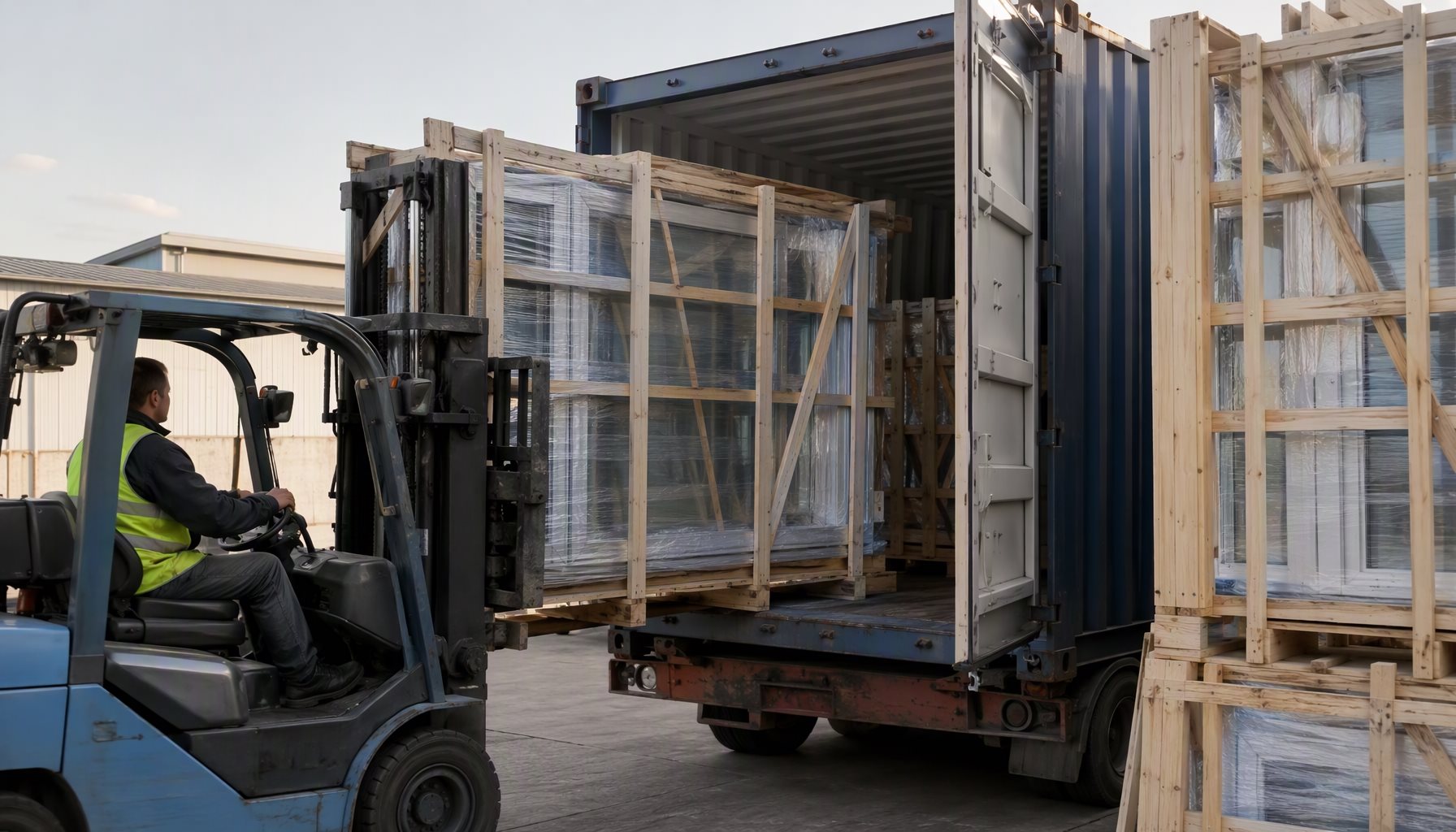
    Packaged thermally broken aluminum windows loaded for export

    A verification sequence for a purchase order

    Run the same four steps on every order for ENERGY STAR aluminum windows rather than once per supplier relationship, because glass packages and component sources change quietly.

    • Confirm the destination zone and the program version that applies there, from the official program documentation.
    • Pull the NFRC label and report for the exact configuration and size being ordered.
    • Match the rated configuration against the quote line by line: frame series, glazing make-up, spacer, gas fill, sash type, size.
    • Verify the listing independently in the certification and program directories, and keep the documents on file with the shipment records.

    If any step fails, the window is not qualified for that zone, whatever the certificate says. That conclusion is worth more than any efficiency claim a supplier can make verbally.

    Frequently Asked Questions

    Does the ENERGY STAR label on a brochure mean the window I am buying qualifies?

    No. Qualification applies to a specific rated configuration and a specific climate zone. The brochure may show a label produced for a different size, glass package, or spacer. Ask for the rating document tied to the configuration on your purchase order.

    What is the difference between ENERGY STAR 7.0 and earlier versions for aluminum windows?

    Each major version is a separate criteria set, and thresholds move between versions and between zones. A product qualified under a previous version is not automatically qualified under 7.0. Confirm the current version and the published threshold for your zone rather than relying on prior paperwork.

    Why does the same window qualify in one state and fail in another?

    ENERGY STAR applies different thresholds by climate zone. Heating-dominated zones test the U-factor hardest, while cooling-dominated zones also cap SHGC. A glass package tuned for one zone typically will not hold both values in another, so the same frame with different glazing is effectively a different product.

    Is an NFRC rating the same as ENERGY STAR qualification?

    No. NFRC supplies the rated values — U-factor, SHGC, air leakage, and visible transmittance — for a defined configuration. ENERGY STAR applies the pass/fail threshold for a climate zone to those values. An NFRC-rated window is the input to qualification, not proof of it.

    What should I do if my supplier cannot produce a rating for my exact configuration?

    Treat the window as unqualified for that zone and do not build a rebate or code argument on it. Either move the specification to a configuration the factory can document, or have the configuration rated before the order is placed. Verbal assurances and center-of-glass values are not substitutes.

    Next step

    If you are specifying aluminum windows for a North American program, send the destination zones, the opening schedule, and your performance targets. We will tell you which configurations can be documented for the zones you sell into, and which documents you should expect with the order — contact Lansen to start that review.

  • Curtain Wall Fabricators: How to Vet and Compare

    Curtain Wall Fabricators: How to Vet and Compare

    hub: /curtain-walls/

    Search for curtain wall fabricators and you will get a long list of companies that all claim to build facades. The hard part is not finding one — it is verifying which of them can engineer, fabricate, and test a wall that passes a specified performance class and a field water test on your building.

    This guide is a vendor-qualification checklist for architects, general contractors, and project buyers. It covers what a fabricator actually does, the difference between a fabricator and a trader, the documents that matter, and the questions that separate a real fabricator from a reseller.

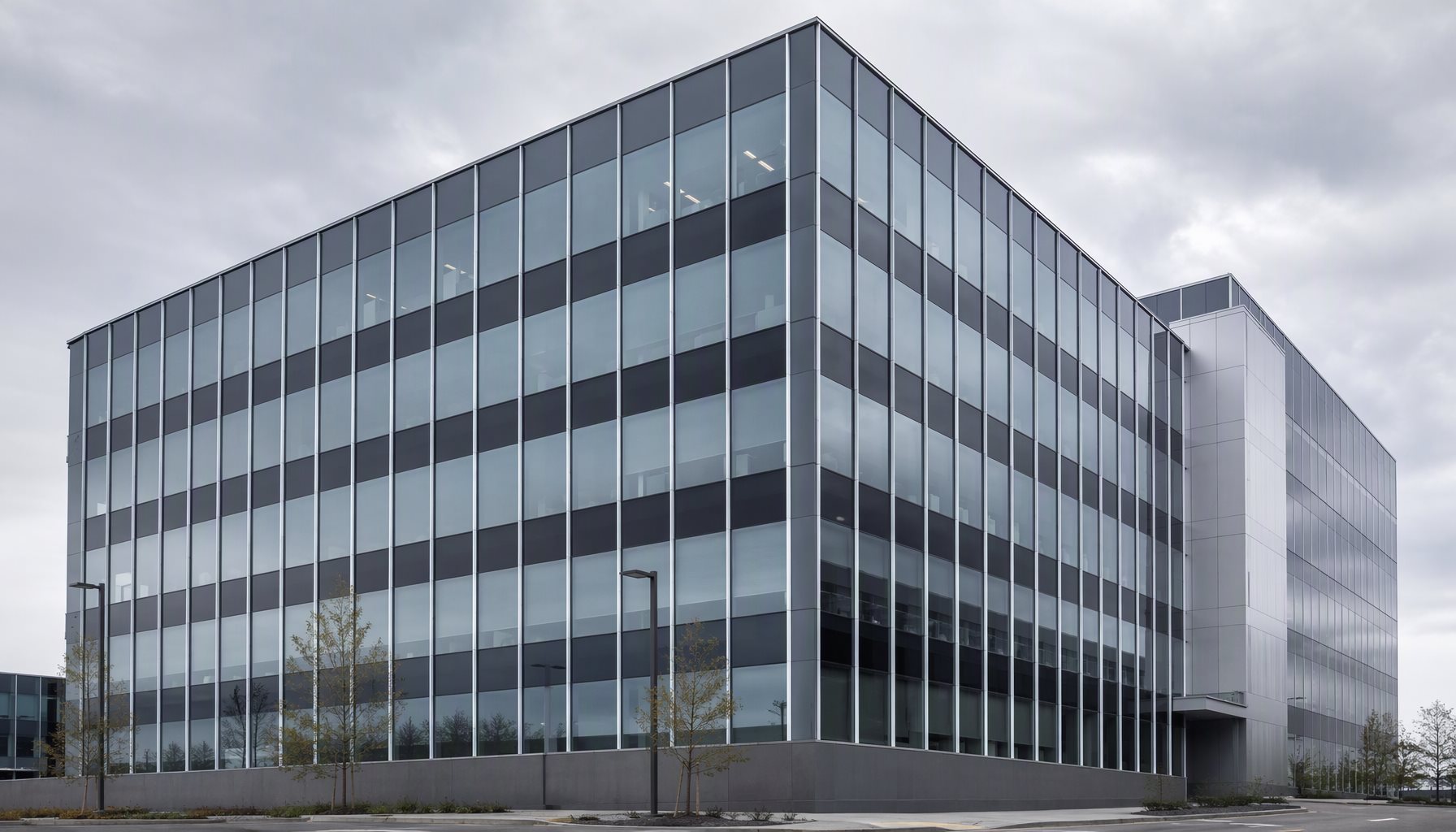
    Curtain wall facade of vision and spandrel glass panels on a commercial mid-rise building

    What a Curtain Wall Fabricator Actually Does: Fabrication Scope

    A curtain wall carries its own weight and resists wind load, transferring both back to the building structure — it does not support the building. Fabricating that wall is an engineering and assembly job, not just a cutting job. The fabricator takes the profile system, cuts and machines the mullions and transoms, fabricates the panels or stick components, and prepares them for glazing and installation.

    That means the fabricator is accountable for the parts of the wall that fail invisibly: corner joinery, drainage paths, anchor geometry, gasket seating, and thermal break continuity. A fabricator who cannot explain how water leaves the wall and how the anchors transfer load is not really fabricating a curtain wall — they are cutting and shipping profiles.

    Curtain Wall Manufacturers vs Fabricators vs Traders: Where Accountability Sits

    Supplier typeWhat they doWhat to verify
    Profile manufacturerExtrudes the aluminum profiles and system componentsAlloy, temper, system design ownership
    FabricatorCuts, machines, and assembles the wall from a systemIn-house engineering, joinery, QC, testing
    Trader / resellerBuys from a fabricator and resellsWhether they control any production at all

    The distinction matters because accountability lives with whoever controls production. A trader can be competent, but when a panel comes back with the wrong anchor holes or a missed drainage weep, you want one party who owns the line it came from. For project work, ask directly: who fabricates this, and can I trace a unit back to the fabrication line?

    The same question has a scheduling consequence. When fabrication and engineering sit under one roof, a shop drawing comment closes in days; when the drawings travel through a reseller to a third factory, each revision costs a round trip you cannot see on the schedule.

    Commercial Curtain Wall Fabrication: What Changes on a Real Project

    Commercial curtain wall fabrication differs from residential assembly in three ways that a buyer can check. First, the shop drawings are project-specific: every mullion, transom, anchor and movement joint is engineered for that building rather than adapted from a catalogue. Second, the fabrication tolerances are defined and measured, not implied. Third, the assembly is tested as a system — air, water and structural — before it reaches site.

    That is also why curtain wall fabrication capacity is hard to judge from a factory tour alone. The question is not whether the shop can cut and crimp aluminium; it is whether the engineering, the mock-up discipline and the inspection records exist behind the cutting. Ask to see a project’s shop drawing set and its fabrication inspection records, not just the finished wall.

    Test reports vs. certificates: the documents that matter

    A certificate and a test report are not the same thing, and a wall of certificates does not make a facade code-compliant.

    • A certificate describes a company system or a declared product family — an ISO 9001 quality certificate, or a CE Declaration of Performance for the European market.
    • A test report names a specific specimen, a specific standard, and a specific result — for example air leakage, water penetration, and structural performance tested to the relevant ASTM methods.

    For North American work, the framework that ties these together is NAFS — the North American Fenestration Standard for windows and doors, with the curtain wall counterpart covering glazed exterior wall systems — which assigns a performance class and a design pressure grade. Confirm the fabricator can state the class and grade for the exact configuration you are quoting, and can produce the report that proves it. For thermal and solar values, the relevant numbers come from NFRC procedures.

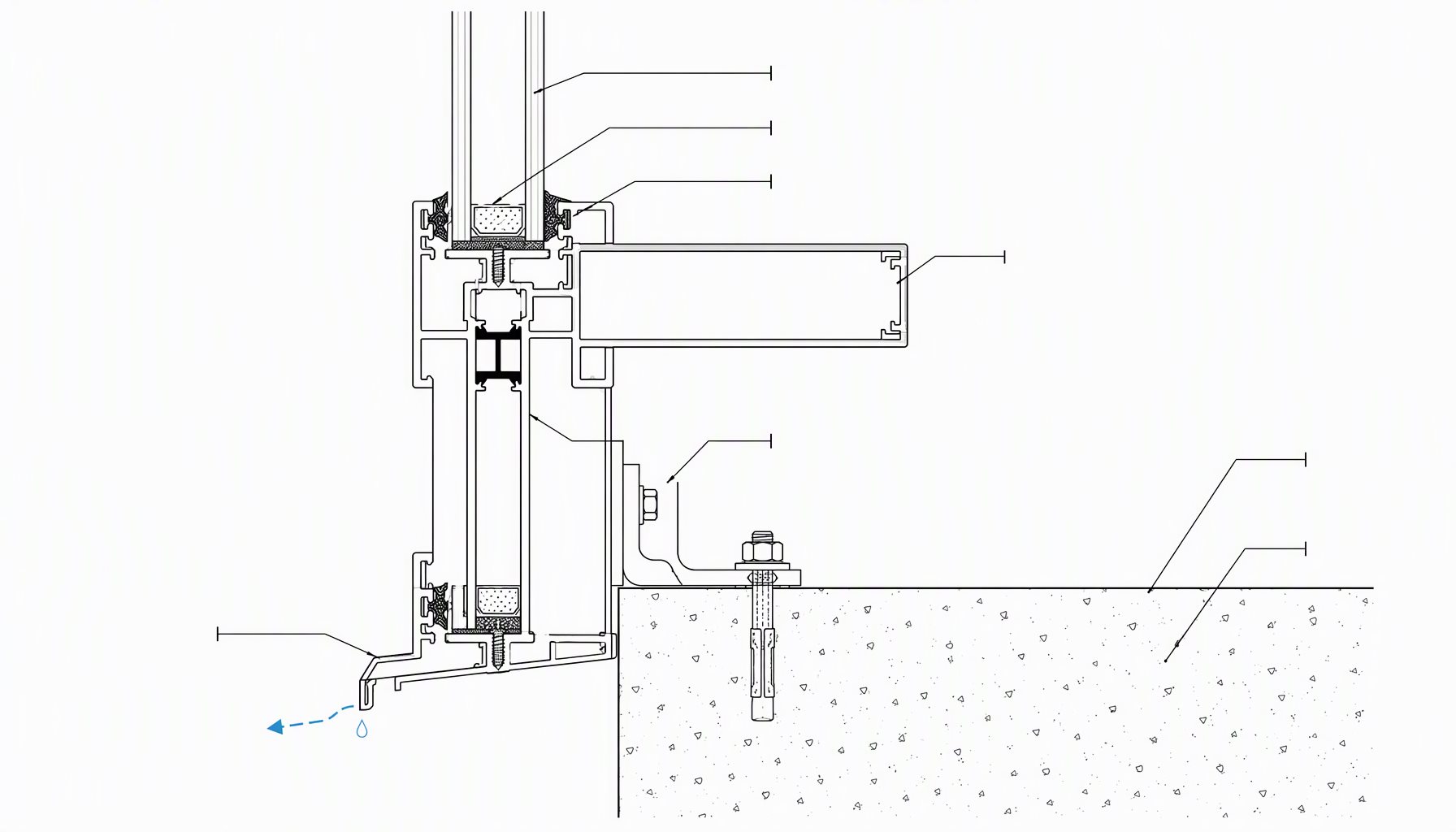
    Technical section drawing of a curtain wall showing mullion, transom, glass, structural anchor, thermal break and drainage weep

    The engineering questions to ask curtain wall fabricators

    Run every candidate through these six questions. A credible fabricator answers with drawings and reports, not assurances.

    • Do you own the profile system, or are you licensed to fabricate it, and who carries the system’s engineering responsibility?
    • Can you produce structural calculations and anchor design for our building, or are you copying a catalog detail?
    • What is the tested performance class and design pressure for this exact profile, glass, and size — and can I see the report?
    • How does water leave the wall? Walk me through the drainage and pressure-equalization path.
    • How is the thermal break continuous through the mullion, transom, and corner?
    • What fabrication and QC records do you keep, and can you trace a lot from raw material to finished unit?

    These questions are deliberately about mechanism, not marketing. A fabricator who can answer them is demonstrating engineering ownership, which is exactly what a curtain wall contract requires.

    How to verify a fabricator before you award

    Documents are the first filter; physical verification is the second.

    • Order a mockup. A corner or panel mockup reveals joinery, sightline, gasket fit, and finish quality far better than a PDF. Approve the mockup in daylight, against the actual vision and spandrel glass.
    • Walk the factory. Confirm the machining and assembly you were promised actually exist — CNC cutting, corner processing, gasket seating — and that the QC records are real, not framed posters.
    • Use third-party inspection. For first projects, an independent pre-shipment inspection verifies quantity, workmanship, and conformance against the purchase order.
    • Check references. Ask for completed projects the fabricator can actually name, ideally in a similar climate and building type. A fabricator who will not share references is telling you something.

    Glazing selection deserves the same scrutiny as the framing. A facade’s thermal and solar performance travels mainly through the glass, so ask how the glass package was chosen for the orientation and climate — not just which coating brand was used.

    For impact-prone coastal locations, the wall may need to be an impact-rated assembly with a Miami-Dade Notice of Acceptance where the local authority requires one — verify before you award, not after. The same discipline that applies to vetting window suppliers in China sourcing applies here, scaled up to a facade.

    Field testing: what the lab cannot catch

    A curtain wall that passes a laboratory test can still leak on your building, because field joints, sealants, and drainage are installed by people rather than machines. Field water testing verifies the completed wall in place, and it is the step that most often catches reversed laps, blocked weeps, and missing sealant before a building is occupied.

    Confirm who pays for field testing, what standard it follows, and what happens if a test fails — before you award. Testing expectations vary by jurisdiction, so check the requirements for your specific project rather than assuming a national rule. The International Code Council publishes the model codes most US jurisdictions adopt.

    Decision guide: what to prioritize

    Your situationWhat to prioritizeWhy
    First facade projectMockup + third-party inspectionDe-risk before awarding volume
    Custom or high-wind facadeIn-house engineering + named test reportsEngineering ownership is non-delegable
    Commercial / high-liability projectFabricator with traceability, not a traderOne accountable party
    Coastal / hurricane zoneApproved product for the jurisdiction + tested assemblyCodes reference approved products

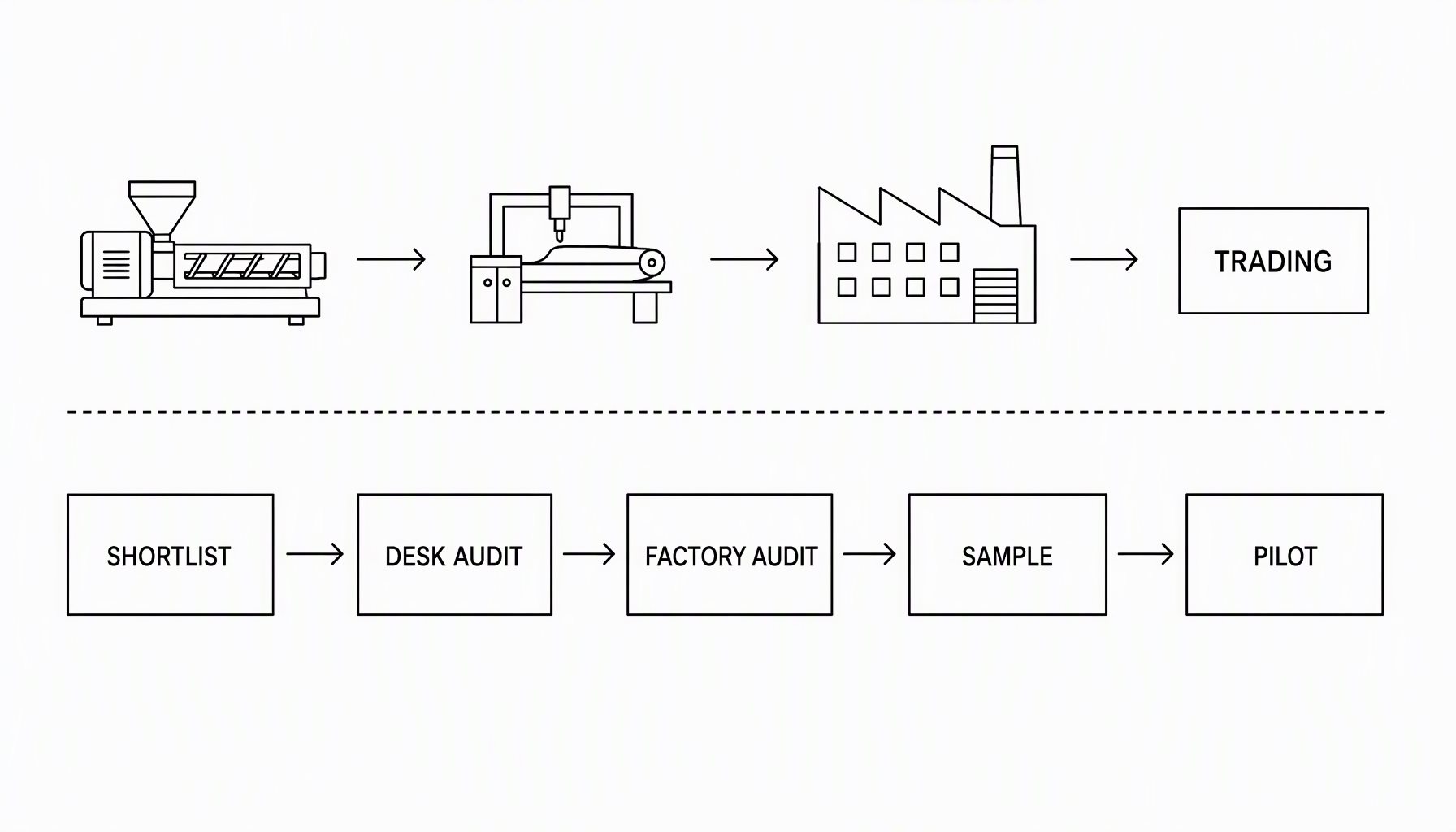
    A practical sequence is: shortlist → document audit → factory walk → mockup → sample or pilot → award. Most bad facade outcomes are avoided in the first three steps, before any metal is cut. Document every answer you receive in writing, because the value of the qualification exercise is the record it leaves when a question comes up two years into the project.

    How the wall is assembled is a separate decision that shapes the shortlist: stick systems are built in the field from members, while unitized systems arrive as glazed panels fabricated and QC’d in the plant. Compare them in stick vs unitized curtain wall before you evaluate who builds which.

    Frequently asked questions

    What does a curtain wall fabricator do?

    A curtain wall fabricator cuts, machines, and assembles the mullions, transoms, and panels of a curtain wall from a profile system, and is accountable for the joinery, drainage, anchoring, and thermal break continuity that decide whether the wall performs.

    What is the difference between a fabricator and a manufacturer?

    A profile manufacturer extrudes the aluminum system; a fabricator turns those profiles into a finished wall. Some companies do both, but for project work the question that matters is who owns the fabrication and can be held accountable for it.

    What certifications should curtain wall fabricators have?

    It depends on the market. For North America, look for a stated performance class and design pressure backed by ASTM-based test reports and NFRC thermal ratings; for impact products, the approval your jurisdiction requires. For Europe, EN 13830 with CE marking. There is no single global certification.

    Is a certificate the same as a test report?

    No. A certificate describes a company system or a declared product family; a test report names a specific specimen, standard, and result. For code compliance, ask for the test report that matches your exact profile, glass, hardware, and size.

    How do I verify a curtain wall fabricator?

    Run the engineering questions in this guide, request test reports for your exact configuration, order a mockup, walk the factory, and use third-party pre-shipment inspection on the first project.

    Why does field water testing matter?

    Because a wall that passes a laboratory test can still leak if the field joints, sealants, and drainage are installed wrong. Field water testing verifies the completed wall on your building, not a specimen in a lab.

    Does a passing test report cover every size on my building?

    No. A test report proves the behavior of the tested specimen and its rated size limits. Ask whether your widest panel, heaviest insulated glass unit, and any unusual anchor condition fall inside the tested range or need engineering of their own.

    How do curtain wall manufacturers differ from fabricators?

    A curtain wall manufacturer typically extrudes or owns the profile system; a fabricator turns those profiles into finished wall panels for a specific project. Many larger suppliers do both, which is why the distinction matters at the accountability level rather than the capability level. Curtain walling manufacturers who only supply profiles leave the assembly responsibility with the fabricator.

    Are curtain walling manufacturers the same as fabricators?

    No. Curtain walling manufacturers produce or own the profile system; fabricators cut, machine, assemble and seal those profiles into project panels. A supplier that only manufactures profiles and does not fabricate cannot answer for a finished wall’s air and water performance, so ask which role the company actually performs before you treat a quote as comparable.

    How do I choose an aluminum curtain wall panel manufacturer?

    Judge an aluminum curtain wall panel manufacturer on three things you can request before an award: a project-specific shop drawing set, test reports for the exact system and size being proposed, and fabrication inspection records from a comparable job. A supplier who can produce all three is a manufacturer in the sense that matters; one who can only show a catalogue is not.

    Need a curtain wall fabricated for your project?

    Send your elevation, performance requirements, and schedule. Our team can review the system, anchoring, glazing, and testing requirements before production — contact Lansen or review our fabrication and QC process.

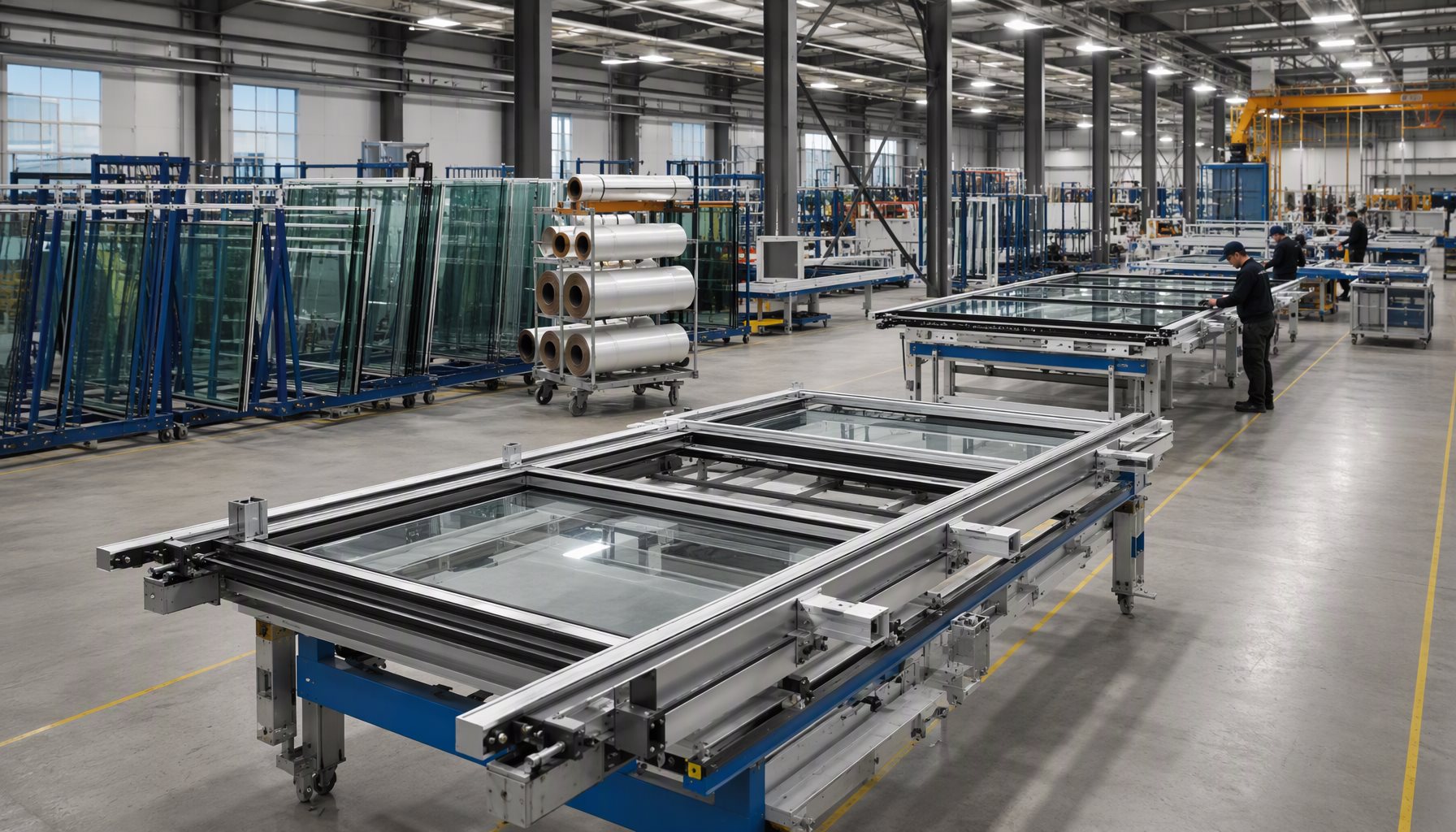
    Curtain wall fabricators machining aluminum mullions and glazed panels on a factory assembly floor
  • Aluminum Window Manufacturers: Evaluate & Compare

    Aluminum Window Manufacturers: Evaluate & Compare

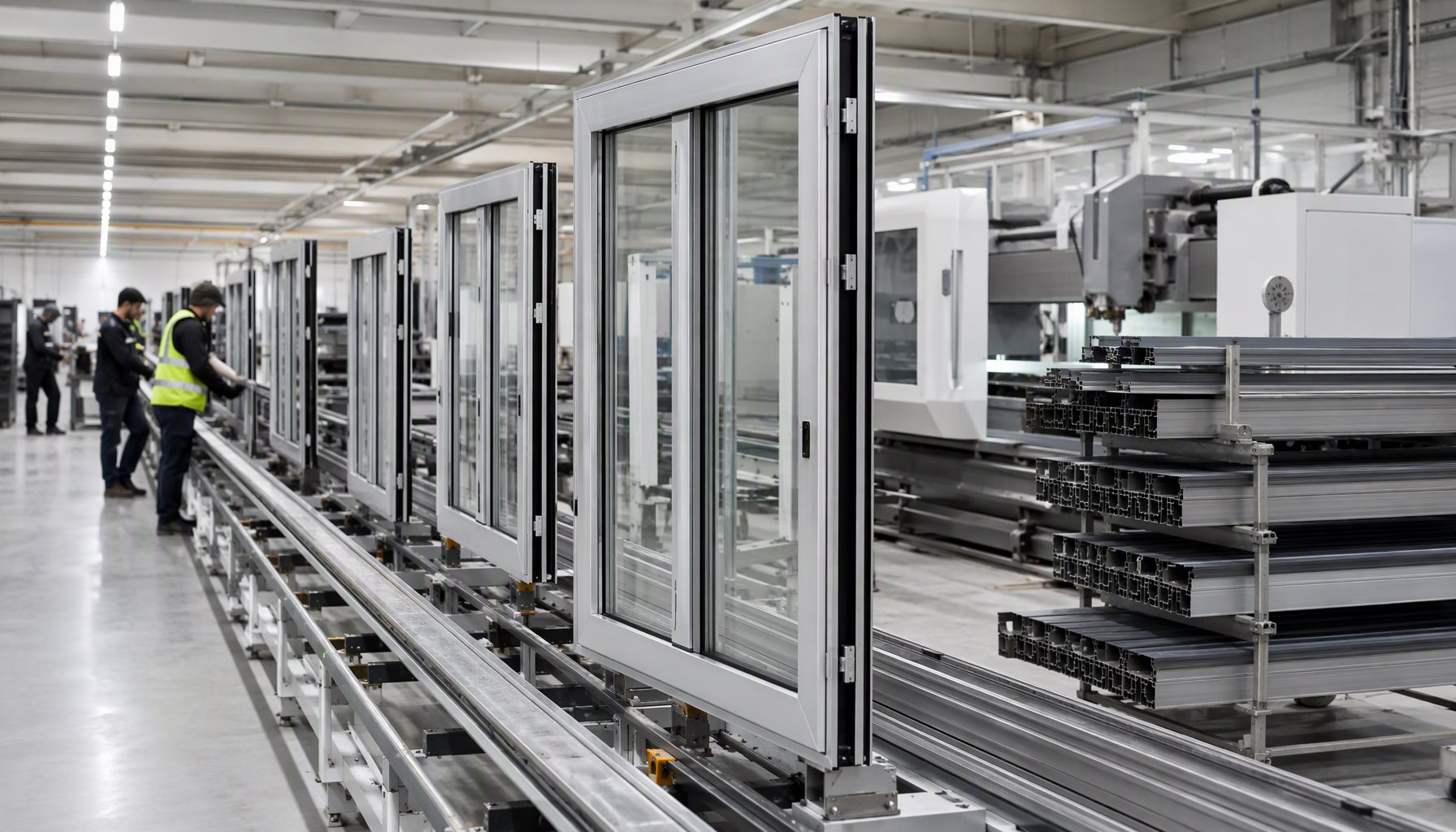
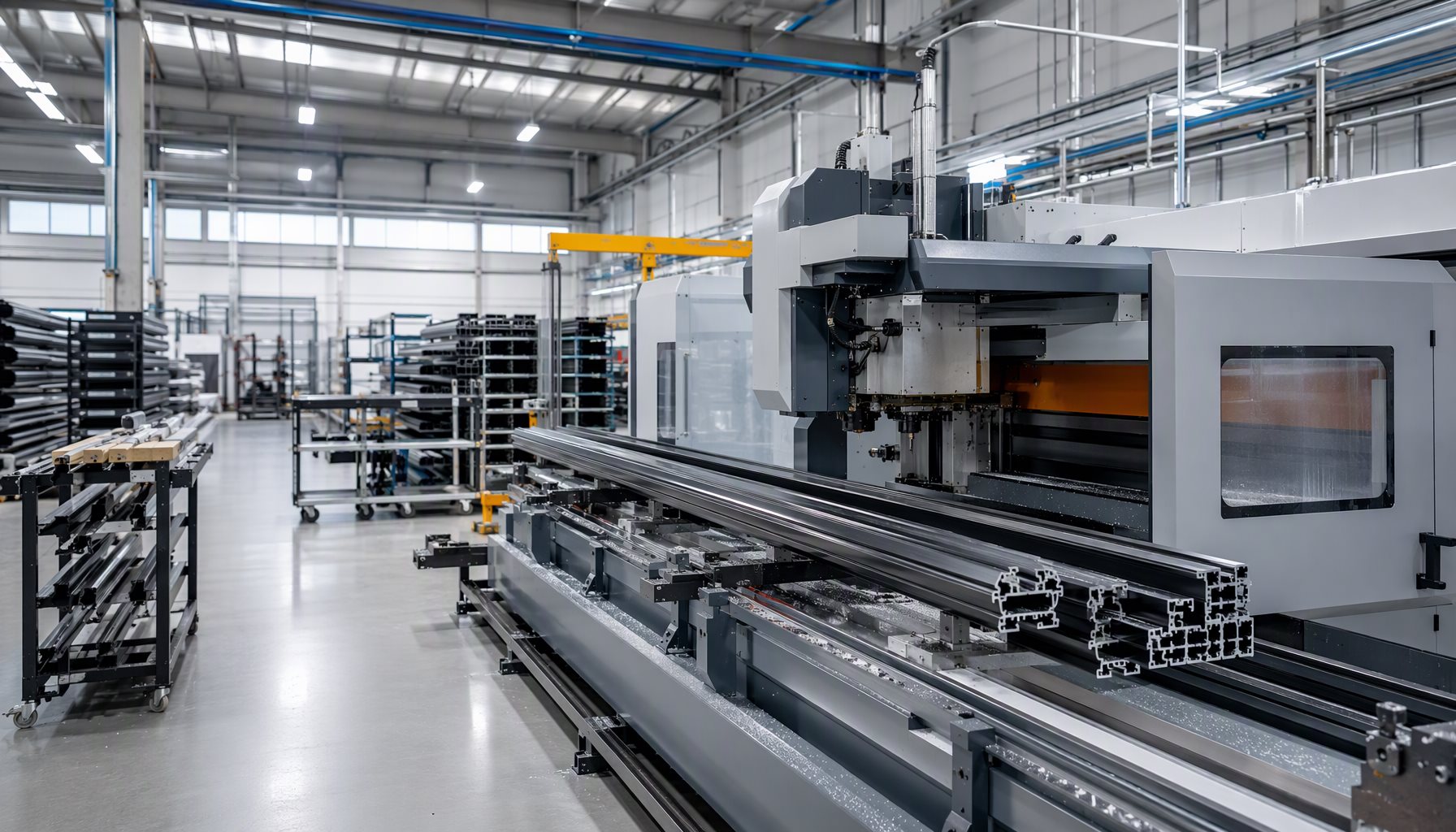
    Aluminum window manufacturing and assembly line

    Part of our procurement series — see the full OEM and ODM program.

    Search for aluminum window manufacturers and you will get hundreds of results, almost all of them calling themselves factories. The hard part is not finding a supplier — it is verifying which of them can actually build your product to specification, on time, and with documentation that survives a building code review and a customs broker’s questions.

    This guide turns the work of comparing aluminum window manufacturers into a repeatable checklist: supplier type, engineering and production capability, quality system, testing evidence, and the red flags that should end a conversation. It is written for architects, contractors, developers, and importers who are comparing manufacturers rather than buying a stock window. For the full import journey from RFQ to loaded container, see our China sourcing guide.

    Quick Summary

    CheckWhat it verifies
    Supplier typeFactory, trading company, or integrated manufacturer
    Engineering & productionWhether they can build your profiles, sizes, and hardware
    Quality systemISO 9001 and in-house QC records, not just marketing claims
    Testing evidenceTest reports (not only certificates) for your exact configuration
    Commercial & referencesPayment terms, lead time, and verifiable past projects

    Start with the supplier type

    Not every company listed among “aluminum window manufacturers” manufactures the same thing. Three supplier types dominate the market, and each changes where accountability sits:

    Supplier typeWhat they doWhat to verify
    ExtruderProduces aluminum profiles; may not fabricate finished windowsProfile alloy, temper, tolerances
    FabricatorBuys profiles and hardware, cuts and assembles into windowsIn-house engineering, assembly QC, testing
    Integrated manufacturerExtrusion + fabrication + finishing + assembly in-houseFull-chain traceability, fewer handoffs

    A trading company sits on top of any of these, buys from a factory, adds a margin, and sells under its own name. Trading companies are not automatically bad — many manage QC and export documentation well — but the further a supplier is from the physical production line, the harder it is to hold a single party accountable for a tolerance or a test result. For custom or code-critical work, the question to ask is: who owns the production, and can I trace a unit back to the line it came from?

    Flowchart comparing aluminum window supplier types and the verification steps
    Supplier types and the verification path.

    The qualification checklist

    Before you exchange drawings, run the supplier through these six questions. A credible manufacturer answers them with documents, not assurances.

    1. Engineering. Can they produce in-house structural calculations, section drawings, and a thermal assessment rather than copying a catalog? Do they understand the difference between NAFS performance classes and a project’s ASCE 7 wind load?
    2. Production. Confirm the profile system, wall thickness, corner joinery, and surface finishing (anodizing, powder coat, or PVDF). Ask where the glass unit is made and which hardware brands are used. Surface finishing is the specification most often written loosely and priced loosely with it; powder coated aluminum windows durability lists the coating questions worth putting in the RFQ.
    3. Quality system. Ask for the ISO 9001 certificate and — more useful — for a sample of in-process and final inspection records. A quality control system is a set of records, not a wall of logos.
    4. Testing. Request test reports that name the exact profile, glass make-up, hardware, and size you are quoting. Performance does not scale by arithmetic, so a report for a different configuration does not cover yours.
    5. Traceability. Confirm that production lots can be traced from raw material certificate to finished unit — useful when a warranty claim or a code review lands two years later.
    6. Commercial. Get terms in writing: payment milestones, lead time, packaging, freight responsibility, and the warranty’s scope and duration.

    Window Quality Assurance: the Records That Prove It

    Window quality assurance is not a certificate on a wall; it is a set of records that lets you trace a specific unit back through its production steps. The records that matter are incoming material verification (alloy and wall thickness on the extrusions, the barrier material, the glass and interlayer), in-process checks at the points where errors become invisible, and a final inspection with measured values rather than a visual pass.

    Ask what is measured, at which step, and who signs it. A supplier with real window quality assurance can answer all three in a sentence and produce a sample record. Confirm the specific performance claims against the certified test data for the system you are buying.

    Certificates vs. test reports: what to actually ask for

    This is where most buyer-seller confusion happens. A certificate and a test report are not the same thing, and a wall of certificates does not make aluminum window manufacturers’ products code-compliant.

    • A certificate (for example an ISO 9001 quality certificate, or a CE Declaration of Performance for the European market) tells you something about the company’s system or a declared product family.
    • A test report tells you what a named specimen did in a named standard: air leakage under ASTM E283, water penetration under ASTM E331, structural performance under ASTM E330.

    For the North American market, the documents that matter most are:

    • NFRC ratings — U-factor, SHGC, and visible transmittance for a specific product, which is what ENERGY STAR and most US/Canadian energy codes cite.
    • FGIA (formerly AAMA) certification and finish grades — including the AAMA 2603 / 2604 / 2605 coating ladder and the NAFS performance framework.
    • Miami-Dade Notice of Acceptance (NOA) — for impact-rated products in the High Velocity Hurricane Zone and, by convention, anywhere impact products are sold on the Gulf and Atlantic coasts.

    For the EU, the relevant product standard is EN 14351-1 with CE marking. A manufacturer that holds European and Australian marks in addition to North American ratings is often running a more mature testing program — but those marks do not certify a product for the US market. Match the certificate to the market you are actually selling into.

    Verify before you order

    Documentation is the first filter. Physical verification is the second.

    • Order a sample unit. A sample reveals more in fifteen minutes than a PDF does in a week: operation, finish quality, sightline, gasket fit, hardware feel.
    • Use third-party inspection. For first orders, a pre-shipment inspection by a firm such as SGS, Bureau Veritas, TÜV, or Intertek checks quantity, workmanship, and spec conformance against your PO before the container is sealed.
    • Check references carefully. Ask for projects the supplier can actually name and, where possible, contact. A manufacturer that will not share references is telling you something.
    • Run a pilot order. Test the full chain — quoting, engineering, production, packing, freight, documentation — with a small order before committing to container volume.
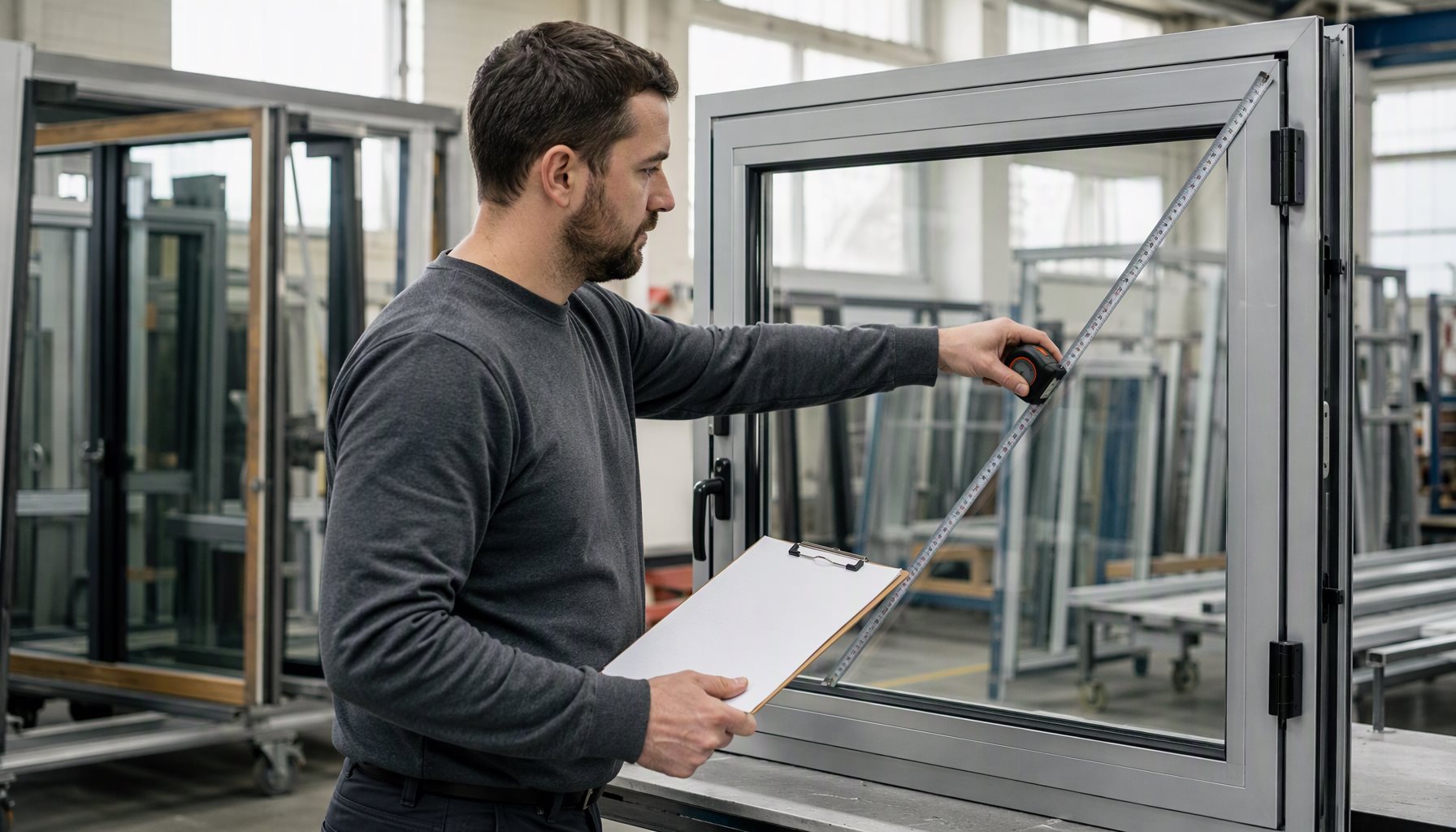
    Quality inspection of aluminum windows at the factory

    Red flags that should end a conversation

    • No named test reports — only marketing brochures with generic performance claims.
    • Vague answers on profile alloy, temper, or wall thickness.
    • A refusal to put specifications, tolerances, and lead time in writing.
    • An insistence on a large upfront payment with no milestone tied to verifiable production progress.
    • No traceability, no QC records, and no one who can answer a technical question in writing.

    None of these alone proves a supplier is bad, but several together is the pattern of a company that trades on margin rather than engineering.

    Decision guide: how to run the evaluation

    Your situationWhat to prioritizeWhy
    First container orderPilot order + third-party pre-shipment inspectionDe-risk before committing volume
    Custom or profile-specific productFactory with in-house engineeringSingle party owns tolerances and drawings
    Impact / hurricane marketMiami-Dade NOA + named test reportsCode requires an approved product
    Commercial or high-liability projectIntegrated manufacturer with traceabilityFewer handoffs, clearer accountability

    A practical sequence is: shortlist → desk audit (documents) → factory audit → sample → pilot order → scale. Most bad outcomes are avoided in the first three steps, before any container is booked.

    Frequently asked questions

    How do I verify an aluminum window manufacturer?
    Work down the checklist in this guide: confirm supplier type, request engineering drawings and test reports for your exact configuration, check the quality system records, order a sample, and run a third-party pre-shipment inspection on the first order.

    What is the difference between a factory and a trading company?
    A factory physically produces the windows — an extruder makes profiles, a fabricator assembles them, and an integrated manufacturer does both. A trading company buys from a factory and resells. Trading companies can be competent, but accountability is harder to trace the further the seller is from the production line.

    What certifications should an aluminum window manufacturer have?
    It depends on your market. For North America, look for NFRC ratings, ENERGY STAR compliance, and FGIA finish and performance certification; for impact products, a Miami-Dade NOA. For Europe, EN 14351-1 with CE marking. There is no single “global certification” that covers every market.

    Is a certificate the same as a test report?
    No. A certificate describes a company system or a declared product family; a test report names a specific specimen, standard, and result. For code compliance, always ask for the test report that matches your exact profile, glass, hardware, and size.

    What is a typical MOQ for custom aluminum windows?
    There is no single number — minimum order quantity varies by product, customization, and finish. Confirm the MOQ in writing for the specific configuration you are quoting, and treat an unusually low MOQ as a prompt to verify the supplier type.

    Should I hire a third-party inspection?
    For a first order or a new supplier, yes. A pre-shipment inspection by a firm such as SGS, Bureau Veritas, TÜV, or Intertek verifies quantity, workmanship, and spec conformance before the container is sealed.

    What are the red flags for a bad window supplier?
    No named test reports, vague answers on alloy or wall thickness, an unwillingness to put specifications in writing, a large upfront payment without production milestones, and no quality or traceability records. Several of these together is the pattern to walk away from.

    How do I evaluate custom aluminum outward-opening windows manufacturers?
    Custom aluminum outward-opening windows manufacturers should be evaluated on the same three things as any supplier, plus one: whether they engineer the sash and hardware for the opening direction rather than adapting an inward-opening kit. Ask for a sample unit you can operate, the hardware brand and grade specified for outward opening, and the structural rating at your design pressure. Confirm the assembly against the certified test data before ordering.

    Need aluminum windows for your project? Send your window schedule, performance requirements, and target market. Our team can review the system, glazing, and fabrication requirements before production — contact Lansen or review our OEM and ODM program.

  • Black Aluminum Windows: The Modern Design Guide

    Black Aluminum Windows: The Modern Design Guide

    Black window frames went from architectural signature to mainstream default in about a decade, and the material that made the trend physically possible is aluminum. Black vinyl windows exist, but dark PVC carries a structural penalty — heat absorption, warping risk, warranty exclusions in hot climates — that aluminum simply does not. This guide covers why black aluminum dominates contemporary design, how the finishes differ, what dark frames mean for thermal engineering, and how to keep the finish looking factory-fresh.

    Why Black Aluminum Dominates Modern Architecture

    The modern design language — slim sightlines, big glass, flat roofs, mixed materials — runs on contrast, and black frames provide it three ways:

    • The frames disappear. Against glass, a dark 1-inch sightline reads as a drawn line, not a window. The elevation becomes a composition of views rather than a grid of frames. This is the entire aesthetic argument for slim aluminum systems, and it only works in dark finishes.
    • Black frames anchor mixed materials. Stucco, brick, board-and-batten, cedar — black aluminum pairs with all of them without competing. It is the reason production builders adopted black windows across every product line: one frame color that never clashes with an elevation they haven’t designed yet.
    • It reads as an upgrade. In the resale market, black windows have become shorthand for a renovated or architect-designed home. Whether that should drive a purchase is another question, but it is the reality of the 2020s housing market.

    The engineering reasons black works on aluminum and not on other materials come down to finishes and thermal design — the next two sections.

    Finish Types and Durability

    “Black aluminum” is not one finish. There are three families, and the differences are durability, texture, and cost:

    Polyester powder coating is the default. Powder is electrostatically applied and oven-cured into a hard, uniform film — consistent color, good scratch resistance, and any RAL shade. Finish performance is specified by the AAMA coating ladder:

    • AAMA 2603 — standard residential duty, suitable for mild inland environments.
    • AAMA 2604 — high-performance class with fluoropolymer-based chemistry, specified for stronger color and gloss retention.
    • AAMA 2605 — the premium tier: a topcoat built on roughly 70% PVDF fluoropolymer resin, qualified with 4,000-hour salt-spray exposure and 10-year Florida-sun performance requirements. This is the coastal and commercial specification, and it is the one to demand for beachfront or high-UV sites. The colour itself does not carry the corrosion resistance; the alloy, the pretreatment, and the drainage detailing do, which is what how to prevent aluminum window corrosion sets out for salt-exposed sites.

    Anodizing converts the aluminum surface itself into a hard oxide layer — exceptional wear behavior and a dimensional, metal-like look. Anodized finishes lean charcoal/bronze tones; a deep saturated black anodize is achievable but less common, which is why nearly all true-black windows are powder coated.

    Fluorocarbon (PVDF) spray coatings are the curtain-wall class of liquid finishes — the same chemistry family as AAMA 2605 in coil/spray form, used on commercial facades where extreme colorfastness over decades justifies the cost.

    Color choices concentrate on two codes: RAL 9005 jet black (the volume seller, usually matte or fine-texture) and RAL 7016 anthracite grey (softer, hides dust better, and reads slightly warmer against brick and stone). Fine-texture finishes are popular for a practical reason: they hide minor handling marks and water spotting.

    Finish Types Compared

    FinishGoverning specBest forWatch-outs
    Polyester powder coat — AAMA 2603 classAAMA 2603Mild inland residential workStandard residential duty only; not the coastal specification
    High-performance powder coat — AAMA 2604 classAAMA 2604General exterior use with strong color and gloss retentionBelow the premium tier; check the class stated in the quote
    Premium PVDF powder coat — AAMA 2605 classAAMA 2605Beachfront, high-UV, and commercial facadesHighest cost; demand the class in writing, not just “powder-coated”
    AnodizingAA-M12C22A41/A44-type Class I architectural anodizeHard-wearing, dimensional metal look; charcoal and bronze tonesDeep saturated black is harder to achieve, which is why true black is usually powder coated
    Fluorocarbon (PVDF) liquid/coil spraySame chemistry family as AAMA 2605Commercial curtain-wall facades needing decades of colorfastnessCost; over-specified for most residential work

    The practical takeaway: “black aluminum” on a spec sheet means powder coat unless it says otherwise. Write the AAMA class into the specification and make the factory confirm it on the finish certificate — the color code alone tells you nothing about how the finish will look in year twelve.

    Close-up detail of a black powder-coated aluminum window frame finish.

    Thermal Considerations with Dark Frames

    A black surface in direct summer sun runs dramatically hotter than a white one — dark powder-coated aluminum commonly reaches 70–90°C surface temperature in peak sun versus roughly 40–50°C for white. Any dark-framed window must be engineered for that, and this is exactly where the materials separate:

    Aluminum absorbs the heat and moves with it. The frame expands predictably — aluminum’s thermal expansion is a known quantity that system engineers design for with correct joint clearances, gasket compression ranges, and glazing tolerances. The coating is qualified for the temperature (AAMA 2604/2605-class films are tested against it). The net effect: a black aluminum window is a normal engineering problem solved at the factory.

    Vinyl absorbs the heat and deforms with it. PVC expands two to three times more than aluminum per degree and loses stiffness as it heats. A dark vinyl frame in full sun is the industry’s known failure case: waviness, bowed sashes, seal stress, and — frequently — warranty language that excludes dark laminates in hot climates or prescribes shade management. The dark-vinyl trend exists mostly in northern climates for this reason.

    The second thermal topic is the thermal break itself. A black frame is usually a dual-color frame — black outside, white inside — and a proper polyamide (PA66 GF25) barrier is what makes that possible: it mechanically separates the hot exterior chamber from the interior chamber, so the dark finish’s heat stays outside and the interior face stays a normal room-temperature component. Without a thermal break, the sun-side heat conducts straight to the interior surface, raising room heat gain and creating a condensation risk in winter.

    The third is glass, not frame: most solar heat gain comes through the glass, not the frame. A dark frame with the wrong glass package (high SHGC) will bake the room regardless of frame material — choose Low-E glazing tuned to orientation.

    Black Frames Across Architectural Styles

    Part of the trend’s durability is that black frames stop being “a look” and start being infrastructure — the connective tissue between very different house styles:

    • Modern farmhouse (the dominant US build of the last decade): black windows against white board-and-batten or shiplap, usually with simple rectangular grids. The contrast does the styling; the grids keep it residential rather than commercial.
    • Mid-century and ranch renovations: black frames replace failing aluminum sliders era-correctly — the original 1960s windows *were* dark anodized aluminum, so the look is a restoration as much as an upgrade. Tall fixed panels over low awnings reproduce the original elevations with modern thermal performance.
    • Coastal and transitional: anthracite (RAL 7016) rather than jet black, against shingle, stone, and weathered wood; the softer tone reads better against salt-air haze and aged materials.
    • Industrial and loft conversions: true black, no grids, and visible frames as part of the interior composition — the loft aesthetic taken literally.
    • Mediterranean and stucco homes: the trickiest pairing. Black against white stucco is striking but unforgiving of proportion; slim frames and deliberate grid patterns keep it intentional rather than pasted-on.

    The style lesson from the factory side: black frames reward *consistency* — one black across all elevations, doors included — and punish half-measures. A single elevation of black windows among white ones reads as a replacement window bought on sale, not a design decision.

    Pairing Black Frames with Glass and Interiors

    Getting black frames right is mostly about deciding what they do inside the room:

    • Industrial / loft look: black frames + clear or lightly tinted glass + visible grid (Colonial or prairie patterns in slim profiles). The window becomes an interior design object; rooms with white walls and wood floors are the classic pairing.
    • Frameless maximalism: black frames at minimum sightline + oversized fixed panels + doors matching. The interior stays quiet; the black outline defines the view.
    • Dual-color discipline: black outside, white inside keeps interiors bright and lets interior trim and cabinetry drive the palette. This is the most common production-home configuration and the easiest to live with long-term.
    • Black inside and out: bold and increasingly common in lofts and architect-led builds. Matte finishes and texture help here — high-gloss black shows every fingerprint and water spot; matte hides them.

    Two practical pairings to respect: black frames against very dark exteriors (charcoal stucco, black cladding) need tonal separation or the elevation loses definition; and interior black frames need a deliberate lighting plan or they visually thin out the window in shaded rooms.

    Black aluminum windows framing the view from a bright interior living room.

    Maintenance and Cleaning

    Black aluminum is a low-maintenance finish, with a short rules list:

    • Wash like a car: mild soap or pH-neutral detergent, soft cloth or brush, rinse. Two to four times a year outdoors; more often in coastal salt zones where salt film must be rinsed off regardless of finish class. Film build and edge coverage decide how long that routine stays cosmetic rather than corrective; see powder coated aluminum windows durability for what the coating thickness and cure actually control.
    • No abrasives, no solvent wipes, no pressure washers at close range — powder coat and anodize are hard, but the enemies are scratching and forced water ingress at gaskets, not the film itself.
    • Check gaskets and weep holes annually; cleaning weep slots is a five-minute task that prevents most water-management complaints.
    • Touch-up kits from the finish supplier handle jobsite nicks; match the RAL and texture.

    A quality powder coat on a thermally broken black aluminum system is a decades-long finish — the AAMA 2605 tier exists precisely to guarantee color and gloss retention under years of full-sun exposure.

    What Black Frames Cost

    The color itself is rarely the expense. In most aluminum window systems, standard RAL powder colors — including RAL 9005 and RAL 7016 — are priced within the standard finish range, because powder coating batches are color-agnostic at production scale. What does move the price:

    • Special textures and exotic finishes (ultra-matte, fine textures beyond the factory standard, metallics) carry setup premiums — usually modest, but real on small orders.
    • Dual-color builds (black outside, white inside) add a second coating pass on separate extrusion halves; the surcharge is typically low single-digit percentages, not a doubling.
    • Anodized dark tones price above powder coat in most factories, which is one more reason “black” on a spec sheet means powder coat in practice.
    • The real premium is the frame class, not the color. The slim sightlines that make black frames look their best are a thermally broken aluminum capability, so the honest comparison is black *aluminum* versus a dark-film *vinyl* product — where the vinyl unit is cheaper but carries the heat-deformation caveats covered earlier.

    On resale, industry agents consistently treat black windows as a value signal rather than a liability — a rare case where the fashionable option and the durable option are the same product.

    FAQ

    Do black aluminum windows fade?

    Not meaningfully when the finish is specified correctly. Powder coatings qualified to AAMA 2605 are tested for years of full-sun color and gloss retention; the failure cases involve bargain finishes in high-UV climates. Matte and fine-texture blacks also hide the minor chalking and marking that high-gloss surfaces reveal.

    Do black window frames get too hot in the sun?

    The surface runs hot — commonly 70–90°C in peak sun versus 40–50°C for white — but aluminum is engineered for it: predictable expansion, heat-resistant coating classes, and a thermal break that keeps the heat on the exterior side. Dark vinyl is the material with genuine heat-deformation problems.

    Why are black windows mostly aluminum instead of vinyl?

    Structure and heat. Aluminum carries slim sightlines and large panels, and its expansion under solar heat is manageable by design. PVC expands two to three times more per degree and softens when hot, which is why dark vinyl carries warping risk and, often, warranty exclusions in hot climates.

    What are the most popular black color codes?

    RAL 9005 (jet black) in matte or fine texture and RAL 7016 (anthracite grey), the softer black-grey that pairs well with brick and stone. Dual-color builds — black exterior, white interior — are the most common configuration for production housing.

    How do I clean black aluminum window frames?

    Mild soap or pH-neutral detergent with a soft cloth, rinsed clean, two to four times a year — more often in coastal zones. Avoid abrasives, harsh solvents, and close-range pressure washing, and keep weep holes clear.

    —

    *Browse Lansen’s [black-frame aluminum window systems](/windows/) — RAL 9005 and 7016 powder coat, dual-color builds, and slim sightlines.*

    Need a Quote for Your Project?

    Lansen manufactures thermally-broken aluminum windows, doors and sunrooms for North American importers, contractors and brands. Get factory-direct pricing, NFRC-rated performance data, and OEM/ODM support.

    Request a Project Estimate  OEM/ODM Program

  • Custom Window Manufacturing: How to Source from China Without Getting Burned

    Custom Window Manufacturing: How to Source from China Without Getting Burned

    For US importers, distributors, and builders, China remains the only supply base that can deliver custom aluminum window systems at container-quantity pricing with real engineering behind them. It is also a market where the gap between a genuine manufacturer and a smooth intermediary is the difference between a 30-year product and a warranty pile.

    This guide walks through the sourcing process the way a factory sees it: why Foshan dominates the supply chain, what OEM and ODM actually mean in this industry, the seven steps from RFQ to loaded container, the commercial terms you should expect, the certifications that matter for North America, and the red flags that should end a supplier conversation.

    Why Buyers Source Windows from Foshan

    Foshan, in Guangdong province, is the center of gravity of the world’s aluminum window industry. The surrounding Pearl River Delta cluster concentrates aluminum smelting and extrusion, profile die-making, glass processing, hardware manufacturing, and finished-window assembly within a few hours’ drive — a vertical density no other region matches.

    For a buyer, that density converts into three practical advantages:

    • Customization at low cost. New extrusion dies are cut locally in days, so semi-custom and fully custom profiles are routine rather than exceptional.
    • Component leverage. Glass, thermal barrier strips, hardware, and gaskets are all commodity-sourced at scale, which keeps the factory cost anatomy lean.
    • Export fluency. The largest Foshan factories ship to North America, Europe, and Australia daily; packing methods, container loading, and documentation are established practice, not improvisation.

    The flip side: the same cluster contains thousands of small workshops alongside dozens of genuine manufacturers. The sourcing process below exists to tell them apart.

    OEM vs ODM: What’s the Difference

    OEM (Original Equipment Manufacturer) means the factory builds to your specification and ships under your brand. You supply drawings, performance requirements, hardware choices, finish, and labeling; the factory engineers, produces, and packs. Choose OEM when you have an established product line, a brand, and defined specs.

    ODM (Original Design Manufacturer) means you start from the factory’s existing system platforms — tested profile families, standard glass make-ups, known hardware packages — and customize within them: dimensions, colors, glazing, branding. Choose ODM when you want speed to market and the risk-reduction of a platform that already exists.

    Most North American buyers run ODM first (a container of adapted standard systems) and migrate to OEM as volume justifies proprietary profiles. The engineering conversation is identical either way: what performance does the finished assembly need in your market, and which tested configuration gets it there.

    OEM vs ODM at a Glance

    DimensionOEM (you specify)ODM (adapt the platform)
    Who owns the designYou — drawings, specs, and performance targets come from your sideThe factory — you customize inside a tested system platform
    BrandingYour brand, labeling, and packagingYour brand on the factory’s existing platform
    Profile toolingNew or modified dies; tooling fee normal, ownership must be stated in writingExisting dies, no tooling cost
    Typical first-order lead timeLonger — tooling, sampling, and engineering roundsShorter — a platform already exists and has been tested
    MOQ pressureHigher; die amortization has to be absorbed somewhereLower; often one 20′ container is enough
    Proprietary protectionStrong — your profiles are not offered to competitors by defaultWeaker — the platform is shared, your customization is not
    Best forEstablished brands with defined product lines and volumeFirst-time importers, dealers, and brand owners validating demand

    Most North American buyers start ODM to validate the market inside a container of adapted standard systems, then move to OEM once volume justifies proprietary profiles. The engineering conversation is the same either way: what performance does the finished assembly need in your market, and which tested configuration gets it there.

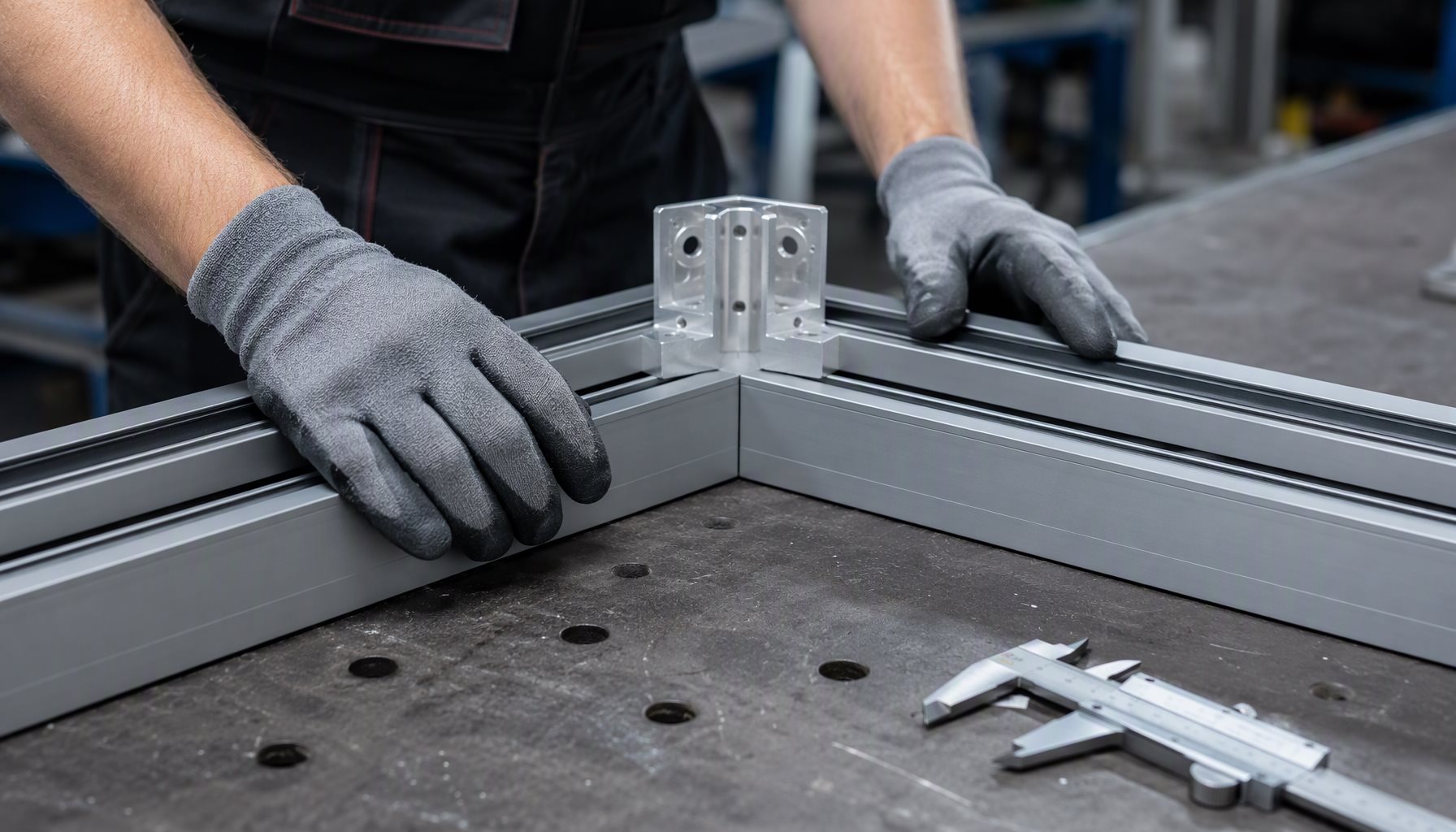
    Aluminum window frame corner assembly on the factory floor during custom window manufacturing.

    The 7-Step Sourcing Process

    1. RFQ with real drawings. Send an opening schedule (width × height per unit, type, quantity), glass specification, finish (RAL or anodized), hardware tier, destination port, and Incoterms. Factories quote what you can specify — a vague RFQ gets a vague price.

    2. Engineering review and quotation. A serious factory responds with an itemized quote: profile system and wall thickness, thermal break spec, glass make-up, hardware brands, packing method, lead time — plus questions about your climate zone and code environment. Expect one or two rounds of value-engineering.

    3. Tooling and extrusion. Semi-custom modifications to existing dies are days of work. Fully new profile dies take a few weeks and carry a tooling fee, commonly amortized or rebated against the first container(s). Confirm in writing who owns the die.

    4. Sample or prototype. Before mass production, produce a working sample — ideally a full window you can operate, glaze-inspect, and water-test locally. Revisions happen here, where they cost a courier fee instead of a container.

    5. Pilot order / first container. Small first batch against real drawings. This is where the relationship is actually qualified: how the factory handles a problem matters more than how it handles a brochure.

    6. Mass production with QC. Standard checkpoints: incoming material verification (alloy and wall thickness on extrusions, PA66 barrier strips, glass and IGU construction, hardware brands against the purchase order), in-process assembly checks, and a final inspection on finished units — typically including functional operation, glass and finish inspection, and water/air testing of sampled units. Third-party inspection (SGS, Bureau Veritas, TÜV, Intertek) is normal, inexpensive insurance; a factory that resists it is telling you something.

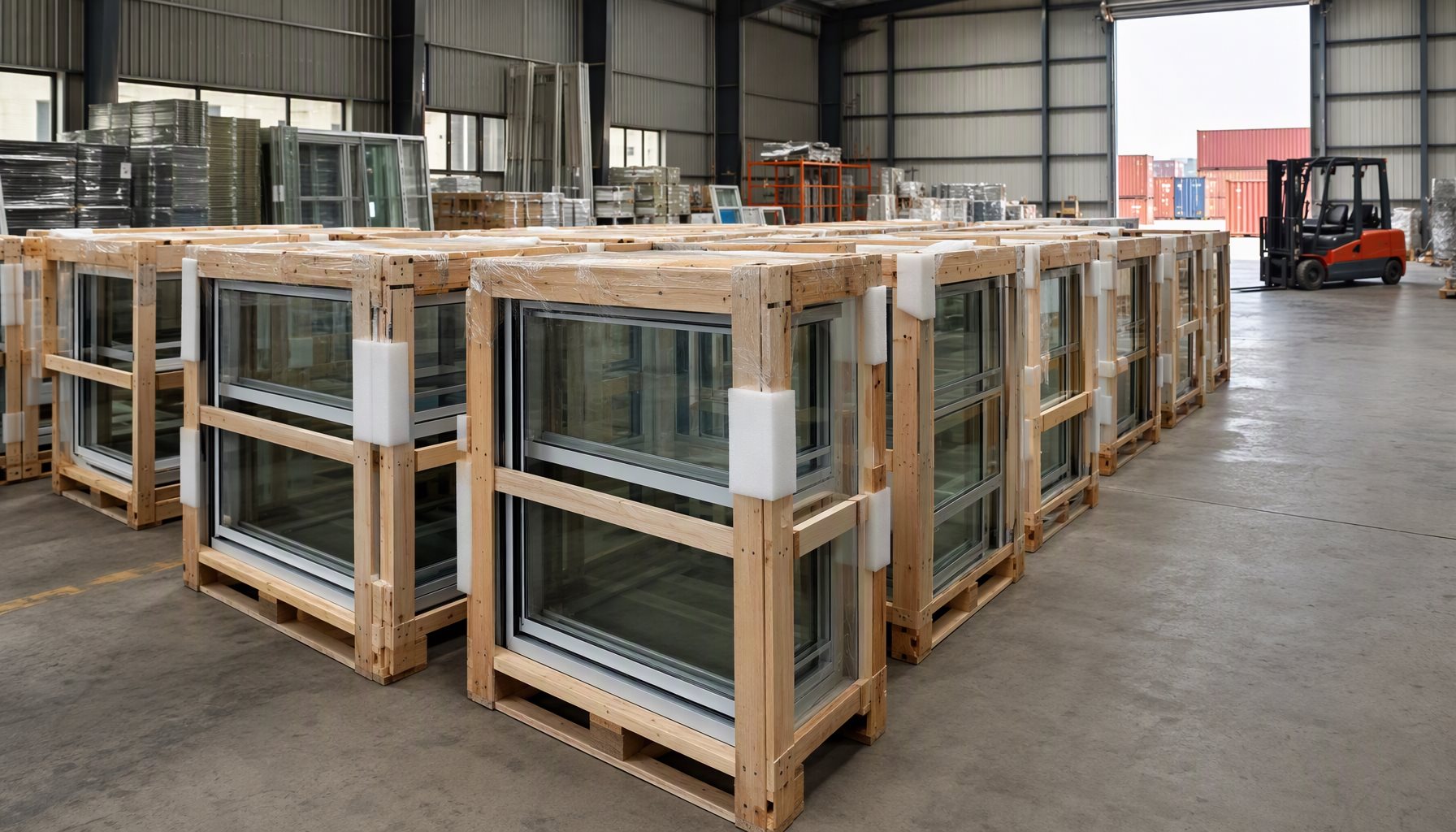
    7. Packing and container loading. Windows ship kraft-wrapped with foam corner protection in engineered crates, glass-to-glass in racks for large panels. Insist on loading photos and a packing list keyed to unit labels — claims are settled with documents, not memories.

    Window export crates and warehouse packaging staged for container shipment from China.

    MOQ, Lead Time, Payment Terms

    The commercial conventions are stable across the industry:

    • MOQ. The practical floor is one 20-ft container (1×20GP), which typically fills with roughly 30–50 window-and-door sets depending on size mix. Smaller trial quantities exist but lose the freight economics that justify importing.
    • Lead time. Tooling (if needed) adds a few weeks; samples about one to two weeks after that; mass production commonly 25–45 days; ocean transit and customs add two to five weeks depending on lane. Plan 45–75 days door-to-warehouse for a standard repeat order, longer for a first OEM run.
    • Payment terms. The industry default is T/T 30% deposit with order, 70% balance against pre-shipment inspection (or against copy of B/L). Letters of credit appear on large project accounts. Never pay 100% upfront, and never let the balance fall due before your inspection has happened.

    Incoterms and Logistics: Who Pays for What, When

    The quote is only comparable to other quotes when the trade terms are explicit. The four Incoterms that matter in window sourcing:

    • EXW (Ex Works): buyer handles everything from the factory gate onward. Lowest quoted price, most work, and the term most often used to make one supplier look cheaper than another.
    • FOB (Free on Board): factory delivers to the Chinese port, cleared for export; buyer owns freight from there. The industry default — it keeps the buyer’s freight forwarder in control of the ocean leg.
    • CIF (Cost, Insurance, Freight): factory pays ocean freight and insurance to the destination port. Convenient for first-time importers, slightly less transparent on what the freight actually cost.
    • DDP (Delivered Duty Paid): factory (or its agent) delivers to the door with duties paid. Maximum convenience, minimum visibility — and duty assumptions buried in the price are worth auditing, because the 2025 tariff environment punishes anyone guessing.

    First containers typically run FOB with the buyer’s forwarder, or CIF while the importer’s logistics chain matures. Whatever the term, the document pack is the same: commercial invoice, packing list keyed to unit labels, bill of lading, certificate of origin, and the product test reports — assembled at booking, not after arrival. US-bound shipments also require ISF (Importer Security Filing) ahead of loading, which the forwarder files; late ISF is a fine, not a warning.

    Certifications a Real Factory Must Hold

    For the North American market, separate what a factory *is certified to* from what a *product has been tested for*:

    • NFRC — energy rating infrastructure. Components are modeled and certified through NFRC-approved simulation and validation labs so finished windows can carry NFRC labels with U-factor, SHGC, and visible transmittance. Ask how the factory’s profiles enter the NFRC component database and which license applies to your product.
    • AAMA coating specifications — powder-coat finish performance tiers (2603/2604/2605) matter for coastal durability; the specification class should appear in the quote, not just the word “powder-coated.”
    • Miami-Dade NOA — for impact-rated products, the product (not the factory) holds the Notice of Acceptance from passing the TAS protocols. Verify the NOA exists, is active, and matches the exact glass make-up being quoted.
    • Structural and thermal testing per ASTM E283/E547/E330 — air, water, and structural performance reports on the actual system.
    • CE (EN 14351-1) and AS2047 — European and Australian marks. They do not certify for the US market, but a factory that maintains them demonstrates a functioning quality system and third-party testing relationships.

    A genuine export manufacturer can produce all of the above per product line within a day or two of being asked.

    Red Flags When Vetting a Supplier

    1. No factory, no problem — for them. Many “manufacturers” are trading companies with polished websites. Ask for a live video walkthrough of the production floor with today’s date on a whiteboard, and the business license scope. (Trading companies are not automatically disqualifying — hiding it is.)
    2. Reports that belong to someone else. Test reports and NOAs must name the exact profile system, glass build-up, and configuration being quoted. “We have NFRC” or “we passed ASTM E1886” without a report per product is the oldest line in the trade.
    3. Prices far below the market band. If a quote undercuts every competitor by 30%, the savings are hiding somewhere specific: 0.8–1.0 mm wall thickness instead of the quoted 1.4–2.0 mm, PVC spacer strips instead of PA66 GF25 thermal breaks, single-seal IGUs, or no-brand hardware. All four pass visual inspection at handover and fail within five years.
    4. No engineering dialogue. A factory that never asks about your climate zone, design pressures, or code environment is quoting a catalog, not building your product.
    5. Refusal of third-party inspection. This one needs no interpretation.
    6. Payment structure games. Full prepayment demands, or pressure to move balances before pre-shipment inspection, invert the risk the terms exist to manage.

    None of these checks requires being in China. Video audits, third-party inspectors, and document verification cover 90% of the risk; a pilot order covers most of the rest.

    FAQ

    What is the typical MOQ for custom aluminum windows from China?

    One 20-ft container is the practical minimum, usually 30–50 sets depending on unit size. Smaller quantities are possible but forfeit the freight economics that make importing worthwhile.

    How long does the full sourcing process take?

    A repeat order runs 45–75 days door-to-warehouse including production and ocean transit. A first OEM run with new tooling and sampling adds several weeks on the front end.

    How do I verify a factory is real?

    Ask for a dated live video walkthrough of production, check the business license scope, confirm test reports per product line, and put a third-party inspector (SGS, BV, TÜV, Intertek) on the pre-shipment inspection. A genuine factory passes all four in a week.

    Can Chinese factories certify windows for the US market?

    Yes — through NFRC component certification for energy ratings, ASTM E283/E547/E330 structural and water testing, and Miami-Dade NOA testing for impact products. What matters is that the certificate covers the exact configuration being shipped, not the factory in general.

    What payment terms are standard?

    T/T 30% deposit with order and 70% balance after pre-shipment inspection is the industry norm; letters of credit appear on large accounts. Avoid 100% prepayment, and keep the balance due until inspection passes.

    —

    *Explore Lansen’s [OEM/ODM program](/oem/) for importers and brand owners, or [request a factory-direct quotation](/contact/) with an itemized spec.*

    Need a Quote for Your Project?

    Lansen manufactures thermally-broken aluminum windows, doors and sunrooms for North American importers, contractors and brands. Get factory-direct pricing, NFRC-rated performance data, and OEM/ODM support.

    Request a Project Estimate  OEM/ODM Program

  • Aluminum Window Cost Guide 2026: What You’ll Actually Pay

    Aluminum Window Cost Guide 2026: What You’ll Actually Pay

    Aluminum window pricing is opaque for a simple reason: the same window can carry three completely different price tags depending on who is selling it and what is included. A US showroom quotes installed retail. A domestic fabricator quotes supply-only. An importing contractor quotes FOB plus freight, duty, and clearance — and lands 20–40% below the showroom number at container quantities.

    This guide breaks aluminum window cost into the layers that actually drive it, walks through a landed-cost calculation for imported windows, lists the hidden costs that blow up budgets, and explains how to get factory-direct pricing with a quote you can actually compare.

    National Averages: What Aluminum Windows Cost in 2026

    For budgeting purposes, the 2025–2026 US market looks like this:

    Window type Supply-only, per window Installed, per window
    Fixed / picture (standard sizes) $250–$600 $450–$900
    Sliding / horizontal roller $350–$800 $600–$1,200
    Casement / awning $400–$1,000 $700–$1,500
    Large-format fixed panel (30+ sq ft) $800–$2,500+ $1,200–$3,500+
    Impact-rated (laminated, certified) $700–$2,000+ $1,200–$3,000+

    Expressed per square foot of opening, aluminum window supply pricing typically runs $40–$120/sf, with installed projects landing higher once site work is counted. Three caveats make averages dangerous:

    • Thermally broken vs non-broken. A true polyamide thermal break adds roughly 10–25% to frame cost. In 2026, unbroken aluminum is largely a niche product for garages and temperate climates; most reputable quotes assume the break.
    • Region. South Florida pricing runs well above national averages because of impact-code requirements; the inland South and Midwest run below them.
    • Volume. A builder buying 60 units pays a different price than a homeowner buying 6. Most published averages reflect the homeowner end of that curve.

    What Drives the Price: Frame, Glass, Hardware, Size

    At the factory level, the cost anatomy of a finished aluminum window follows a fairly consistent rule of thumb:

    Cost component Typical share
    Aluminum extrusion + thermal break ~30%
    Glass / IGU ~25%
    Hardware (locks, rollers, hinges, handles) ~15%
    Labor, assembly, QC ~20%
    Packing, coating, other ~10%

    These shares explain most line-item moves on a quote:

    • Frame. Wall thickness (1.4 mm vs 2.0 mm+), profile depth, and whether the thermal barrier is a proper PA66 strip all move extrusion cost. Powder coating in a standard RAL is included in most quotes; anodizing and special finishes add.
    • Glass. Double-glazed Low-E with argon is the 2026 baseline. Triple glazing adds roughly 15–30%; laminated impact glass adds 30–60% depending on interlayer and thickness; oversized panels jump discontinuously because tempering and handling change class.
    • Hardware. This is where cheap quotes get cheap. Roller systems, multi-point locks, and handles span a 3–5× price range between commodity brands and European marques. On a large slider, the hardware is structural — it is not the place to save $40.
    • Size economics. Cost per square foot falls as units get bigger (fixed panels especially), because the frame perimeter — the expensive part — shrinks relative to glass. A wall of glass in four large panels often costs less than eight small windows covering the same area.
    Double-glazed and triple-glazed insulated glass unit samples, a major driver of aluminum window cost.

    Window Style Economics: Why Type Moves the Price

    Two windows with identical glass and frame depth can differ 40% in price because of what moves. The hardware and operation engineering per style explains most of the spread:

    • Fixed / picture windows are the cheapest way to buy glass: no hardware, no operating tolerances, no gasket travel — just frame, glass, and install foot. Per square foot, a large fixed panel is the best value in the entire catalog, which is why designers mix large fixed panels with a few operable units instead of making everything openable.
    • Horizontal sliders add a roller system, interlocking meeting stiles, and twin weather lines. Moderate hardware cost, but the geometry is forgiving — the reason builders default to them for bedrooms and kitchens.
    • Casements and awnings carry the most expensive per-square-foot hardware of the common styles: hinge systems (or friction stays), multi-point locking, sash gaskets that compress on closure, and egress hinges where bedrooms require them. A casement typically prices 20–40% above an equivalent-area slider.
    • Impact-rated versions of any style add the laminated glass and the heavier frame engineering described throughout this guide — and the glass weight pushes hardware one size class up, which is part of why impact products carry a premium beyond the glass alone.

    When comparing quotes across styles, normalize by *operable square feet*, not total glass area. A wall that solves daylight with two large fixed panels and one casement will usually beat a quote built from six small sliders — same ventilation, fewer hardware sets, fewer gasket lines to maintain.

    Domestic vs Imported: The Landed Cost Math

    Chinese FOB pricing for thermally broken aluminum windows typically undercuts US supply-only pricing by 30–50% for equivalent specification — before shipping and duties. Whether that advantage survives the journey is pure arithmetic. The illustrative math for a 40-ft high-cube container of thermal-break windows looks like this:

    Line item Illustrative range (2025–2026)
    FOB value (e.g., 300–400 sf of windows) $18,000–$35,000
    Ocean freight, 40′ HC, China → US $3,000–$6,000 depending on lane and season
    Duty (Section 232 aluminum derivatives + Section 301) varies — see note below
    Customs clearance, ISF, documentation $500–$1,000
    Inland freight to site/warehouse $1,000–$3,000

    The duty line is the one that changed the math in 2025 and must be verified before any budget is set. Combined Section 232 (aluminum derivative) and Section 301 measures on Chinese aluminum building products reached very substantial percentages of FOB value — on the order of 70–80%+ combined at several points in 2025 — and the rates changed multiple times during the year. Confirm the current HTS classification and rate with a licensed customs broker before comparing any import quote to a domestic one; a quote that ignores this line is not a quote.

    The honest summary for 2026: import economics work best for large custom units, multi-unit projects, and OEM programs where the FOB gap is wide enough to absorb duties and still land 15–30% below domestic supply — and they demand a factory that already documents compliance for the US market. Lead time runs 45–75 days door-to-warehouse including production and ocean transit.

    Hidden Costs That Break Budgets

    Whether windows come from a local dealer or a factory overseas, the installed cost includes layers beyond the window itself:

    • Installation labor: commonly $150–$500 per window for straightforward replacements; oversized units, crane setting, and structural modifications scale well beyond that.
    • Water management: properly flashed sills, pan flashing, and sealant systems. Skipped here, this is where leaks and warranty claims are born.
    • Interior finish: drywall returns, jamb extensions, stools, and casing are typically quoted separately by trim carpenters.
    • Permits and compliance: energy-code documentation, egress requirements in bedrooms, and — in wind-borne debris regions — impact-rated product submittals that need an approval path before ordering.
    • Old window removal and disposal, plus lead-safe practices on pre-1978 housing.
    • Oversize engineering: anything beyond standard sizes may need structural review of lintels and anchorage.

    On full-home projects, these site costs routinely add 30–50% over the supply price of the windows themselves. Budget them first, then shop for the windows.

    Aluminum window set in a prepared rough opening, showing the site labor included in aluminum window cost.

    How to Get Factory-Direct Pricing

    A comparable factory-direct quote — one you can line up against a domestic bid — requires an RFQ with real content. Send the factory:

    1. Opening schedule with width × height per unit, type (fixed/casement/sliding), and rough-in conditions.
    2. Glass specification: double or triple, Low-E coating targets (U-factor and SHGC), argon, and any impact/laminated requirement.
    3. Finish: RAL number or anodized tone, interior/exterior if dual-color.
    4. Hardware brand tier and any certification requirement (NFRC component data, Miami-Dade testing, etc.).
    5. Destination port and Incoterms (FOB, CIF, or DDP) so the quote is complete and comparable.

    A serious factory responds with a quote that itemizes profile system, wall thickness, thermal break spec, glass make-up, hardware brand, packaging method, and lead time — and asks questions about your climate zone and code requirements before pricing. If a quote arrives with none of those specifics and a price 40% below everyone else, the missing line items are the answer.

    For OEM and brand-owner programs, the same RFQ package starts tooling and engineering review; the factory-direct channel is where container-quantity pricing, private labeling, and project-specific engineering are negotiated.

    Warranty, Service, and the True Cost of Cheap

    A window’s price tag buys the unit; its warranty buys the years. Reading the two together is where budgets get honest:

    • Glass seal warranties on quality insulated units commonly run 10–20 years against fogging; hardware is warrantied for far shorter — sometimes one to five years on commodity components, longer on named brands; finishes are warrantied by class, with AAMA 2605-class powder coat carrying the strongest color and film-integrity coverage.
    • What voids them is predictable: improper installation (unflashed openings, missing shims), non-approved cleaning solvents, and site modifications to the frame. If the installer and the manufacturer are different companies, get the installation requirements in writing before the order — that document is what separates a covered failure from a contested one.
    • For imported windows, service is a logistics question: hardware is the first thing to need replacement in year 8–15, so spec hardware brands with North American distribution, and hold spare rollers, gaskets, and handles from the production run. A factory that will quote a spare-parts kit with the container is thinking about your year-ten, not just your delivery date.

    The pattern across long service histories is consistent: the expensive window and the cheap window cost the same by year fifteen — the cheap one just pays in installments, with interest paid in callbacks.

    FAQ

    How much do aluminum windows cost per square foot in 2026?

    Supply-only pricing typically runs $40–$120/sf of opening depending on frame system, thermal break, and glass package, with installed costs higher once site labor and finishing are included. Large-format fixed panels land at the low end of the per-square-foot curve; small operable units land high.

    Why is there such a price difference between quotes?

    Almost always four line items: wall thickness and profile depth, the thermal barrier specification, glass make-up, and hardware brand. A quote missing those specifics is pricing a different window, not a discount on yours.

    Are imported aluminum windows cheaper?

    FOB pricing from China typically undercuts domestic supply by 30–50% for equivalent spec, but ocean freight, inland freight, and duties — which for Chinese aluminum products reached very substantial combined percentages in 2025 — narrow the advantage. At container scale with correct duty budgeting, imports commonly land 15–30% below domestic supply; verify current duty rates with a customs broker before committing.

    How much more does a thermal break cost?

    Typically 10–25% over an unbroken frame. Given that it can move whole-window U-factor from the 0.50–0.70 range into the 0.28–0.40 range, it is the highest-value upgrade on the quote sheet.

    What is the biggest hidden cost in window replacement?

    Site work — installation labor, flashing, interior trim, and disposal — which commonly adds 30–50% over supply price on full projects. In impact zones, permit and product-approval submittals add administrative cost and lead time that budgets routinely miss.

    —

    *Get a line-itemed factory-direct quote through our [RFQ page](/contact/), or review our [OEM program](/oem/) for importers and brand owners.*

    Need a Quote for Your Project?

    Lansen manufactures thermally-broken aluminum windows, doors and sunrooms for North American importers, contractors and brands. Get factory-direct pricing, NFRC-rated performance data, and OEM/ODM support.

    Request a Project Estimate  OEM/ODM Program