Part of our door specification series — see the full doors page.
A sliding glass door that sticks, fogs, or rattles is not always a lost cause — and buying a replacement sliding glass door is not always the right first move. The decision depends on what failed: the rollers, the frame, the glass, or the whole thermal package.
This guide walks through the repair-versus-replace call, how to measure for a replacement, the glass and frame options, and what to check before you order so the new door fits and performs.
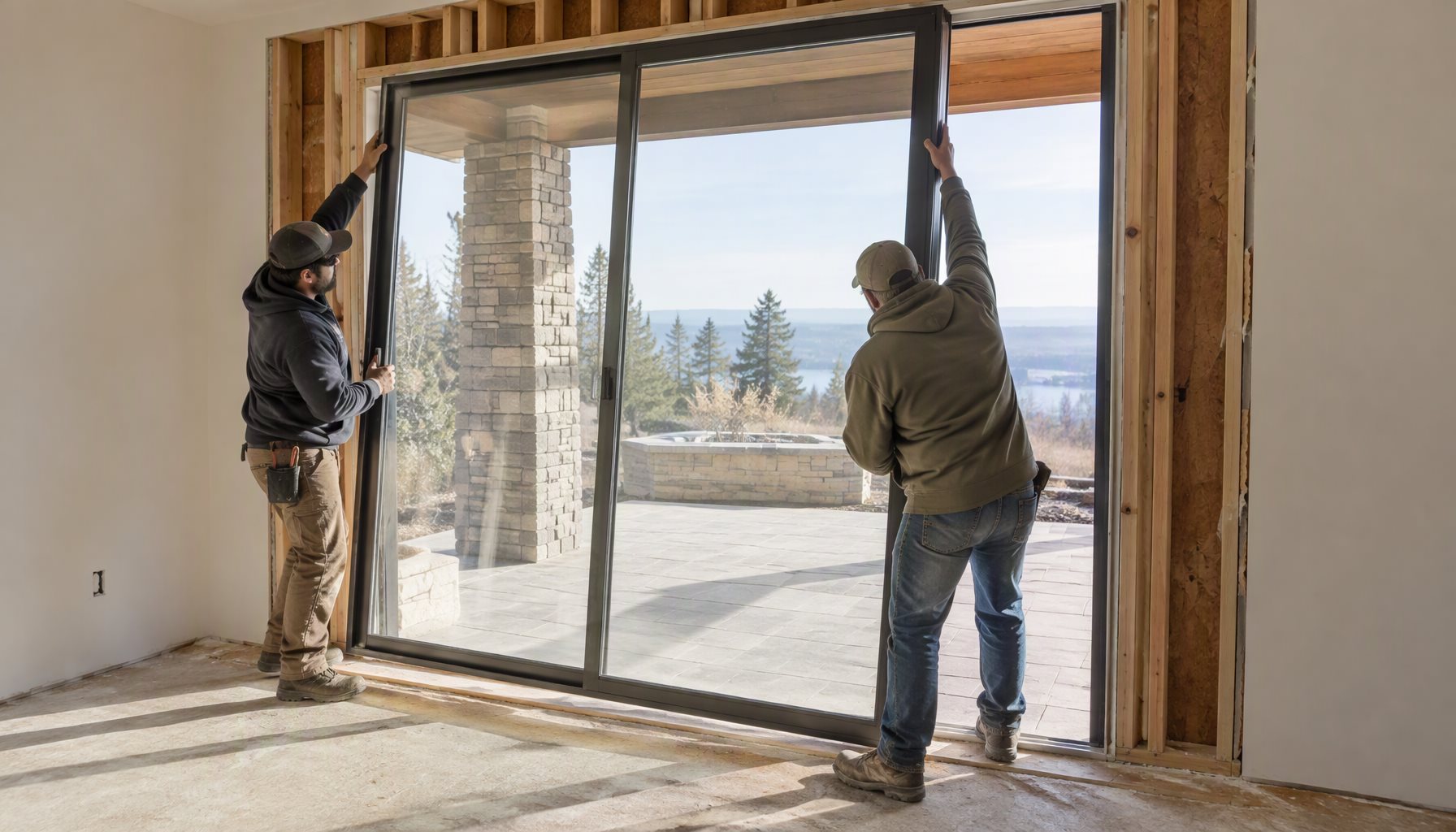
Quick Summary
| Question | Short answer |
|---|---|
| Repair or replace? | Rollers and tracks are repairable; a failed seal, warped frame, or outdated glazing usually means replace |
| Can you replace just the glass? | Often yes, if the frame is sound |
| What to measure first | Rough opening and panel size — not the old door |
| What matters most | Glass package, frame thermal break, and roller quality |
| Biggest ordering risk | Getting the panel size or handing wrong |
Repair or replace: how to tell
Start with the symptom, not the price.
- Sticks or drags — usually worn rollers, a dirty track, or a door that has settled out of level. This is normally a repair, and it is often cheaper than replacing.
- Fog between the panes — the insulating glass unit’s seal has failed. The glass can be replaced in a sound frame, but if the frame is also aging, a full replacement is worth considering.
- Water or drafts at the edges — points to worn weatherstripping, a failed seal, or a frame that has moved. Repair is possible, but repeated leaks suggest the assembly itself has reached the end of its life.
- Warped or corroded frame — replacement. No amount of new rollers fixes a frame that has lost its shape.
A useful rule: if the failure is in the hardware, repair it; if the failure is in the frame or the glass unit, the replacement math usually favors a new door.
What to measure before you order
A replacement sliding glass door is ordered to dimensions, and the most expensive mistake is measuring the old door instead of the opening.
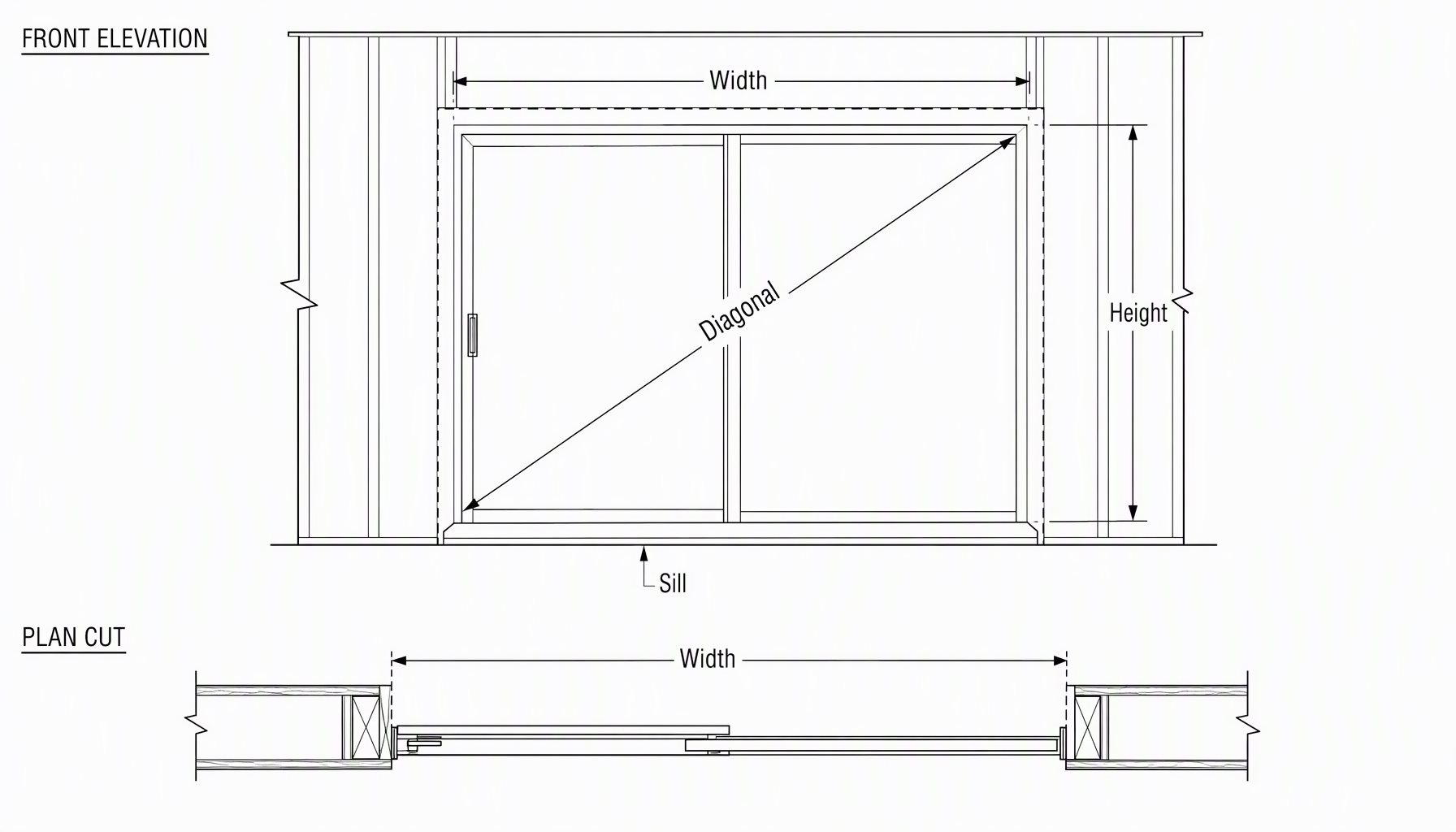
- Measure the rough opening — the framed hole in the wall — width and height, at multiple points, because openings are rarely perfectly square.
- Record the handing and which panel slides (viewed from the exterior).
- Note the sill type and whether the door is a two-, three-, or four-panel configuration.
Take the width at three heights — near the head, at mid-opening, and just above the sill — and take the height at three positions across the opening. Record the narrowest reading in each direction: a replacement has to fit the tightest point, not the average. Then measure both diagonals corner to corner. If they differ, the opening is racked, and the frame can only be made plumb with shims and packing. That is workable up to a point, but a badly out-of-square opening will fight you later on roller adjustment and on lock-strike alignment.
Two further readings decide whether the door sits right. First, the depth of the opening: the frame has to suit the wall build-up, including the exterior finish and interior trim, so measure wall thickness at several points and note any jamb return. Second, the relationship between the sill and the finished floor. If the floor is going to be redone, the threshold height changes after the door is set, so state which floor level the door is being built to. Where a sub-floor or slab is exposed, say so on the order instead of leaving the installer to absorb it.
Many replacement doors are built to common rough-opening sizes, which is why standard sliding door sizes are a useful reference — but confirm against the system’s own requirements rather than a generic chart. Our rough opening guide shows how the opening is set out.
When only the panel or the glass is being replaced
A fogged unit in a sound frame does not always justify pulling the whole door. Two narrower options exist, and each has its own trap.
Replacing the insulating glass unit only. The new unit is ordered to the dimensions of the existing IGU, not to the size of the glass you can see, because part of every pane sits inside the frame’s glazing rebate. Getting that number means removing a glazing bead, which on an older door can be painted in, caulked, or brittle enough to snap. Confirm the beads come out intact before committing, and record the unit’s edge build-up — spacer width, gas fill if any, and rebate depth — so the replacement matches the original profile.
Replacing the sliding panel only. Here the frame stays and the sash is new, which means the panel must match the existing frame’s track geometry, roller pocket and interlock profile. Aluminum door systems are not interchangeable between manufacturers, or even between series from the same manufacturer, and no amount of hardware adjustment makes a mismatched panel run quietly. If the frame is outside the supplier’s current range, a panel-only swap usually costs more than a complete door by the time the fitting is finished.
Both options assume the frame is straight, the anchors are sound and the sill still drains. If any of those fail, the narrower repair is a delay rather than a saving.
Glass and frame options for the replacement
The performance of a sliding door is mostly the glass package plus the frame’s thermal break.
- Glass. A modern insulating glass unit with a Low-E coating and argon fill improves thermal and solar performance (U-factor and SHGC) over older double glazing — see what a Low-E argon unit adds.
- Frame. An aluminum frame should be thermally broken so the interior and exterior metal are separated; without that break, the frame conducts cold straight through and the glass upgrade is partly wasted.
- Hardware. Rollers carry the entire panel weight, so the replacement should use quality bearing rollers and a rigid track. This is the difference between a door that rolls for years and one that drags in two.
For impact-prone coastal locations, the door may need to be an impact-rated assembly tested to the applicable design pressure — check before you order rather than after.
How the replacement is installed
Installation is where a good door becomes a leaky one. The key points:
- The frame must be set level and plumb, and anchored to the structure, not just shimmed and caulked.
- The sill must be detailed to drain — water that gets past the door should have a path out, not into the wall.
- Flashing and sealing follow the same rules as a window: continuity of the air and water barrier matters more than the door itself.
If the existing opening is badly out of square or the sill is compromised, budget for opening repair as part of the replacement rather than forcing a new door into a bad hole.
A note on thermal continuity: the frame’s thermal break matters most at the edges, where the panel meets the jamb and sill. If the replacement frame is not broken, the glass package alone cannot carry the thermal performance, and the door will feel cold and condense at the perimeter even with good glass.
What to confirm before the order goes out
The sequence that keeps a replacement from going wrong is short: settle the opening dimensions, then the system, then the paperwork. Once the measurements are recorded, choose the frame and glass against the performance you actually want — the specification side is covered in our sliding glass door specifications guide. Then confirm the handing, the sill condition, and who removes the old door.
Before anything is built, get three things in writing: the dimensions you supplied and the ones the supplier drew back to you, the glass build-up with its rated values for that exact assembly, and the test documentation or performance label that backs them. A door built to a misread dimension is not a warranty claim — it is a second order. And if the wall is being opened up, inspect the sill and sheathing once the old frame is out; that is the moment when a small repair is still cheap.
Decision guide: what to order
| Your situation | What to do | Why |
|---|---|---|
| Door drags or sticks | Replace rollers and clean the track | Hardware failure, not assembly failure |
| Fogged glass, sound frame | Replace the glass unit | Cheaper than a full door |
| Warped frame or failed seals | Full replacement | Frame and glazing are past repair |
| Upgrading performance | Thermally broken frame + Low-E/argon glass | Biggest thermal gain |
| Coastal / impact zone | Impact-rated tested assembly | Code may require it |
Frequently asked questions
When should I replace a sliding glass door instead of repairing it?
Replace when the failure is in the frame or the glass unit — a warped or corroded frame, a failed seal, or glazing that no longer meets your performance needs. Rollers and tracks are usually repairable.
Can you replace just the glass in a sliding glass door?
Often yes. If the frame is sound, the insulating glass unit can be replaced on its own, which is cheaper than a full door. If the frame is aging or the glazing is outdated, weigh that against a full replacement.
What are standard sliding glass door sizes?
Widths cluster around a few common rough-opening dimensions and heights usually run between 6 ft 8 in and 8 ft, but the number that governs your order is your own opening, measured at several points. Our standard sliding door sizes guide covers the usual ranges by panel count.
How do you measure for a replacement sliding glass door?
Measure the rough opening width and height at multiple points, record the handing and which panel slides, and note the sill type. Measure the opening, not the old door.
What does a replacement sliding glass door cost?
It varies significantly by size, frame, glass package, hardware, and installation scope. A thermally broken aluminum door with a Low-E argon unit costs more than a basic aluminum door, and installation can add materially to the total — get a quote against your specific opening.
How long do sliding glass doors last?
Service life depends on climate, finish, hardware quality, installation, and maintenance. A well-made door with good rollers can perform for decades, but a poorly installed or poorly maintained door can fail much sooner.
What should I look for in a replacement sliding glass door?
A thermally broken frame, an insulating glass unit with Low-E and argon, quality bearing rollers on a rigid track, and a sill detailed to drain. In coastal or impact zones, confirm the assembly is tested and approved for the design pressure.
Need a replacement sliding glass door for your project? Send your rough opening, handing, and performance requirements. Our team can review the glass package, frame, and hardware before production — contact Lansen.