Aluminum conducts heat readily, which is exactly why a door left as a bare aluminum frame becomes the coldest surface in a wall. Thermally broken aluminum doors solve that at the finished-door level: a low-conductivity barrier is inserted between the outside and inside frame rails so heat, cold and — just as importantly — condensation no longer travel straight through the metal. The result is a door that keeps aluminum’s strength, slim sightlines and durability while behaving far more like a building-physics product than a piece of extruded metal.

What the Break Does on a Finished Door
A thermal break is a rigid, low-conductivity bar — typically reinforced polyamide — mechanically or structurally joining the exterior aluminum rail to the interior rail, so the two metals never touch directly. On a door, this matters more than on many windows because a door is a large assembly with a big frame perimeter, frequent hand contact, and a threshold sitting in the coldest part of the wall. Reducing conduction through the frame lifts the interior surface temperature, which is the single most effective way to control the condensation that otherwise forms on a cold door stile.
The window-side version of this logic is covered in our thermal break windows guide; the same principle simply has to be carried through the taller, heavier members a door uses.
Frame, Glass and Whole-Door Performance Are Different Numbers
It is worth being precise about what you are quoting, because a broken frame does not automatically equal a good whole-door number. A door’s thermal behaviour is the combined result of the frame (Uf), the glazing (Ug) and the assembled product (Uw), and the whole-door value depends on frame geometry, glass build-up, spacer, size and the calculation method. Rather than repeat the ratings mechanics here, our dedicated piece on aluminum window U-factor explains how a whole-product Uw is derived and why a bare “U 1.x” claim on a quote can hide a very different assembly.
The practical takeaway for doors: a thermal break improves the frame contribution, but the glazing and the size of glass-to-frame area decide the whole-door figure. A thermally broken frame behind a poor single-glazed infill is still a poor door.
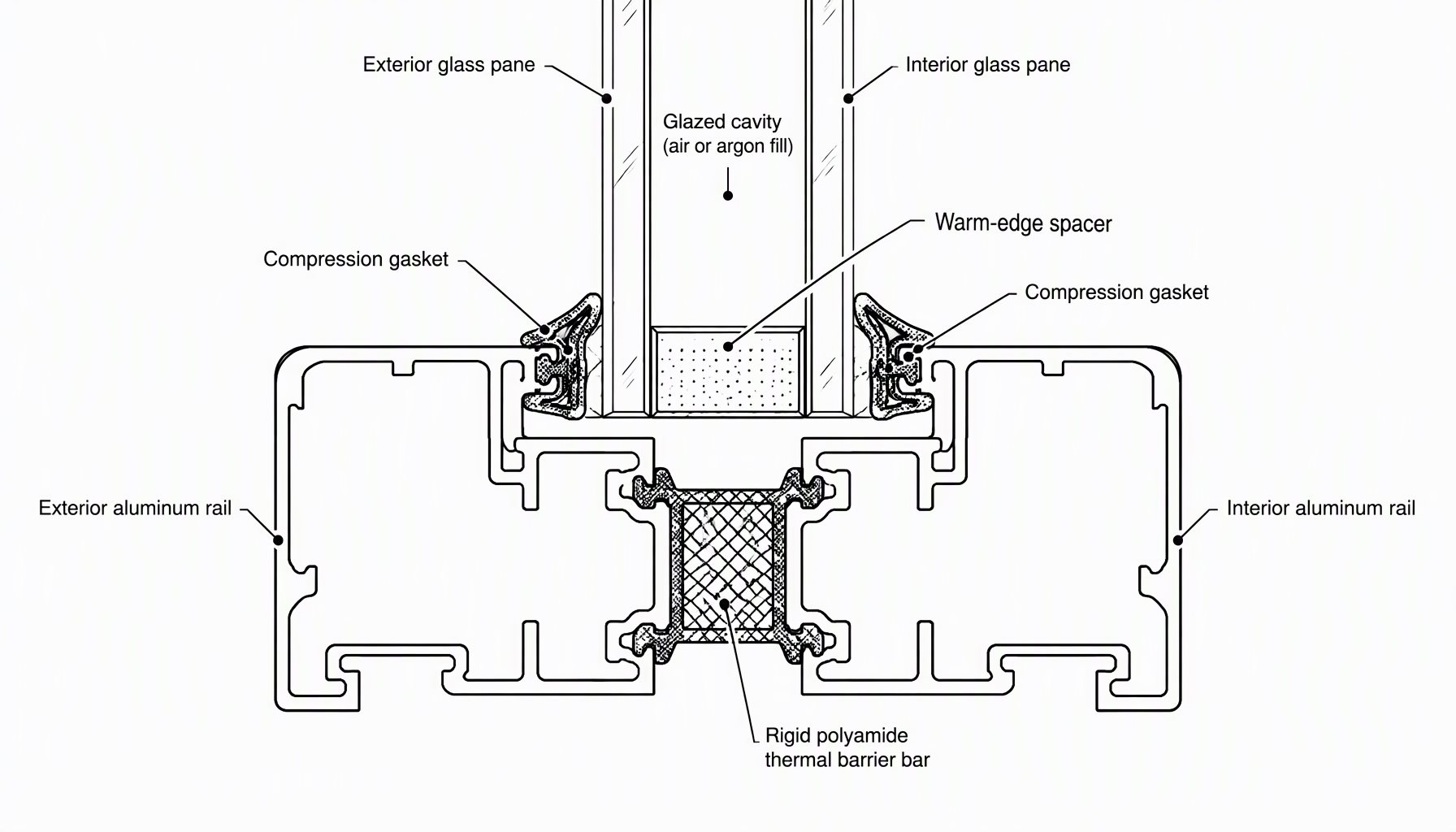
Condensation Control on Thermally Broken Aluminum Doors
The reason buyers feel a thermal break most is condensation, not the heating bill. A cold interior frame rail drives the surface below the dew point, and water runs down the stile onto the floor. Breaking the frame raises that surface temperature, and pairing it with warm-edge spacers and low-emissivity glass — the same coated insulated build-up described in our Low-E argon glass guide — keeps the glazed area as warm as the frame. When condensation still appears on a broken door, the cause is usually room humidity or a cold threshold rather than the frame itself, a diagnosis we treat on the glazing side in condensation inside double glazing.
The threshold is its own detail. A thermally broken door with a non-broken metal sill or an uninsulated panel zone undoes much of the benefit, so the full assembly — stile, rail, sill, any side panels — needs to be specified as one thermal system.
Door Types That Benefit Most
Every aluminum door family in our aluminum doors guide can take a thermal break, but the payoff varies. Sliding and patio doors have long spans of glass and a big track that runs through the coldest zone, so a broken frame plus a thermally separated sill is where the difference shows; the structural and hardware side of those is in sliding glass doors specs. Entrance and pivot doors get the most hand contact and the largest single-leaf sightlines, so frame warmth is felt directly. Interior-only doors rarely need the expense. That is precisely why thermally broken aluminum doors are specified on cold-climate and mixed-climate projects from the outset rather than added after the fact.

What to Specify — A Decision Matrix
| Project Requirement | Recommended Choice | Why |
|---|---|---|
| Cold or mixed climate exterior door | Broad thermal break, insulated glazing, warm-edge spacer, broken sill | Keeps the whole frame and sill above the dew point to control condensation and interior comfort |
| Large sliding or patio door | Thermally broken frame plus a thermally separated track/sill | Long glass spans and a cold running track are where an unbroken frame fails first |
| Coastal or high-humidity project | Break plus a compatible protective finish on both rails | Warm interior surfaces reduce condensation that would otherwise sit against the frame and hardware |
| Interior or mild-climate door | Standard non-broken aluminum may be sufficient | A break adds cost where the temperature difference across the frame is small |
Verification: What the Rating Has to Reflect
A credible thermal claim on a broken door describes the tested or calculated configuration, not the marketing name. Whole-product energy ratings for fenestration are produced under the NFRC procedures and certified through its label program, documented at NFRC. When you compare quotes, ask which number is being given — a frame value or a whole-door value for the size you are ordering — and match it against the climate-zone guidance behind ENERGY STAR certified doors and windows. Energy-code thresholds that a project must clear are set by the code your jurisdiction adopts; the International Code Council publishes the residential and commercial code families those requirements come from. Note also that a thermal rating is separate from structural, air and water performance under the North American framework — a broken frame says nothing on its own about design-pressure or leak ratings.
Frequently Asked Questions
Are thermally broken aluminum doors worth the extra cost?
For exterior doors in cold, mixed or high-humidity climates, usually yes: they raise interior surface temperature, cut condensation and improve comfort. For interior or mild-climate doors the gain is often too small to justify the premium.
Does a thermal break change the whole-door U-value on its own?
No. It improves the frame contribution. The whole-door value still depends on the glazing, spacer and size, so a break behind poor glass stays a poor assembly.
Why does my broken door still sweat?
Most often it is room humidity, a cold threshold, or a non-broken sill panel rather than the main frame. Check those surfaces before blaming the break.
Is a thermal break the same on a door as on a window?
The principle is identical, but a door applies it to taller, heavier members and to a sill and track that sit in the coldest part of the wall, so the detailing is more demanding.
Do sliding doors need a break more than hinged doors?
Sliding and patio doors benefit a lot because of the long cold track and large glass area, but any exterior door with a meaningful temperature difference across it gains from a broken frame.
Can I tell if a door is thermally broken from the outside?
Not reliably. Ask the supplier to show the profile section and the rating for the exact configuration; a visual glance cannot confirm a polyamide barrier.
Specify the Whole Door, Not Just the Frame
A thermal break only pays off when the glass, sill, threshold and panels are specified with it. Send your door type, size, climate, and any structural or energy requirements, and the Lansen team can review the full assembly — break, glazing and hardware — before fabrication.
Send your drawings to our engineering team for a thermal and specification review.