Search for curtain wall fabricators and you will get a long list of companies that all claim to build facades. The hard part is not finding one — it is verifying which of them can engineer, fabricate, and test a wall that passes a specified performance class and a field water test on your building.
This guide is a vendor-qualification checklist for architects, general contractors, and project buyers. It covers what a fabricator actually does, the difference between a fabricator and a trader, the documents that matter, and the questions that separate a real fabricator from a reseller.
What a Curtain Wall Fabricator Actually Does: Fabrication Scope
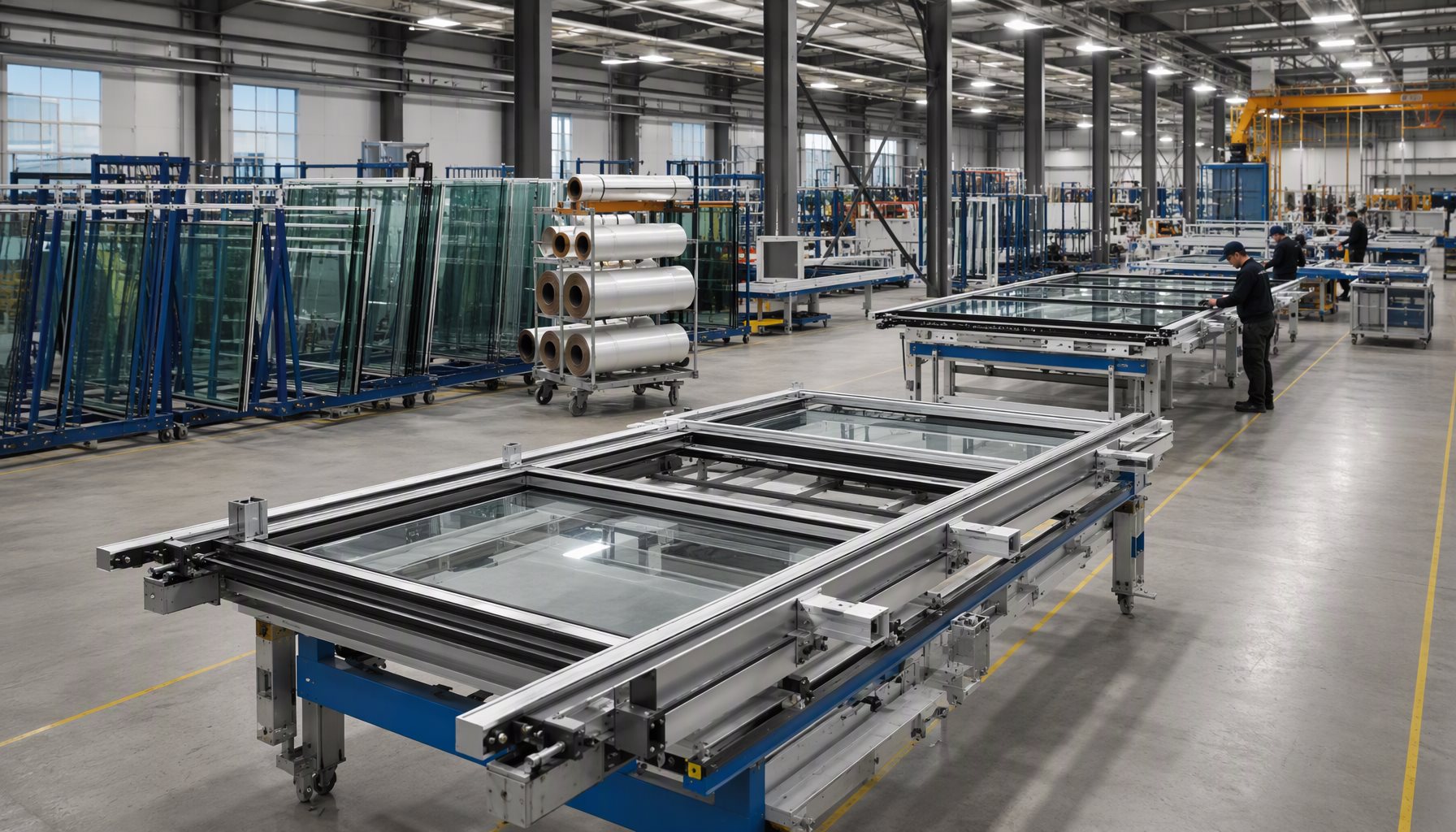
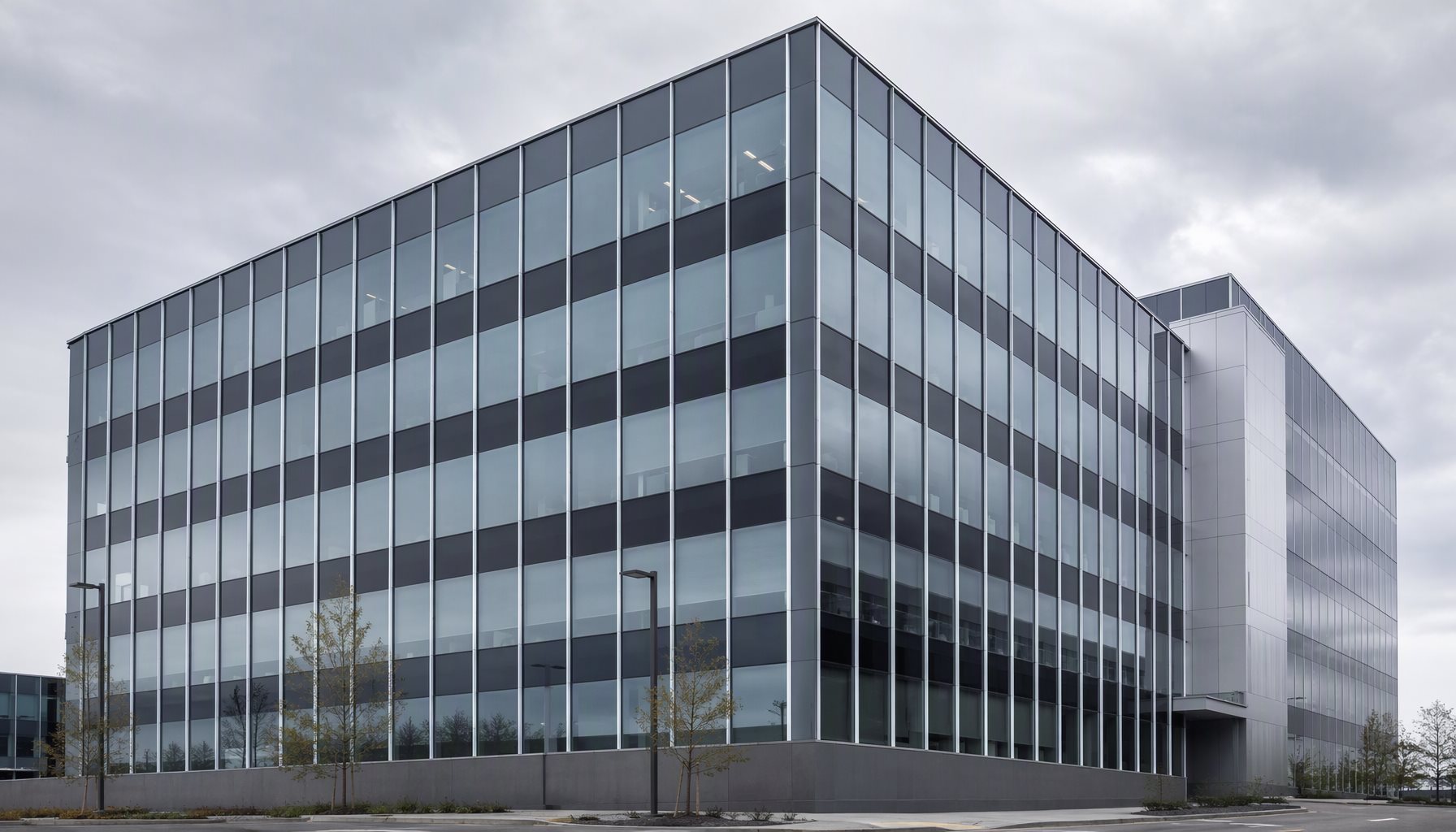
A curtain wall carries its own weight and resists wind load, transferring both back to the building structure — it does not support the building. Fabricating that wall is an engineering and assembly job, not just a cutting job. The fabricator takes the profile system, cuts and machines the mullions and transoms, fabricates the panels or stick components, and prepares them for glazing and installation.
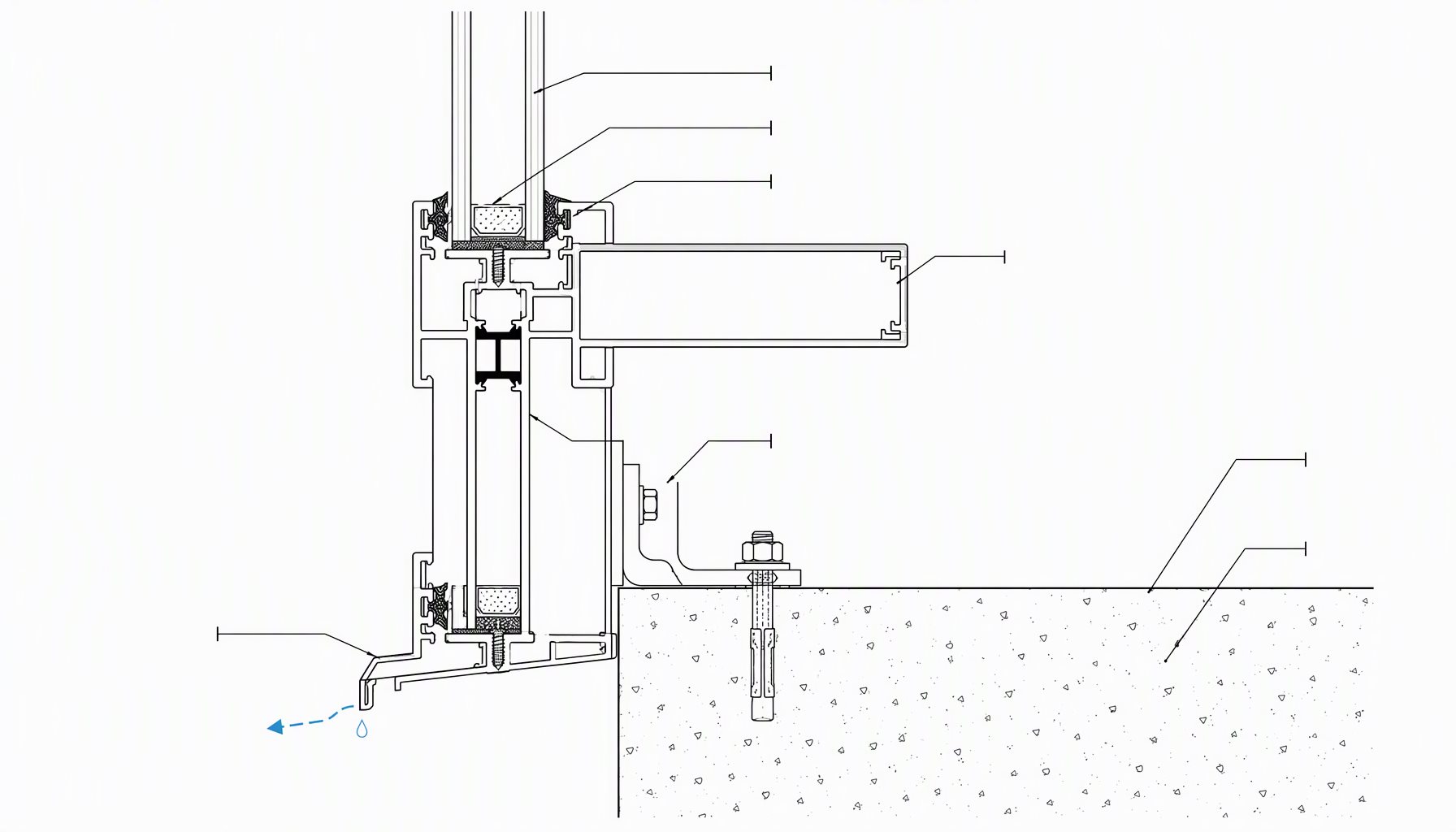
That means the fabricator is accountable for the parts of the wall that fail invisibly: corner joinery, drainage paths, anchor geometry, gasket seating, and thermal break continuity. A fabricator who cannot explain how water leaves the wall and how the anchors transfer load is not really fabricating a curtain wall — they are cutting and shipping profiles.
Curtain Wall Manufacturers vs Fabricators vs Traders: Where Accountability Sits
| Supplier type | What they do | What to verify |
|---|---|---|
| Profile manufacturer | Extrudes the aluminum profiles and system components | Alloy, temper, system design ownership |
| Fabricator | Cuts, machines, and assembles the wall from a system | In-house engineering, joinery, QC, testing |
| Trader / reseller | Buys from a fabricator and resells | Whether they control any production at all |
The distinction matters because accountability lives with whoever controls production. A trader can be competent, but when a panel comes back with the wrong anchor holes or a missed drainage weep, you want one party who owns the line it came from. For project work, ask directly: who fabricates this, and can I trace a unit back to the fabrication line?
The same question has a scheduling consequence. When fabrication and engineering sit under one roof, a shop drawing comment closes in days; when the drawings travel through a reseller to a third factory, each revision costs a round trip you cannot see on the schedule.
Commercial Curtain Wall Fabrication: What Changes on a Real Project
Commercial curtain wall fabrication differs from residential assembly in three ways that a buyer can check. First, the shop drawings are project-specific: every mullion, transom, anchor and movement joint is engineered for that building rather than adapted from a catalogue. Second, the fabrication tolerances are defined and measured, not implied. Third, the assembly is tested as a system — air, water and structural — before it reaches site.
That is also why curtain wall fabrication capacity is hard to judge from a factory tour alone. The question is not whether the shop can cut and crimp aluminium; it is whether the engineering, the mock-up discipline and the inspection records exist behind the cutting. Ask to see a project’s shop drawing set and its fabrication inspection records, not just the finished wall.
Test reports vs. certificates: the documents that matter
A certificate and a test report are not the same thing, and a wall of certificates does not make a facade code-compliant.
- A certificate describes a company system or a declared product family — an ISO 9001 quality certificate, or a CE Declaration of Performance for the European market.
- A test report names a specific specimen, a specific standard, and a specific result — for example air leakage, water penetration, and structural performance tested to the relevant ASTM methods.
For North American work, the framework that ties these together is NAFS — the North American Fenestration Standard for windows and doors, with the curtain wall counterpart covering glazed exterior wall systems — which assigns a performance class and a design pressure grade. Confirm the fabricator can state the class and grade for the exact configuration you are quoting, and can produce the report that proves it. For thermal and solar values, the relevant numbers come from NFRC procedures.
The engineering questions to ask curtain wall fabricators
Run every candidate through these six questions. A credible fabricator answers with drawings and reports, not assurances.
- Do you own the profile system, or are you licensed to fabricate it, and who carries the system’s engineering responsibility?
- Can you produce structural calculations and anchor design for our building, or are you copying a catalog detail?
- What is the tested performance class and design pressure for this exact profile, glass, and size — and can I see the report?
- How does water leave the wall? Walk me through the drainage and pressure-equalization path.
- How is the thermal break continuous through the mullion, transom, and corner?
- What fabrication and QC records do you keep, and can you trace a lot from raw material to finished unit?
These questions are deliberately about mechanism, not marketing. A fabricator who can answer them is demonstrating engineering ownership, which is exactly what a curtain wall contract requires.
How to verify a fabricator before you award
Documents are the first filter; physical verification is the second.
- Order a mockup. A corner or panel mockup reveals joinery, sightline, gasket fit, and finish quality far better than a PDF. Approve the mockup in daylight, against the actual vision and spandrel glass.
- Walk the factory. Confirm the machining and assembly you were promised actually exist — CNC cutting, corner processing, gasket seating — and that the QC records are real, not framed posters.
- Use third-party inspection. For first projects, an independent pre-shipment inspection verifies quantity, workmanship, and conformance against the purchase order.
- Check references. Ask for completed projects the fabricator can actually name, ideally in a similar climate and building type. A fabricator who will not share references is telling you something.
Glazing selection deserves the same scrutiny as the framing. A facade’s thermal and solar performance travels mainly through the glass, so ask how the glass package was chosen for the orientation and climate — not just which coating brand was used.
For impact-prone coastal locations, the wall may need to be an impact-rated assembly with a Miami-Dade Notice of Acceptance where the local authority requires one — verify before you award, not after. The same discipline that applies to vetting window suppliers in China sourcing applies here, scaled up to a facade.
Field testing: what the lab cannot catch
A curtain wall that passes a laboratory test can still leak on your building, because field joints, sealants, and drainage are installed by people rather than machines. Field water testing verifies the completed wall in place, and it is the step that most often catches reversed laps, blocked weeps, and missing sealant before a building is occupied.
Confirm who pays for field testing, what standard it follows, and what happens if a test fails — before you award. Testing expectations vary by jurisdiction, so check the requirements for your specific project rather than assuming a national rule. The International Code Council publishes the model codes most US jurisdictions adopt.
Decision guide: what to prioritize
| Your situation | What to prioritize | Why |
|---|---|---|
| First facade project | Mockup + third-party inspection | De-risk before awarding volume |
| Custom or high-wind facade | In-house engineering + named test reports | Engineering ownership is non-delegable |
| Commercial / high-liability project | Fabricator with traceability, not a trader | One accountable party |
| Coastal / hurricane zone | Approved product for the jurisdiction + tested assembly | Codes reference approved products |
A practical sequence is: shortlist → document audit → factory walk → mockup → sample or pilot → award. Most bad facade outcomes are avoided in the first three steps, before any metal is cut. Document every answer you receive in writing, because the value of the qualification exercise is the record it leaves when a question comes up two years into the project.
How the wall is assembled is a separate decision that shapes the shortlist: stick systems are built in the field from members, while unitized systems arrive as glazed panels fabricated and QC’d in the plant. Compare them in stick vs unitized curtain wall before you evaluate who builds which.
Frequently asked questions
What does a curtain wall fabricator do?
A curtain wall fabricator cuts, machines, and assembles the mullions, transoms, and panels of a curtain wall from a profile system, and is accountable for the joinery, drainage, anchoring, and thermal break continuity that decide whether the wall performs.
What is the difference between a fabricator and a manufacturer?
A profile manufacturer extrudes the aluminum system; a fabricator turns those profiles into a finished wall. Some companies do both, but for project work the question that matters is who owns the fabrication and can be held accountable for it.
What certifications should curtain wall fabricators have?
It depends on the market. For North America, look for a stated performance class and design pressure backed by ASTM-based test reports and NFRC thermal ratings; for impact products, the approval your jurisdiction requires. For Europe, EN 13830 with CE marking. There is no single global certification.
Is a certificate the same as a test report?
No. A certificate describes a company system or a declared product family; a test report names a specific specimen, standard, and result. For code compliance, ask for the test report that matches your exact profile, glass, hardware, and size.
How do I verify a curtain wall fabricator?
Run the engineering questions in this guide, request test reports for your exact configuration, order a mockup, walk the factory, and use third-party pre-shipment inspection on the first project.
Why does field water testing matter?
Because a wall that passes a laboratory test can still leak if the field joints, sealants, and drainage are installed wrong. Field water testing verifies the completed wall on your building, not a specimen in a lab.
Does a passing test report cover every size on my building?
No. A test report proves the behavior of the tested specimen and its rated size limits. Ask whether your widest panel, heaviest insulated glass unit, and any unusual anchor condition fall inside the tested range or need engineering of their own.
How do curtain wall manufacturers differ from fabricators?
A curtain wall manufacturer typically extrudes or owns the profile system; a fabricator turns those profiles into finished wall panels for a specific project. Many larger suppliers do both, which is why the distinction matters at the accountability level rather than the capability level. Curtain walling manufacturers who only supply profiles leave the assembly responsibility with the fabricator.
Are curtain walling manufacturers the same as fabricators?
No. Curtain walling manufacturers produce or own the profile system; fabricators cut, machine, assemble and seal those profiles into project panels. A supplier that only manufactures profiles and does not fabricate cannot answer for a finished wall’s air and water performance, so ask which role the company actually performs before you treat a quote as comparable.
How do I choose an aluminum curtain wall panel manufacturer?
Judge an aluminum curtain wall panel manufacturer on three things you can request before an award: a project-specific shop drawing set, test reports for the exact system and size being proposed, and fabrication inspection records from a comparable job. A supplier who can produce all three is a manufacturer in the sense that matters; one who can only show a catalogue is not.
Need a curtain wall fabricated for your project?
Send your elevation, performance requirements, and schedule. Our team can review the system, anchoring, glazing, and testing requirements before production — contact Lansen or review our fabrication and QC process.