Importers and specifiers routinely use these four terms as if they were interchangeable quality grades. They are not. Each answers a different question, is enforced differently, and requires different documentation. NFRC certified aluminum windows can still fail ENERGY STAR in your climate zone, and an assembly can pass AAMA structural testing and have no impact rating at all.
Confusing them costs money in both directions: you either pay for certification your market does not require, or you ship a product that fails a code review your buyer was counting on. This article sets out what each program covers, what documentation to request, and how they interact.
The short version
| Program | Answers the question | Who requires it |
|---|---|---|
| NFRC | How much heat and light does this unit let through? | Referenced by code; used to demonstrate compliance |
| AAMA | Does the assembly survive wind, rain and pressure? | Specified by architects and project specs |
| ENERGY STAR | Does it pass the efficiency target for this climate zone? | Voluntary label, but written into many programs and rebates |
| Impact rating | Does it resist wind-borne debris? | Local code in defined regions only |
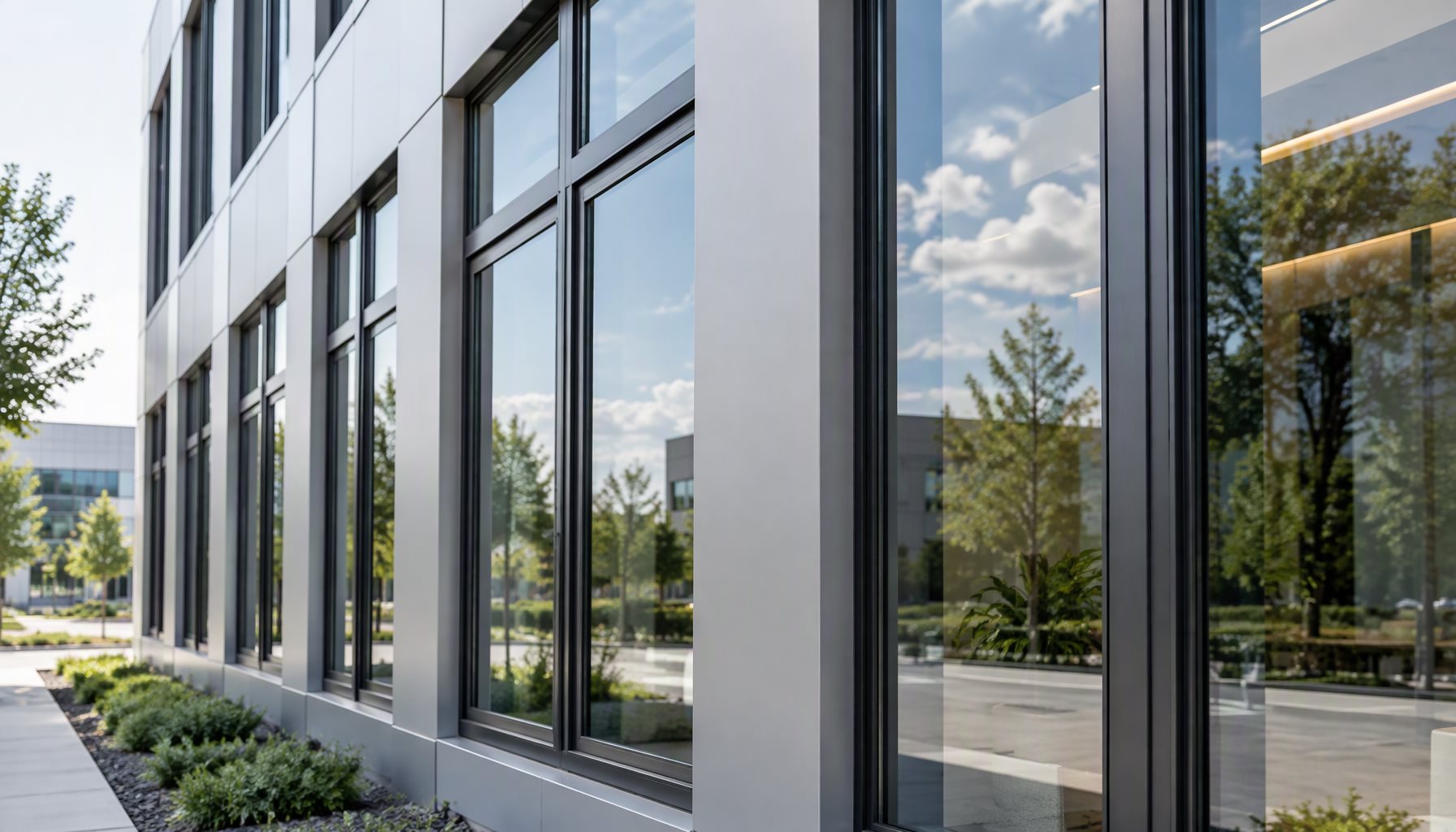
NFRC gives you the numbers. AAMA proves the build. ENERGY STAR turns NFRC numbers into a climate-specific pass/fail. Impact is a regional code requirement that sits on top of the assembly.
NFRC Certified Aluminum Windows: The Performance Numbers
The National Fenestration Rating Council operates a uniform rating and labeling system for windows, doors and skylights. Its purpose is comparability: an NFRC label lets a builder in one state compare a window from one manufacturer against a window from another on the same basis.
An NFRC label reports four figures that matter to you:
- U-Factor — the rate of heat transfer. Lower is better; this is the number most closely tied to heating energy use.
- Solar Heat Gain Coefficient (SHGC) — the fraction of solar radiation admitted. Lower blocks more heat, which matters in cooling-dominated climates.
- Visible Transmittance (VT) — how much daylight passes through. Higher means more natural light.
- Condensation Resistance (CR) — a relative measure of how well the assembly resists interior condensation.
What to request from a supplier: the NFRC simulation or certification report for the specific series and configuration you are buying. Not a label image, not a screenshot — the report, which states the frame, glazing make-up and spacer that were rated.
The detail that catches importers: a U-Factor quoted for one configuration does not transfer to another. Change the glass make-up, the spacer type or the frame depth and the rating changes. If a supplier advertises a single headline U-Factor for an entire product range, ask which configuration produced it.
This is also where whole-window U-factor (Uw) and centre-of-glass U-factor get conflated. Centre-of-glass measures only the middle of the glass, ignoring the frame and edge — it is always a better-looking number. Whole-window includes the frame and spacer, which is what a code official will look at. If a supplier quotes a U-value without saying which it is, ask directly — that distinction decides whether two sets of NFRC certified aluminum windows are actually comparable.
AAMA: the structural proof
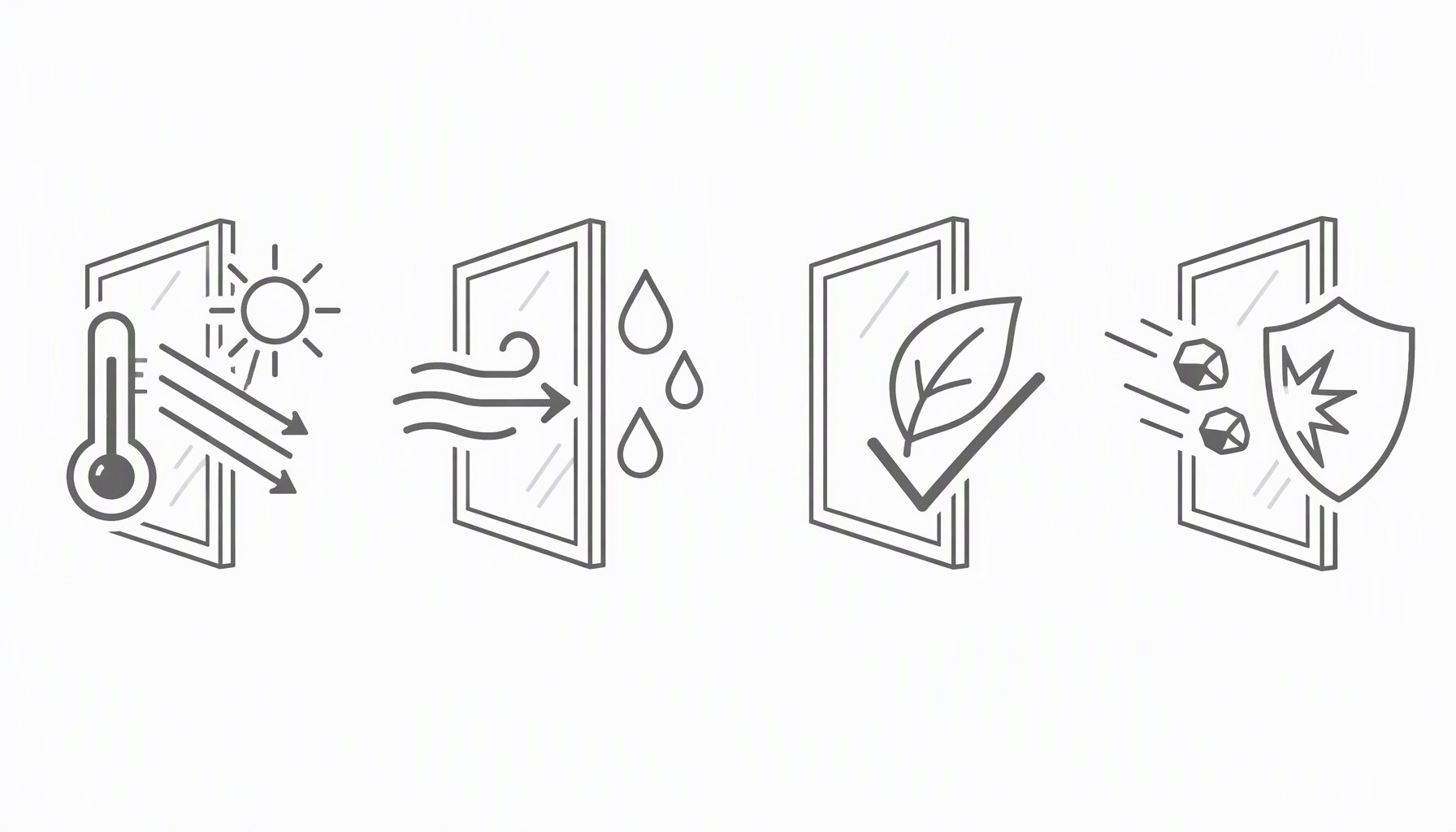
AAMA standards describe how a finished window or door assembly is tested for the things that make it fail in service. The core tests are:
- Air infiltration — how much air leaks through the assembly under pressure differential
- Water penetration — whether water is driven past the frame under simulated wind-driven rain
- Structural wind load — whether the assembly deforms or fails under design pressure
- Forced-entry resistance — the burglar-resistance grade, where specified
Results are expressed as performance classes or design pressure (DP) ratings. A DP rating indicates the wind pressure the assembly is rated to withstand — which is why DP matters in high-rise and coastal work and is one of the first things a structural specifier checks.
What to request: a test report that names the exact assembly tested — series, sash dimensions, glazing, and hardware. A test on a 900 mm wide unit does not automatically validate a 1,800 mm wide unit made from the same profiles.
Why this matters for importers: AAMA testing is where a supplier’s real engineering capability shows. A trading company can show you a certificate it bought; it usually cannot produce a test report tying a specific assembly size and glazing build to a DP rating.
ENERGY STAR: the climate-zone pass/fail
ENERGY STAR is a voluntary labeling program run by the US Environmental Protection Agency. It does not generate its own performance data — it takes NFRC-rated values and applies pass/fail thresholds that differ by climate zone.
The consequence is the thing most often missed in export conversations: the same window can qualify in Miami and fail in Minneapolis. Northern zones impose stricter U-Factor limits because heating dominates; southern zones focus more on SHGC because cooling dominates.
What to request: a list of the specific configurations qualified for the climate zones your customer sells into. Do not accept “ENERGY STAR certified” as a blanket statement — it is only meaningful per zone.
Practical note for importers: ENERGY STAR qualification is often written into utility rebate programs and some green-building certification paths. If your customers sell into rebate-driven markets, qualification is not optional, it is part of the sales argument.
For how a specific configuration is checked against a zone threshold, see our guide to ENERGY STAR qualification for aluminum windows.
Impact ratings: a local code requirement, not a quality tier
Impact-rated windows are tested to resist wind-borne debris — typically a missile-impact test followed by cyclic pressure loading. These requirements come from local building codes in specific hurricane- and storm-prone regions, and they vary by state and sometimes by county.
Two things importers get wrong here:
- Treating impact as a premium upgrade. In a code-required zone it is a baseline requirement, not an upgrade. Quoting a non-impact assembly into such a project produces a product that cannot legally be installed.
- Assuming impact rating is national. It is not. A project 200 miles away may have no such requirement. Confirm against the specific project location and the authority having jurisdiction.
Impact glazing usually means laminated glass, sometimes combined with a heavier frame and upgraded anchoring requirements. It changes both cost and lead time, so it needs to be settled before pricing, not after.
How the four interact in a real quote
Take a residential project in coastal Florida:
- Impact rating is likely required by local code — this is a pass/fail gate on the assembly
- AAMA testing demonstrates the assembly meets the structural and water requirements for the design pressure at that location
- NFRC values provide the U-Factor and SHGC that the code or a green program will reference
- ENERGY STAR qualification may additionally be needed if a rebate or program is involved

Now move the same project to a temperate inland market: impact is irrelevant, AAMA testing still matters, and ENERGY STAR becomes an energy-code and marketing question rather than a safety one.
The practical lesson: define the destination market and the code requirement before specifying the window. Every one of these four items changes the glass build, the frame, or the documentation package — and all three are expensive to change after extrusion begins.
What documentation to ask for, and when
| Stage | Document | Why |
|---|---|---|
| Before quoting | Target U-factor / SHGC and any impact requirement for the project location | Determines the build-up and the price |
| With the quotation | NFRC report for the proposed configuration | Confirms the claimed numbers are real |
| Before deposit | AAMA test report naming the assembly | Confirms structural performance and its limits |
| Before shipment | Batch test reports for profile, coating and glass | Confirms the delivered goods match the approved spec |
A supplier who can produce all four without prompting is a supplier with a real quality system. A supplier who responds to every request with a certificate image and a verbal assurance is telling you something important about how the order will go.
Common mistakes importers make
- Accepting a U-value without asking whether it is whole-window or centre-of-glass. These differ materially, and only one of them is what the code references.
- Assuming one label covers every size of NFRC certified aluminum windows across a product range. Ratings are configuration-specific.
- Treating “ENERGY STAR certified” as a single yes/no. Qualification is per climate zone.
- Quoting a non-impact assembly into an impact-required zone. This produces a product that cannot be installed legally, and the problem surfaces at the job site, not at the factory.
- Not asking for the test report that names the tested size. Performance on a small unit does not automatically extend to a large one.
- Discovering the compliance requirement after extrusion has started. Glass and frame changes after production begins are expensive and often impossible without changing the profile system.
Where to start
If you are sourcing for a North American project, send your window schedule together with the project location and the energy or impact requirement that applies there. A supplier who works in that market should be able to tell you before metal is cut whether the proposed system meets it — and flag any system that does not.
Send your schedule, project location and target performance values to get a line-item quote with the correct glazing for that market — and a straight answer on which performance documents exist for the configuration and which would need third-party testing.
Frequently Asked Questions
Is NFRC the same as AAMA?
No. NFRC produces the performance numbers — U-factor, SHGC, visible transmittance and condensation resistance — through simulation and testing of components. AAMA standards test the finished assembly for air infiltration, water penetration and structural wind load. A window can carry NFRC values and still fail an AAMA structural requirement, because the two answer different questions.
Can a window be NFRC rated but fail ENERGY STAR?
Yes, routinely. ENERGY STAR takes NFRC-rated values and applies pass/fail thresholds that differ by climate zone, so the same window can qualify in a southern zone and fail in a northern one. “ENERGY STAR certified” without a zone is not a meaningful statement — ask which zones the configuration qualifies for.
What is the difference between whole-window and centre-of-glass U-factor?
Centre-of-glass measures only the middle of the glazing and ignores the frame and edge spacer, so it always looks better. Whole-window U-factor includes the frame, spacer and edge effects, which is the number a code official or an energy model will reference. Always ask which one a quoted U-value refers to.
Do I need impact-rated windows for my project?
Only where the local building code requires opening protection, which in the United States is limited to defined wind-borne debris regions and varies by state and sometimes county. Impact rating is a code baseline in those zones, not a premium upgrade, and a project a short distance away may have no such requirement. Confirm against the project location and the authority having jurisdiction.
What documents should I ask a supplier for?
Four, at four stages: the target U-factor, SHGC and any impact requirement for the project location before quoting; the NFRC report for the proposed configuration with the quote; the AAMA test report naming the tested assembly before deposit; and batch reports for profile, coating and glass before shipment. A supplier who can produce all four without prompting has a real quality system behind the price.