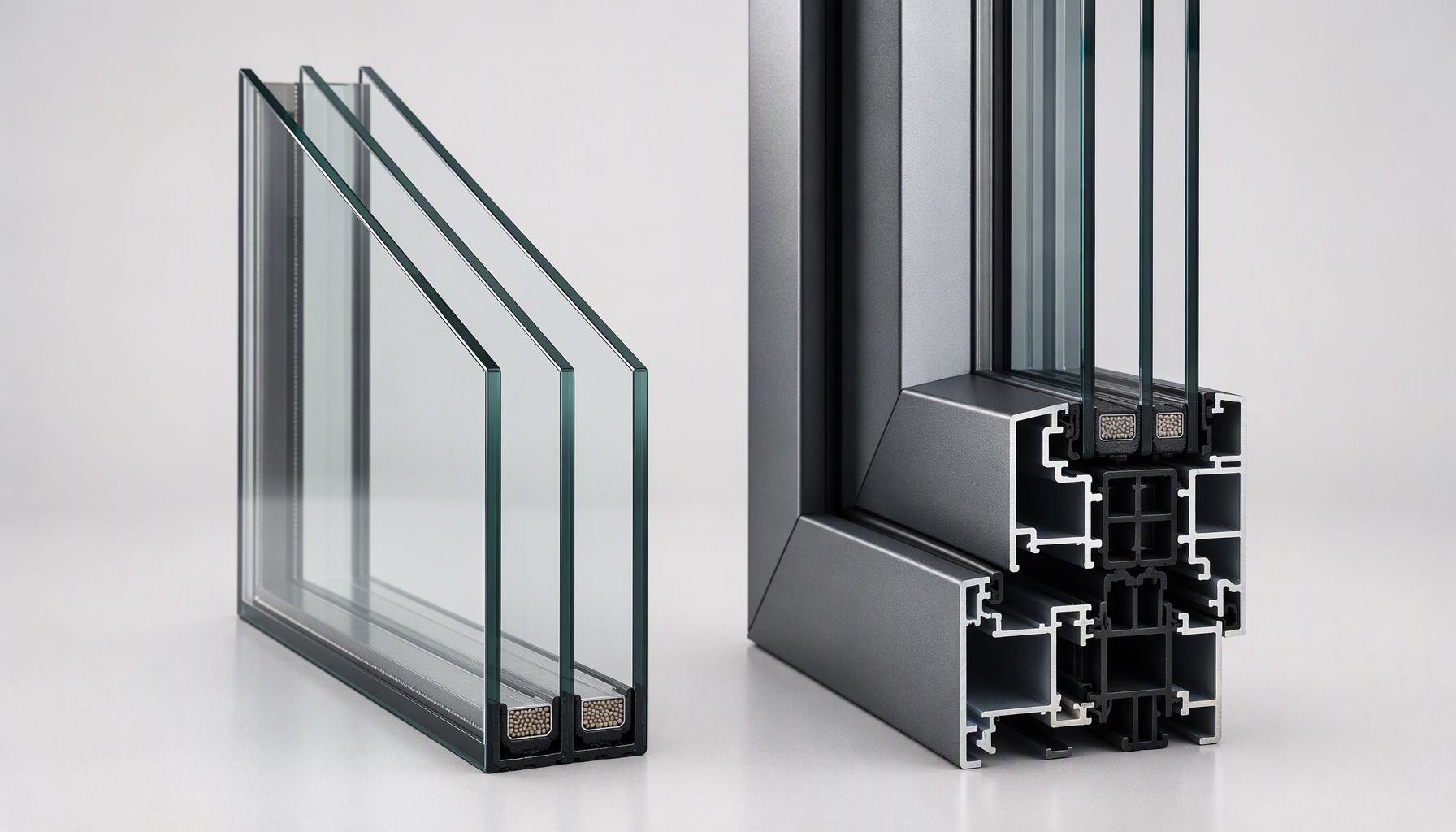
Tag: energy-efficiency

Posts about energy efficiency on Lansen aluminum windows and doors.

  • Condensation Inside Double Glazing: Causes, Fixes

    Condensation Inside Double Glazing: Causes, Fixes

    Condensation inside double glazing — moisture trapped between the two panes, where nobody can wipe it away — is a seal failure, not a cleaning problem and not a humidity problem. Once water vapor has entered the cavity, the desiccant in the spacer can no longer hold it and the unit fogs whenever the glass temperature drops. The insulating glass unit has reached the end of its serviceable life and needs replacing.

    This article explains how an insulating glass unit manages moisture, how to tell cavity failure apart from surface condensation, what repair options exist, and what to specify to reduce the risk.
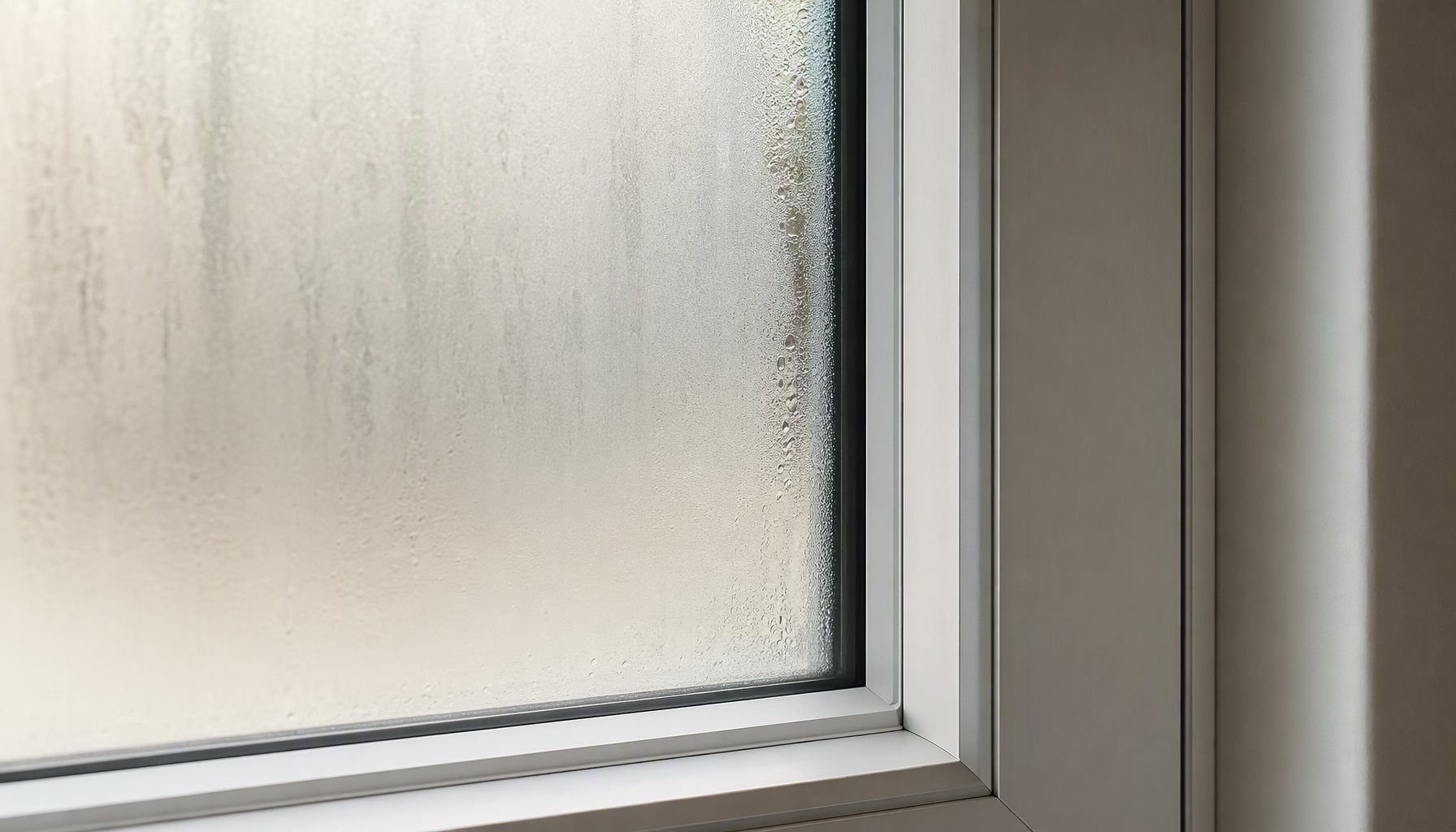
    Close-up of a fogged double glazed window with hazy moisture film between the panes in an aluminum frame

    Condensation Inside Double Glazing Means the Edge Seal Has Failed

    An insulating glass unit (IGU) is two or more panes of glass separated by a spacer and sealed around the perimeter. The cavity is filled with dry air or an inert gas, and the spacer contains a desiccant that absorbs whatever residual moisture remains at manufacture. The system works only while that edge seal stays intact.

    Seal failure happens progressively. Cavity gas expands and contracts with temperature and barometric change, so the edge seal flexes on every cycle. Over time the primary seal loses adhesion or the secondary seal cracks, and the desiccant gradually saturates as outside air is drawn in.

    The visible result is what most people describe as foggy double pane windows: a hazy film, droplets or a tide-mark residue between the lites. It appears when the inner cavity surface drops below the dew point of the trapped air, which is why fogging is often worst in early morning and clears as the glass warms.

    Two consequences follow: the glass no longer looks clear, and the unit has lost part of its thermal function, because moisture-laden air and escaped inert gas both degrade performance relative to the original specification.

    Where the Moisture IsWhat It IndicatesTypical Response
    Between the panes, cannot be wipedIGU edge seal failure, desiccant saturatedReplace the insulating glass unit
    Room-side surface of the glassHigh indoor humidity, cold interior surfaceVentilation, humidity control, better glazing
    Exterior surface in the morningNormal dew on a well-insulating unitNone required — it clears as glass warms
    On the frame or sill below the glassPossible water ingress or thermal bridgingCheck drainage and seals as a separate issue
    Intermittent haze with no dropletsEarly-stage seal degradationMonitor; plan IGU replacement

    How an Insulating Glass Unit Manages Moisture

    Three components do the work.

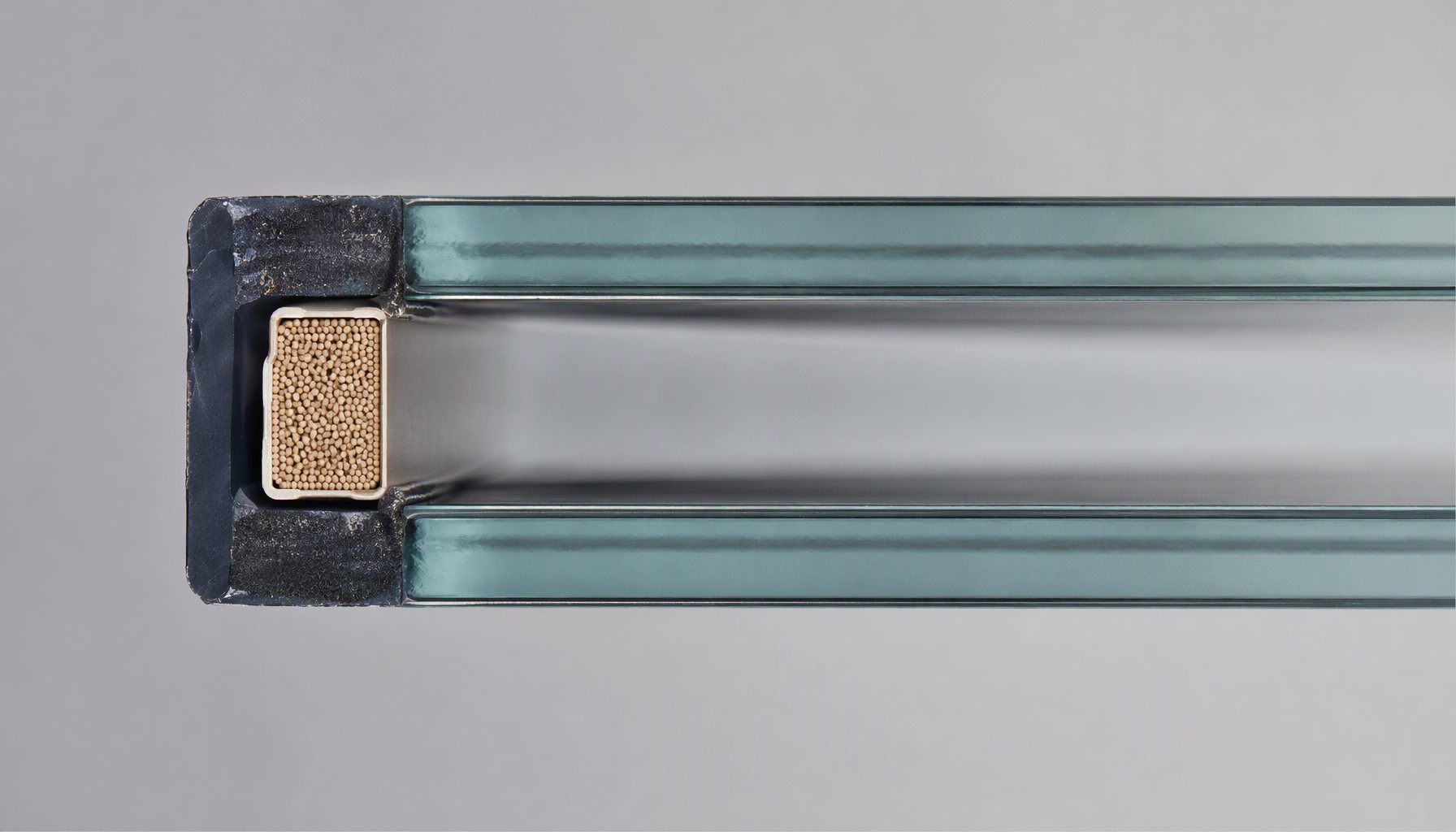
    The spacer separates the lites and carries the desiccant. Conventional aluminum spacers conduct heat readily, which makes the glass edge the coldest part of the unit and the most likely place for surface condensation. Warm-edge spacers use lower-conductivity materials to reduce that edge heat loss and raise the interior surface temperature at the perimeter.

    The desiccant adsorbs moisture from the cavity and has finite capacity. Once saturated it cannot be regenerated in place, so any incoming vapor condenses on the glass instead of being absorbed.

    The edge seal — usually a primary seal for moisture resistance and a secondary seal for structural integrity — keeps the cavity closed. Its life depends on sealant chemistry, fabrication quality, ultraviolet exposure and pressure cycling.

    Gas fill is a separate question. Argon or krypton improves thermal performance relative to air, and gas loss is invisible: a unit can lose fill without fogging, or fog without significant fill loss. Both follow from the same imperfect seal, but they are not the same measurement.

    Rating methods for the finished unit come from NFRC procedures, which define how U-factor, solar heat gain coefficient and visible transmittance are determined for a complete product rather than for glass alone.
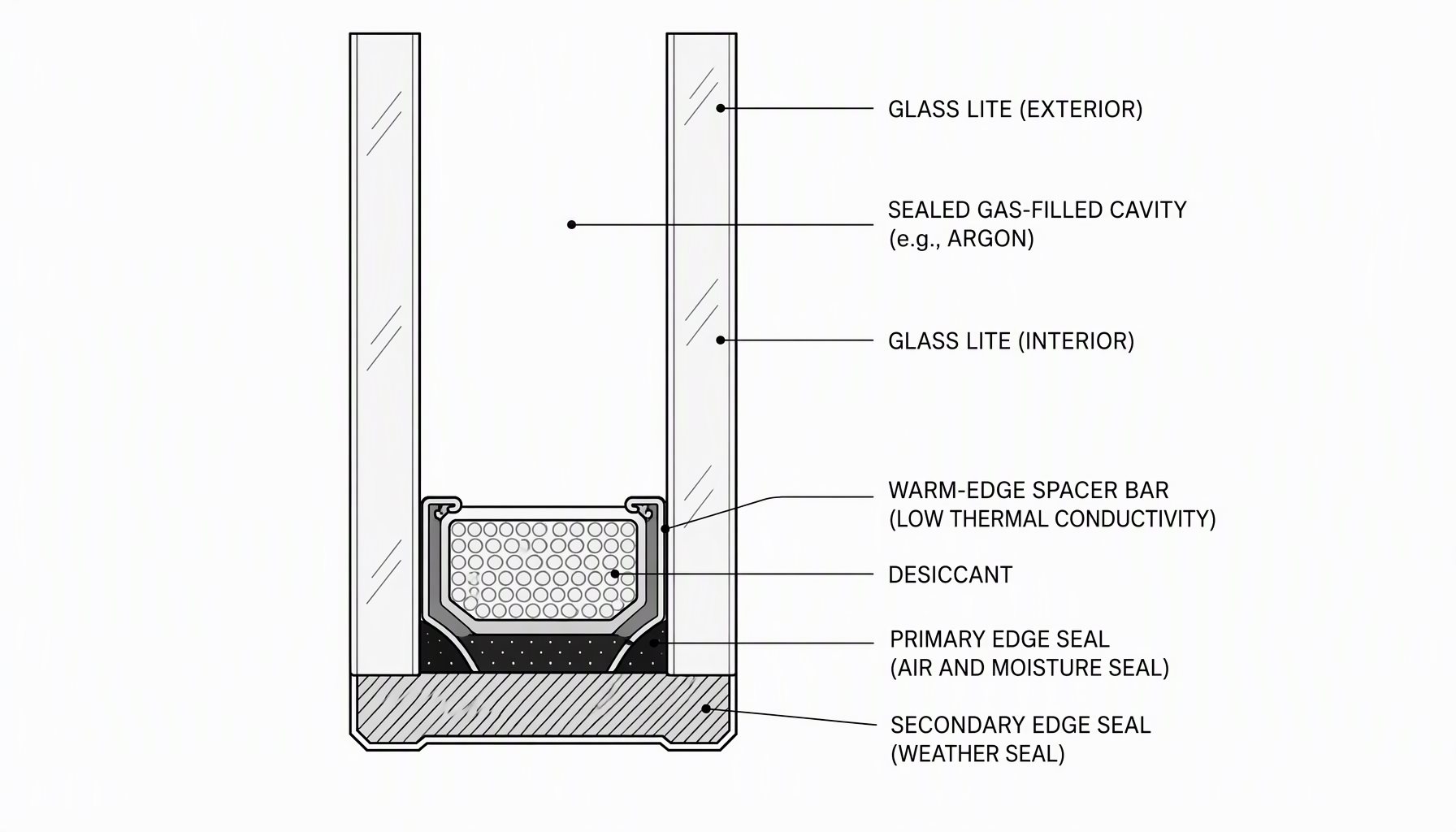
    Cross-section diagram of an insulating glass unit showing two glass lites, warm-edge spacer with desiccant, edge seals and gas-filled cavity

    Inside the Cavity Versus on the Surface: Two Different Problems

    Condensation inside double glazing is frequently confused with surface condensation, and the distinction determines the entire response. Surface condensation on the room side reflects a relationship between indoor humidity and interior glass temperature. It is a building physics issue, and it can be legitimate — a high performing window in a humid interior may still show temporary surface moisture.

    The practical differences:

    • Cavity moisture cannot be wiped away. If a cloth on either face does not clear it, the water is between the lites.
    • Surface moisture responds to humidity control. Cavity moisture responds only to unit replacement.
    • Surface condensation indicates thermal or ventilation conditions. Cavity condensation indicates a defect in that unit.
    • Isolated cavity failures are normal attrition. Widespread fogging across a project suggests a fabrication, handling or glazing-system problem worth raising with the supplier.

    Frame thermal performance also influences surface conditions. A thermally broken frame reduces heat flow through the profile, but whole-unit behavior depends on frame geometry, thermal-break design, glazing, spacer, dimensions and the calculation or testing method used. Our thermal break window guide covers this; a thermal break alone does not guarantee freedom from surface condensation.

    Reglaze, Replace the IGU or Replace the Window

    Once the seal has failed there is no reliable way to restore the unit. Cleaning between the lites is impossible without dismantling the assembly, and defogging treatments that drill into the cavity neither restore the desiccant nor reseal the unit, so any clarity gained is temporary.

    That leaves three real options, and the right one depends on the condition of everything around the glass.

    Replace the IGU only. Viable when the frame, sash, gaskets and hardware are sound and the glazing rebate accepts a new unit of the same thickness. Usually the lowest-cost route, and it preserves the opening.

    Replace the sash. Appropriate where the sash is distorted, gaskets are compressed beyond adjustment or hardware no longer holds alignment.

    Replace the window. Justified when the frame is corroded or out of square, when current performance requirements are no longer met, or when the project is already opening the wall for other work.

    Whatever the scope, specify against measured dimensions rather than assumed ones, and confirm glazing rebate depth, gasket compression and spacer thickness before ordering. The custom size and dimension page explains what we need to quote a bespoke schedule.

    MetricWhat It DescribesWhat It Does Not Tell You
    Ug (center-of-glass U-factor)Heat transfer through glazing away from edgesEdge or frame losses, which dominate small units
    Uf (frame U-factor)Heat transfer through the frame profileWhole-unit performance, which also depends on glass and spacer
    Uw (whole-unit U-factor)Combined performance of frame plus glazingPerformance of a different size or configuration
    Condensation resistance ratingRelative resistance to surface condensationWhether the unit will fog in a specific interior
    Gas fill percentageProportion of cavity filled with inert gasFuture retention — it declines with seal quality

    These metrics should never be quoted interchangeably. A center-of-glass value is the most favorable number in the set and says nothing about the perimeter, where condensation starts.

    Specifying Glazing That Resists Condensation

    Prevention is a specification decision made before fabrication, not a maintenance task afterwards.

    Project RequirementRecommended ChoiceWhy
    Humid interior — pool, spa, kitchen-heavyWarm-edge spacer with improved whole-unit performanceA warmer interior surface reduces condensation risk
    Cold climate projectThermally broken frame with a rated low-emissivity IGUFrame and edge losses dominate in cold conditions — see low-e argon glass
    Coastal or high-UV exposureSealant and coating selection matched to exposureUV and salt accelerate edge seal and finish degradation
    Existing units fogged, frames soundIGU-only replacement to measured dimensionsPreserves the opening and avoids structural work
    Fogging across many units on one projectInvestigate fabrication and handling before replacingA pattern indicates a systemic cause, not individual attrition
    Performance claims required for approvalRequest rated whole-unit data for the exact configurationRatings apply to the tested or calculated assembly only

    Certification context matters when a specification calls for energy performance. ENERGY STAR window and door criteria are climate-zone specific, and U.S. Department of Energy guidance explains how glazing selection fits whole-building energy use. Product and installation standards are published through FGIA.
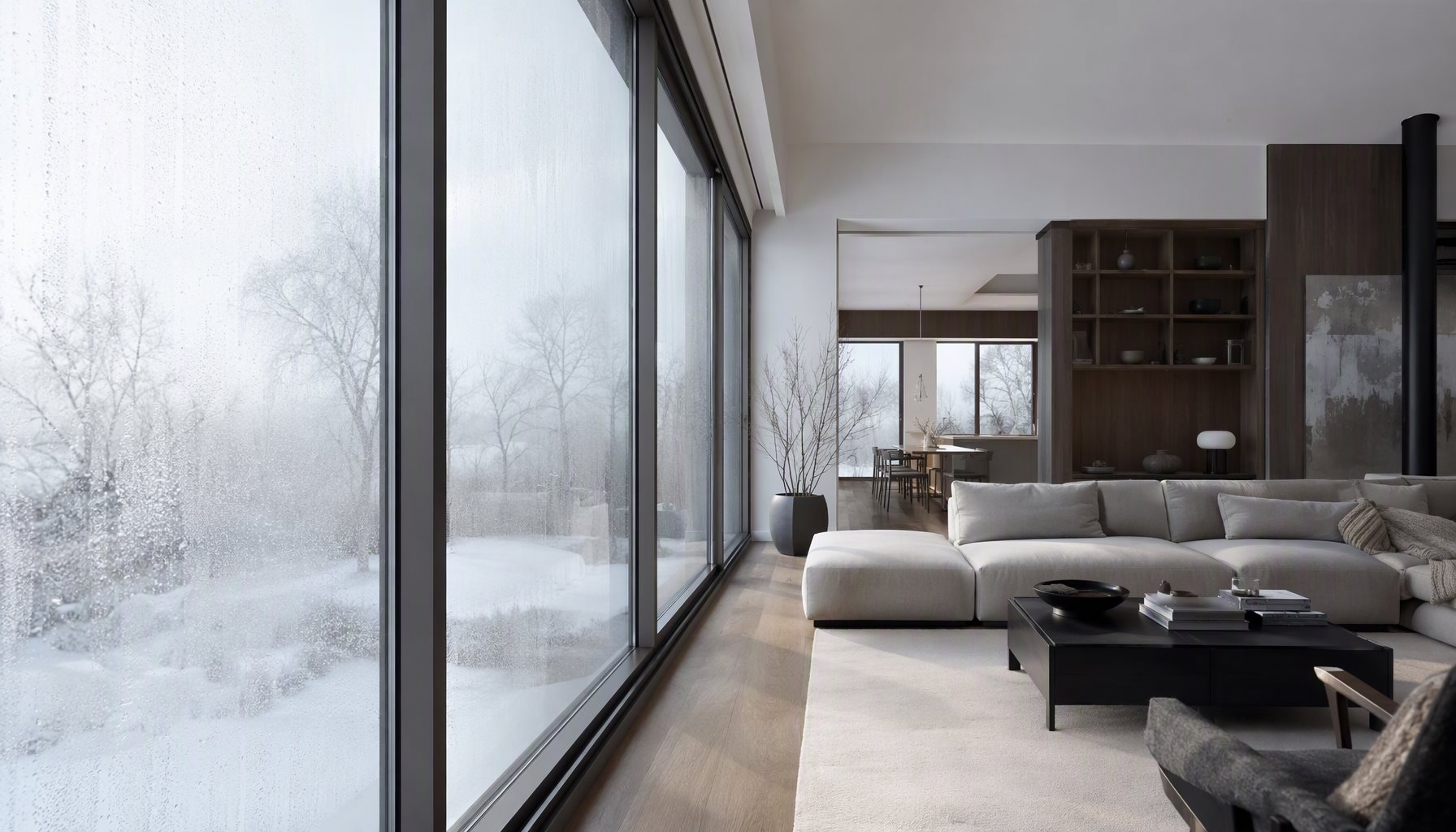
    Modern residential interior with large aluminum windows on a cold bright morning, faint dew on the outer glass

    Frequently Asked Questions About Condensation Inside Double Glazing

    Can condensation inside double glazing be cleaned out?

    No. The moisture is sealed between the lites where there is no access. Treatments that drill into the cavity may reduce visible haze temporarily, but they do not restore the desiccant, reseal the unit or recover the lost thermal performance. Replacing the insulating glass unit is the durable solution.

    Does fogging between the panes mean the window has failed structurally?

    Not usually. Seal failure affects the insulating glass unit, not the frame, sash or hardware. Many fogged units sit in sound frames, so IGU-only replacement is often viable and far cheaper than replacing the whole window.

    Why does the fogging appear and disappear during the day?

    Because it is temperature-driven. When the inner cavity surface drops below the dew point of the trapped air, moisture condenses and the unit fogs. As the glass warms, moisture evaporates back into the cavity and clarity returns. That intermittent behavior signals a saturated desiccant, not a self-resolving problem.

    Will replacing the glass with argon fill stop it happening again?

    Argon improves thermal performance relative to air, but it does not prevent seal failure on its own — gas retention depends on edge seal quality and spacer design. Specify the fill as part of a complete IGU build-up and ask for rated whole-unit data for that configuration.

    Is surface condensation on the inside of the glass the same problem?

    No. Room-side surface condensation reflects indoor humidity and interior glass temperature, and responds to ventilation, humidity control and better glazing. Condensation inside double glazing is a unit defect. A cloth clears one and cannot reach the other.

    Does exterior morning dew mean my windows are failing?

    Generally the opposite. Dew on the outside face means the glass is staying close to outdoor temperature, which happens when the unit insulates well and little interior heat reaches the outer surface. It clears as the sun warms the glass.

    How long should an insulating glass unit last?

    Service life depends on sealant chemistry, spacer and desiccant design, fabrication quality, exposure, pressure cycling and installation handling, so it cannot be stated as one number for all products. Ask the supplier for the IGU build-up, the edge seal system and applicable warranty terms for the configuration being quoted.

    Request a Glazing Specification Review

    If fogged units are appearing on a project, send the IGU build-up, unit dimensions, exposure conditions and photographs. Our engineering team can review the spacer, desiccant and edge seal specification, confirm whether the pattern points to fabrication or individual attrition, and propose a replacement configuration with the rated whole-unit data your approval process requires. See our quality and testing page or the window hub, and use the contact page to start a review.

  • Argon Filled Windows: Low-E Argon Glass Explained

    Argon Filled Windows: Low-E Argon Glass Explained

    Most of a window’s energy performance lives in the glass package, and most glass-package performance comes from two technologies: a microscopically thin metallic coating called Low-E, and an inert gas fill — usually argon — between the panes. Neither is exotic; both are standard in quality windows. What varies enormously is how well they’re specified for your climate, and how honestly they’re presented on a quote.

    This guide covers what Low-E coatings physically do, what argon actually contributes (and what it doesn’t), whether triple glazing earns its premium, how to decode U-factor / SHGC / VT, and how to pick a glass package by climate zone.

    What Are Low-E Coated Argon Gas Windows? A Plain Definition

    Every object radiates heat as infrared energy. Emissivity measures how readily a surface radiates and absorbs that energy: plain glass runs an emissivity of roughly 0.84, meaning it happily absorbs and re-radiates heat. A Low-E (low-emissivity) coating is a layer of metallic oxides a few hundred atoms thick that drops that figure to roughly 0.02–0.10 — the surface now reflects infrared heat while passing visible light.

    The practical consequences:

    • Winter: interior heat (long-wave infrared) bounces back into the room instead of escaping through the glass. Rooms stop feeling cold near the windows.
    • Summer: the sun’s radiated heat is reflected before it enters, cutting solar gain dramatically without visibly darkening the glass.
    • UV: Low-E coatings block a large share of ultraviolet transmission, slowing fading of floors and furniture (laminated glass with a PVB interlayer blocks even more).

    There are two manufacturing routes, and the difference matters:

    Soft coat (sputtered, MSVD) — the metallic layers are applied off-line in a vacuum process to finished glass. Emissivity reaches the low end (~0.02–0.04), performance is the best available, and optical clarity is excellent. The coating is delicate, so it must face into the insulated unit’s sealed cavity — which is why soft-coat glass always arrives as part of a double- or triple-glazed unit, never as exposed single glass.

    Hard coat (pyrolytic) — the coating is fused into the glass surface during float-glass production. It’s durable enough for exposed single glazing (storm windows), but emissivity is higher (~0.15–0.25) and solar control is weaker. It’s the budget option; virtually all modern residential insulated glass uses soft coat.

    One nuance worth knowing: Low-E coatings are tuned, not generic. By adjusting the coating stack, glassmakers trade solar heat rejection against visible light and passive winter gain. The same “Low-E” label can describe a glass optimized to keep Arizona sun out or to welcome Minnesota winter sun — which is why the performance numbers on the label matter more than the marketing name.

    What Is Argon Gas in Windows? Myth vs Measurable Benefit

    Argon is a denser, lower-conductivity gas than air — thermal conductivity around 0.016–0.017 W/m·K versus air’s 0.026. Filling the gap between panes with 90%+ argon slows both conduction and convection inside the cavity, which typically improves the whole-window U-factor by roughly 0.01–0.03 compared to an air-filled unit.

    So the honest verdict: argon’s benefit is real, measurable, and modest — and because it costs only a few dollars per unit at the factory, it is among the cheapest performance upgrades in the window industry. That’s why quality double glazing ships argon-filled by default rather than as an upsell.

    Two follow-up facts buyers should know:

    • Argon doesn’t last forever. The gas slowly permeates through seals over decades (roughly on the order of 1% per year in well-made units), but even heavily depleted units retain most of their performance — the Low-E coating does the heavy lifting.
    • Krypton is the niche alternative. Krypton conducts even less heat (~0.009 W/m·K) and performs best in the narrow gaps used in triple glazing, but it costs several times more than argon. It earns its price in high-performance northern builds, not in standard double glazing.

    The myth to skip: argon as a dramatic transformation. It’s a refinement on top of Low-E glazing geometry, not a technology that rescues a bad window.

    Low E Argon Glass Meaning: What the Term Actually Covers

    Low E argon glass meaning comes down to two components that are often sold as one product. The low-E part is a microscopically thin metallic coating on an interior glass surface; the argon part is the gas filling the cavity between the panes. Neither does the other’s job. The coating controls radiant heat transfer across the cavity, and the gas slows conduction and convection inside it.

    That is why a quote that says only “low E argon glass” tells you almost nothing. You still need the coating type (soft coat or hard coat), its emissivity, the gas and its concentration, the cavity width, and the spacer. Those five values decide the number; the phrase does not.

    Argon Filled Units: What the Fill Actually Changes

    Argon filled units improve performance in a specific and limited way. Argon is denser and less conductive than air, so it reduces heat movement through the cavity — typically a modest improvement in whole-window U-factor rather than a transformation. The gain is real but it is a fraction of what the coating contributes.

    Argon-filled units also make one thing worse if the unit is badly built: an insulated unit that loses its fill loses part of its rated performance, and you cannot see that from outside. Ask how the unit is sealed and what the manufacturer’s gas-retention position is, rather than assuming the fill is permanent because it is invisible.

    Argon Requirement for Insulating Glass: When It Gets Specified

    There is no universal argon requirement for insulating glass. Argon gets specified when a project needs a lower U-factor than air fill can reach in the cavity depth available, or when a climate zone’s energy provisions push the assembly into a performance band that air fill cannot meet. In mild climates with generous cavity depth, the same coating on air can be close enough that the argon premium is hard to justify.

    So the specification question is not “argon or not” but “what U-factor does this opening need, and does air fill reach it in this profile”. Confirm against the certified test data for the exact glass make-up you are buying rather than against a family-level claim.

    Low-E Argon Gas-Filled Insulated Windows: the Build-Up, Line by Line

    A low-E argon gas-filled insulated window is a stack, and each layer has a job. Outer pane, sealed cavity filled with argon, low-E coating on the cavity surface, spacer at the edge, inner pane. The spacer matters more than its name suggests: it is the thermal bridge at the perimeter, and a cheap spacer gives back much of what the coating and gas earn in the middle.

    Read the build-up as a whole when comparing quotes — 6 mm + 12 mm argon + 6 mm with a soft-coat low-E and a warm-edge spacer is a different product from the same glass dimensions with a hard coat and an aluminium box spacer, even though both get described as low-E argon glass.

    Argon Filled Triple Glazing: Do You Really Need Triple?

    Triple glazing adds a third pane and a second gas cavity, pushing whole-window U-factors from the typical double-glazed 0.25–0.32 down to roughly 0.20–0.28. The costs: roughly 15–30% more for the glass package, meaningfully heavier panels (which affects hardware sizing on large doors), and slightly lower visible transmittance.

    Where triples win:

    • Cold climates — the Northern zone and high elevations, where heating dominates and windows are the coldest surface in the wall. The added insulation pays in both energy and comfort (the interior glass surface stays warmer, killing condensation).
    • Large glass areas in cold regions — glass walls, sunrooms, big sliders — where the window fraction of the envelope is high.
    • Noise — the extra pane and cavity measurably dampen exterior sound, a bonus in airport and road corridors.

    Where triples waste money:

    • Hot climates. In the South, the enemy is solar gain, and a third pane does almost nothing against it. The budget belongs in low-SHGC soft-coat Low-E and good frames — a double-glazed unit with SHGC around 0.25 beats a mediocre triple on every metric that matters in Texas or Florida.
    • Standard-size replacement windows in mixed climates, where the energy payback of the third pane stretches past the window’s service life.

    The rule of thumb from the factory side: triple glazing is a heating-climate tool, not a status upgrade.

    The Upgrade Ladder: What Each Glass Option Adds

    Glass options are usually presented as a menu; it’s more useful as a ladder, where each rung solves a specific problem:

    Rung What it adds Typical effect Worth it when
    Air-filled double glazing baseline insulated unit whole-window U ≈ 0.30–0.45 almost never the final spec — but common in builder-grade stock
    + Argon fill slower conduction in cavity ΔU ≈ 0.01–0.03 always — it costs almost nothing at the factory
    + Warm-edge spacer warmer glass edge less edge loss, less edge condensation cold climates and any condensation-prone room
    + Tuned soft-coat Low-E solar control and low emissivity SHGC from ~0.60 down to ~0.25; U down toward 0.28–0.32 always — this is the main event
    → Triple glazing second cavity U ≈ 0.20–0.28 heating-dominated climates, big glass areas, noise corridors

    Reading the ladder by region: in the South, the journey usually ends at rung four with a very low SHGC; in the North it climbs to five. The two most common specification mistakes are stopping at rung two (argon with a generic hard-coat glass) and jumping to rung five where rung four was the actual requirement — both pay real money for the wrong problem.

    One factory-floor footnote on gas fill: quality units are filled to 90%+ argon at the assembly line, and reputable manufacturers verify fill rates periodically on production samples. Units built with capillary tubes or pump holes for pressure equalization (common at extreme altitudes) may need their gas topped up — an edge case worth mentioning only because high-elevation projects are exactly the ones that spec triples.

    Decoding U-Factor, SHGC, and VT

    Three numbers on the NFRC label describe the glass package — and each one answers a different question:

    • U-factor answers “how fast does heat pass through?” — the insulating quality. Lower is better; it drives winter heat loss and, secondarily, summer heat gain by conduction. Compare whole-window numbers, not center-of-glass.
    • SHGC (Solar Heat Gain Coefficient) answers “how much of the sun’s energy comes through?” — a value from 0 to 1. Lower is better in cooling climates and on west/east glass; higher can be a feature on south glass in heating climates.
    • VT (Visible Transmittance) answers “how much daylight?” — also 0 to 1, higher is better. Good coatings balance SHGC and VT rather than sacrificing daylight entirely.

    The pairing logic that catches buyers out: a window can have a superb U-factor and still roast a west-facing room, because U-factor says nothing about solar gain. Conversely, a very low SHGC glass in a cold-climate south elevation throws away free winter heat. Glass selection is orientation-by-orientation, not house-by-house.

    Bright interior lit through energy-efficient Low-E argon glass windows that balance daylight and solar heat control.

    Climate-Zone Picking Guide

    North American energy programs (ENERGY STAR and IECC climate zones) sort the continent into roughly four bands. The glass-package logic for each:

    • Northern (cold-heating dominated): prioritize low U-factor — 0.27 or lower; triple glazing earns consideration. SHGC can stay moderate or high (roughly ≥0.30) on south-facing glass for passive winter gain.
    • North-Central / mixed: U around 0.30 or lower with a good soft-coat double glazing; SHGC moderate (roughly ≤0.40) and tuned by orientation.
    • South-Central (hot summers, mild winters): U around 0.30, and SHGC tightly capped (roughly ≤0.25) — solar control is where comfort lives.
    • Southern (cooling dominated: FL, TX coast, AZ): U around 0.40 is generally acceptable, but SHGC ≤0.25 with strong visible transmittance is the real spec; triple glazing is wasted money here.

    Two add-ons that move real-world numbers more than most options: warm-edge spacers (they raise the glass-edge temperature, cutting condensation and edge heat loss) and quality installation with air sealing (infiltration can exceed the glass’s own leakage several times over if installation is sloppy).

    Warm-edge spacer detail in a Low-E argon insulated glass unit, keeping the glass edge warmer to reduce condensation.

    FAQ

    Is argon fill actually worth it?

    Yes — as a bundle with good Low-E glazing. The measured benefit is modest (roughly 0.01–0.03 U-factor improvement) but the cost at the factory is only a few dollars per unit, making it the cheapest meaningful efficiency upgrade in the spec. It is not, by itself, a technology that rescues a poor window.

    What’s the difference between soft-coat and hard-coat Low-E?

    Soft coat (sputtered) delivers the best performance — emissivity around 0.02–0.04 — but is delicate and always lives inside a sealed insulated unit. Hard coat (pyrolytic) is fused to the glass, survives exposed single glazing, but has higher emissivity (~0.15–0.25) and weaker solar control. Modern insulated glass is soft-coat territory.

    Is triple glazing worth it in a hot climate?

    Generally no. A third pane barely affects solar gain, which is the dominant heat source in cooling climates. The budget belongs in low-SHGC soft-coat Low-E glass and a thermally broken frame; a well-specified double unit outperforms a mediocre triple in Texas or Florida.

    Does Low-E glass stop furniture fading?

    It slows it substantially. Low-E coatings block a large share of UV; laminated glass with a PVB interlayer blocks more (99%+). Fading is also driven by visible light and heat, so no glass stops it entirely — but Low-E glazing extends the life of floors and fabrics noticeably.

    How long does argon gas last in a window?

    Decades. Gas permeates slowly through seals — roughly on the order of 1% per year in well-made units — and even partially depleted units retain most performance, because the Low-E coating provides the majority of the benefit. Quality manufacturing and warm-edge seals matter more than the gas itself.

    —

    Explore Lansen’s Low-E and argon glazing packages — tuned by climate zone and orientation for North American projects.

    What is low e argon glass?

    It is an insulating glass unit combining a low-emissivity coating on an interior surface with an argon fill in the cavity between the panes. The coating suppresses radiant heat transfer and the argon slows conduction and convection, so the pair outperforms either alone. What the phrase does not tell you is the coating type, emissivity, cavity width and spacer — ask for all four.

    What are low e argon windows, and are they worth it?

    Low e argon windows are simply windows built with that kind of unit. Whether they are worth it depends on where the building is and what the opening needs to achieve: in heating-dominated climates the combination usually earns its cost, while in a cooling-dominated climate the solar heat gain coefficient matters more than the extra cavity performance. Compare whole-window U-factor and SHGC, not the descriptor.

    What are windows with argon gas and low e actually buying?

    They are buying two separate improvements that are sold together: a coating that lowers radiant heat transfer, and a denser gas that reduces conduction across the cavity. Windows with argon gas and low e perform better than either feature alone, but the size of the gain depends on the cavity depth and the spacer. Confirm against the certified test data for the configuration.

    Is low e argon gas the same as argon-filled units?

    Low e argon gas describes the combination of a coating and a gas fill; argon-filled units describes only the fill. A unit can be argon filled without a low-E coating, and a unit can carry a low-E coating with air rather than argon. The terms are not interchangeable, and a quote should state both parts explicitly.

    Need a Quote for Your Project?

    Lansen manufactures thermally-broken aluminum windows, doors and sunrooms for North American importers, contractors and brands. Get factory-direct pricing, NFRC-rated performance data, and OEM/ODM support.

    Request a Project Estimate  OEM/ODM Program

  • Thermal Break Windows: Aluminum Frames Explained

    Thermal Break Windows: Aluminum Frames Explained

    Aluminum is the strongest common window material and, at the same time, one of the best conductors of heat in common use. Leave that second fact unaddressed and an aluminum window becomes a thermal short-circuit: cold in winter, hot in summer, wet with condensation between the two. The fix is a single engineering feature — the thermal break — and it is the difference between thermal break aluminum windows worth buying and aluminum windows worth avoiding.

    This guide explains why raw aluminum fails thermally, how a polyamide thermal break actually works, what whole-window U-factors to expect, and how to read an NFRC label so a supplier’s claims can be checked against numbers.

    Thermally Broken Windows Meaning: What the Term Requires

    Thermally broken windows meaning is narrower than the marketing use of the phrase. It describes a frame where the interior and exterior aluminium are physically separated by a low-conductivity barrier, so there is no continuous metal path for heat to travel through the frame. That is the entire claim. A frame with a barrier injected in one section and bridged in another is not thermally broken in the sense the term requires.

    The practical test is continuity. Ask how the barrier runs through every frame member — head, jamb, sill, mullion, and the joints where they meet — and how the manufacturer verifies that continuity in production. A thermally broken window is a manufacturing discipline as much as a profile design.

    Why Raw Aluminum Fails Thermally: What Non Thermally Broken Windows Lose

    Aluminum conducts heat roughly 1,000 times faster than the polymers used in window frames and a few hundred times faster than wood. In engineering terms, its thermal conductivity sits around 160–200 W/m·K, versus roughly 0.2 W/m·K for uPVC and vinyl compounds. On a winter day, that means an unbroken aluminum frame conducts heat from the warm interior surface to the cold exterior surface as efficiently as a metal heatsink — because it is one.

    The measurable consequences:

    • Whole-window U-factors in the 0.50–0.70 range even with good double glazing, because the frame bypasses the insulation the glass provides.
    • Cold interior frame surfaces. The interior face of the frame tracks the outdoor temperature. When the indoor surface temperature falls below the room air’s dew point, water condenses on the frame — and runs onto the sill, drywall, and floor. Chronic condensation is the signature failure of unbroken aluminum windows in heated buildings.
    • Failed energy code compliance. Modern US energy codes (IECC-based) set whole-window U-factor maximums that unbroken aluminum cannot reliably meet in most climate zones, which is why the thermal break has moved from an upgrade to a requirement for nearly all new aluminum construction.

    So the question is not whether an aluminum window has a thermal break — in 2026 it almost certainly does. The question is how good the break is.

    Window condensation comparison showing how a thermal break keeps the interior frame surface warm and dry in cold weather.

    Window Thermal Break: How the PA66 Barrier Actually Works

    A thermal break is a low-conductivity barrier that mechanically separates the aluminum frame into an interior side and an exterior side, so heat has no continuous metal path between them.

    The dominant technology is the polyamide strut: an extruded bar of glass-fiber-reinforced polyamide — typically PA66 GF25, meaning polyamide 66 filled with 25% glass fiber — that bridges the two aluminum chambers. The assembly process is what makes it structural:

    1. The profile extruder forms a knurled cavity in the aluminum root where the barrier will sit.
    2. The PA66 strip is inserted into both aluminum roots.
    3. Rolling and crimping the aluminum roots mechanically locks the strip under permanent engagement — the joint’s shear and tensile strength comes from the mechanical interlock, not glue.

    The material properties are the point: polyamide conducts heat at roughly 0.25–0.30 W/m·K — about 1,000 times less than the aluminum it interrupts — and the 25% glass fiber gives the strip stiffness and a coefficient of thermal expansion close enough to aluminum that the composite frame stays dimensionally stable through decades of thermal cycling.

    Two specification details separate good breaks from bad ones:

    • Barrier width. Wider polyamide struts (roughly 14 mm to 34 mm and up in high-performance systems) mean a longer heat path and better insulation. The barrier width is one of the most honest single numbers on a frame drawing.
    • PA66 versus imitations. Cheap systems substitute PVC or unplasticized strips. PVC softens at lower temperatures, expands much more than aluminum, and creeps — the crimp loosens over years and the frame can delaminate at the barrier. PA66 GF25 is the industry’s real answer; insist on the material by name.

    (The alternative technology — poured liquid polyurethane that is then “debridged” by cutting the aluminum bridge — exists mainly in North American legacy systems. Polyamide strips dominate modern global systems, including all European-derived designs.)

    Polyamide Strips vs Poured-and-Debridged Barriers

    Polyamide struts are the global standard, but they share the market with a North American legacy technology: the poured-and-debridged thermal break. Knowing the difference matters when comparing quotes between US-made and European-system aluminum windows.

    Poured-and-debridged works like this: the extrusion is designed with a continuous cavity; liquid polyurethane is poured into it and cured; then a saw cuts away the two thin aluminum bridges (“debridging”), leaving the cured polymer as the only connection between interior and exterior halves. The result performs well — poured systems can match strip systems on U-factor at equal cavity depth — but the process has two inherent sensitivities: the saw cut must fully remove both bridges (any residue re-joins the metal path), and the polymer’s bond and thermal-cycling behavior depend on the pour chemistry and shop control.

    Polyamide strips are a mechanical system: an extruded glass-fiber-reinforced nylon profile crimped into knurled aluminum roots. The joint strength is verifiable (shear and tensile tests on the finished profile), the material’s expansion is engineered to track aluminum, and the technology is the one behind virtually all European-derived systems — which matters for buyers sourcing globally, because replacement strips and tooling exist everywhere.

    Practical guidance for buyers:

    • Either technology, properly executed, meets modern energy codes; neither is automatically disqualified.
    • Strip systems dominate new custom and imported work; poured systems persist in domestic retrofit product lines.
    • What to ask for either way: barrier material by name, barrier width in millimeters, and the shear-strength test evidence for the assembled profile. A supplier who can produce those three items has a real thermal break; one who answers “yes, it’s broken” has a brochure.

    Multi-Chamber Geometry: The Rest of the Design

    The barrier is necessary but not sufficient. High-performance aluminum frames surround the break with multiple isolated chambers — typically three to five — that separate structural, glazing, and drainage functions and lengthen every conduction path:

    • The outer chamber carries weather, coating, and drainage (weep slots, pressure-equalized cavities).
    • The barrier zone interrupts conduction and is where the glazing pocket’s edge sits close to room temperature.
    • The inner chamber carries hardware and structural load and stays warm and dry.

    In cross-section, a quality thermally broken frame reads as a fortress of separated compartments — versus a cheap one where the “break” is a thin plastic line with metal continuing around it. This is also why frame depth matters: high-performance systems run deeper profiles (70–90 mm and more) because chamber geometry needs room to work.

    Thermal Break Frame vs Thermal Brake: the Parts and the Spelling

    A thermal break frame and a thermal brake frame are the same thing — the second spelling is a common typo, and both describe a frame with an insulating barrier between the inside and outside faces. Inside that frame, the parts that matter are the barrier itself (usually a glass-fibre-reinforced polyamide strip), the crimp or pour that attaches it, and the chamber geometry around it.

    When a specification says thermal break frame without naming the barrier material, the width of the barrier, or the number of chambers, it has not specified anything measurable. Name all three, then confirm the profile against the certified test data for the system.

    Thermal Aluminium Windows: the Line in the Specification That Matters

    Thermal aluminium windows are specified by a whole-window number, not by the presence of a break. The frame contribution (Uf), the glass contribution (Ug) and the spacer all combine into the whole-window U-factor (Uw), and that is the value a code or an energy model uses. Two thermal aluminium windows with identical profiles can land in different performance bands because their glass packages differ.

    So the specification line to get right is the whole-window U-factor at the actual size, not the phrase “thermally broken”. Ask for the Uw on the units you are buying and confirm it against the certified test data for that configuration.

    Non Thermal Windows: What You Give Up, and When It Does Not Matter

    Non thermal windows — frames without a barrier — are not automatically wrong. In a mild climate, on a shaded elevation, or on an unconditioned space, an unbroken aluminium frame can be an acceptable engineering choice, and it costs less. The failure case is a non thermal window specified in a heating-dominated climate or on an interior face where winter condensation forms on the frame.

    The decision turns on the interior surface temperature of the frame in the coldest design condition, not on the material name. If that surface drops below the dew point of the indoor air, an unbroken frame will show condensation regardless of how good the glass is.

    Real U-Factor Numbers by Climate and Glass

    The thermal break moves the frame; the glass completes the window. Whole-window, NFRC-rated expectations for the same family of aluminum frames:

    Configuration Typical whole-window U-factor (Btu/h·ft²·°F)
    Aluminum, no thermal break, double glazing 0.50–0.70
    Thermal break, standard double Low-E IGU 0.28–0.40
    Thermal break, high-performance double (Low-E, argon, warm edge) 0.25–0.30
    Thermal break, triple glazing 0.20–0.28

    How to aim those numbers by climate:

    • Hot-humid South (FL, TX, AZ): U around 0.30–0.40 is comfortably compliant; spend the budget on low SHGC (roughly ≤0.25–0.30) instead of triple glazing.
    • Mixed (Midwest, Mid-Atlantic): U around 0.28–0.32 with a good double-glazed Low-E argon unit meets code in most jurisdictions; SHGC moderate (0.25–0.40) by orientation.
    • Cold North and high elevation: target U ≤0.27 and consider triple glazing (0.20–0.28) for north elevations and large glass areas.

    The frame contribution matters more as glass improves: with triple glazing, a mediocre frame becomes the bottleneck, which is why premium aluminum systems advertise barrier width and chamber count alongside glass data.

    Cold-climate home with thermal break aluminum windows designed for energy-efficient winter performance.

    How to Read an NFRC Label

    NFRC (National Fenestration Rating Council) ratings are the only numbers that let you compare windows like-for-like, because every product is rated by the same simulation and testing methodology. On the label:

    • U-factor (0.20–1.20 scale): heat *loss* rate; lower is better. This is the number the thermal break moves. Whole-window, not center-of-glass — a “center-of-glass U” claim conveniently ignores the frame.
    • SHGC (0–1): fraction of solar heat admitted; lower is better in cooling climates and for west-facing glass; deliberately higher on south glass in heating climates if you want passive gain.
    • Visible Transmittance (0–1): how much daylight passes; higher is better. Low-E coatings cost a little VT — a good unit balances SHGC and VT rather than maximizing one.
    • Air Leakage (cfm/ft²): infiltration at test pressure; lower is better. Frame design and gaskets drive this.
    • Condensation Resistance (optional, 1–100): higher is better; a direct measure of the frame-and-glass edge temperature performance that thermal breaks exist to provide.

    The verification habit that saves projects: demand the NFRC rating for the exact product configuration quoted, not a brochure number from a similar one. A frame with a 34 mm barrier and a 0.26 U rating tells you nothing about the narrow-barrier version of the same system.

    Specifying a Thermal Break: The Buyer’s Checklist

    The thermal break is invisible in a photo and decisive in a wall, so it lives or dies in the specification. Before signing any aluminum window order, require the supplier to state:

    1. Barrier material by name: PA66 GF25 polyamide strip (or, for poured systems, the polymer specification). “Insulated frame” is not a specification.
    2. Barrier width in millimeters. Wider is better, all else equal — this single number predicts more thermal performance than any other frame feature. Narrow “breaks” (under ~14 mm) are the tell of cost-optimized systems.
    3. Chamber count and frame depth of the profile system, so the break’s work isn’t undone by a conductive bypass elsewhere in the cross-section.
    4. Shear/tensile test evidence for the crimped profile — the mechanical lock is what keeps the break structural over decades of thermal cycling.
    5. NFRC rating for the exact configuration — whole-window U-factor, not center-of-glass, as covered below.

    Two red flags that end conversations in the factory trade: a thermal break quoted at a price indistinguishable from a non-broken frame (the break costs real money to build), and a “thermal break” identified only by a black line in a cross-section photo — which is sometimes a PVC strip, the material that softens and creeps its way out of tolerance within years.

    The good news: verification is cheap. A competent supplier answers all five items in one email; the ones who dodge were never going to be the low-cost option by year ten.

    FAQ

    What exactly is a thermal break in a window frame?

    A low-conductivity barrier — typically a glass-fiber-reinforced polyamide (PA66 GF25) strip — mechanically crimped between the interior and exterior aluminum chambers so heat has no continuous metal path through the frame. It is what lets aluminum windows meet modern energy codes.

    How much difference does a thermal break make?

    It commonly moves whole-window U-factor from the 0.50–0.70 range (unbroken aluminum with double glazing) into the 0.28–0.40 range with the same glass — roughly a 40–50% reduction in frame-driven heat transfer — and eliminates the cold interior surfaces that cause winter condensation.

    What does PA66 GF25 mean?

    Polyamide 66 (nylon) reinforced with 25% glass fiber — the standard material for structural thermal barrier strips. The glass fiber gives the strip the stiffness and thermal-expansion behavior to stay locked in the aluminum for decades. PVC strips are the cheap substitute to refuse.

    Do I need triple glazing or just a good thermal break?

    In cooling-dominated southern climates, a thermally broken frame with a good double-glazed Low-E unit (and low SHGC) is usually the right budget. In cold northern climates, triple glazing on a high-performance frame reaches U-factors of 0.20–0.28 and is worth the premium on large glass areas.

    How do I verify a window’s thermal performance?

    Read the NFRC label for the exact configuration: whole-window U-factor (not center-of-glass), SHGC, VT, air leakage, and condensation resistance. Any supplier quoting thermal numbers without a config-specific NFRC rating is selling assumptions.

    —

    See Lansen’s thermally broken aluminum window systems — PA66 GF25 barriers, multi-chamber profiles, and NFRC-rated glazing packages.

    What are thermal break windows?

    Thermal break windows are windows whose frames carry a low-conductivity barrier between the interior and exterior aluminium, so heat cannot travel continuously through the metal. The barrier is usually a glass-fibre-reinforced polyamide strip, mechanically crimped or poured in place. The benefit is a lower frame U-factor and a warmer interior frame surface in winter.

    What is a thermal break in windows?

    A thermal break in windows is the insulating element itself — the strip or poured polymer that separates the two aluminium chambers. It works by removing the continuous metal path, which is why an unbroken frame conducts heat so much faster. The measure of a good break is how wide it is, how continuous it runs through every frame member, and whether the chambers around it are well designed.

    What does ABS thermal break mean?

    ABS thermal break refers to a barrier made from ABS polymer rather than the more common glass-fibre-reinforced polyamide. ABS has been used in some markets and systems, but it behaves differently under sustained heat and load, so the material matters when the frame is specified for a demanding climate. Ask which polymer the barrier uses and confirm the profile against its certified test data.

    Need a Quote for Your Project?

    Lansen manufactures thermally-broken aluminum windows, doors and sunrooms for North American importers, contractors and brands. Get factory-direct pricing, NFRC-rated performance data, and OEM/ODM support.

    Request a Project Estimate  OEM/ODM Program

  • Aluminum Window Energy Efficiency: What to Specify

    Aluminum Window Energy Efficiency: What to Specify

    Aluminum window energy efficiency is not one number. It is the combined result of three separate thermal paths — the insulating glass, the frame, and the spacer edge where they meet — and each one can be improved, marketed, or misreported independently. Bids most often go wrong when a submittal quotes a flattering glass-only value while the code documents require a whole-window rating.

    This guide explains how aluminum window energy efficiency is measured, what thermal breaks, Low-E coatings, argon and warm-edge spacers contribute, how SHGC and condensation shift by climate zone, and what to verify on a submittal. For operating-style comparisons, see our aluminum window types overview.

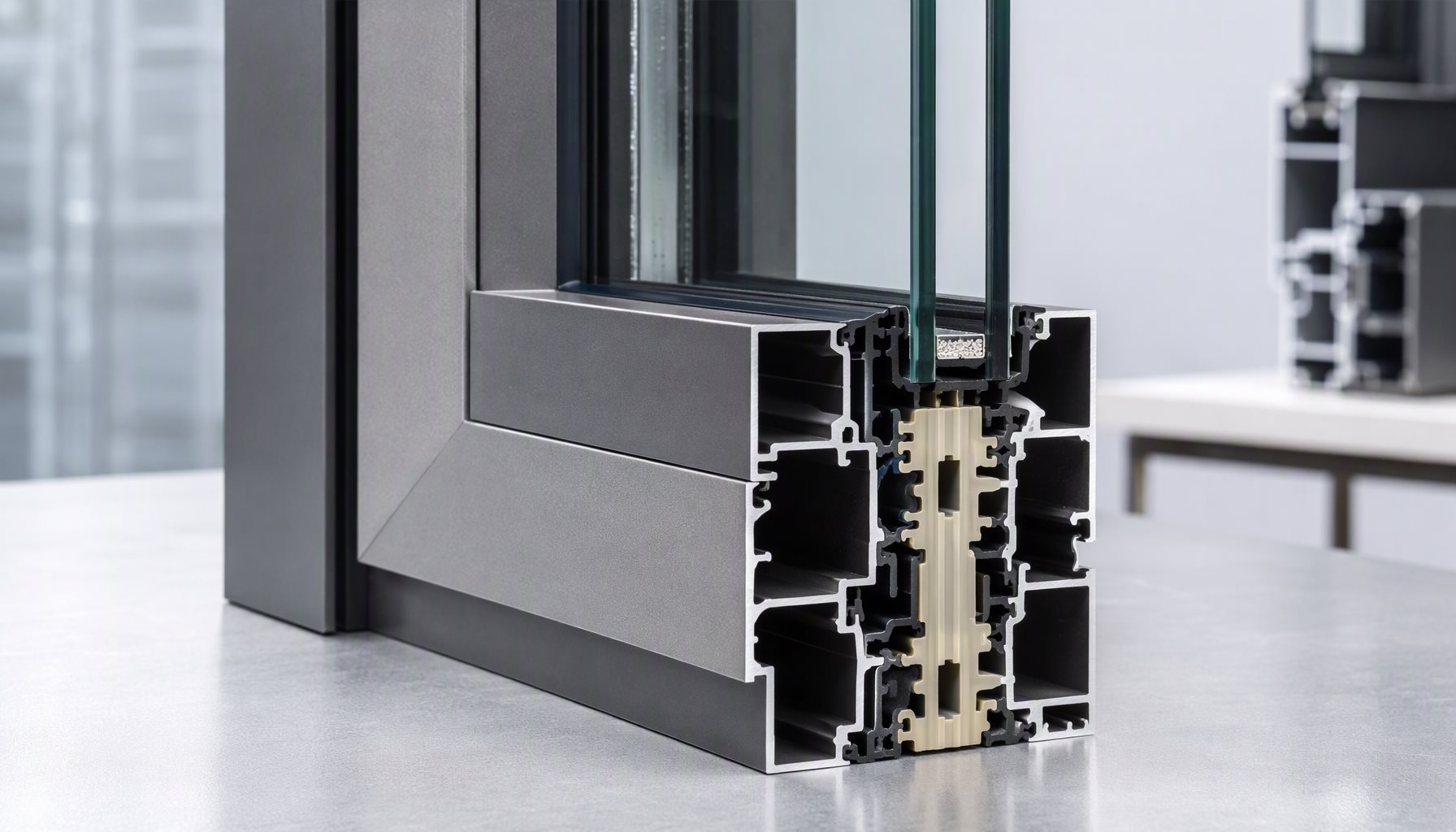
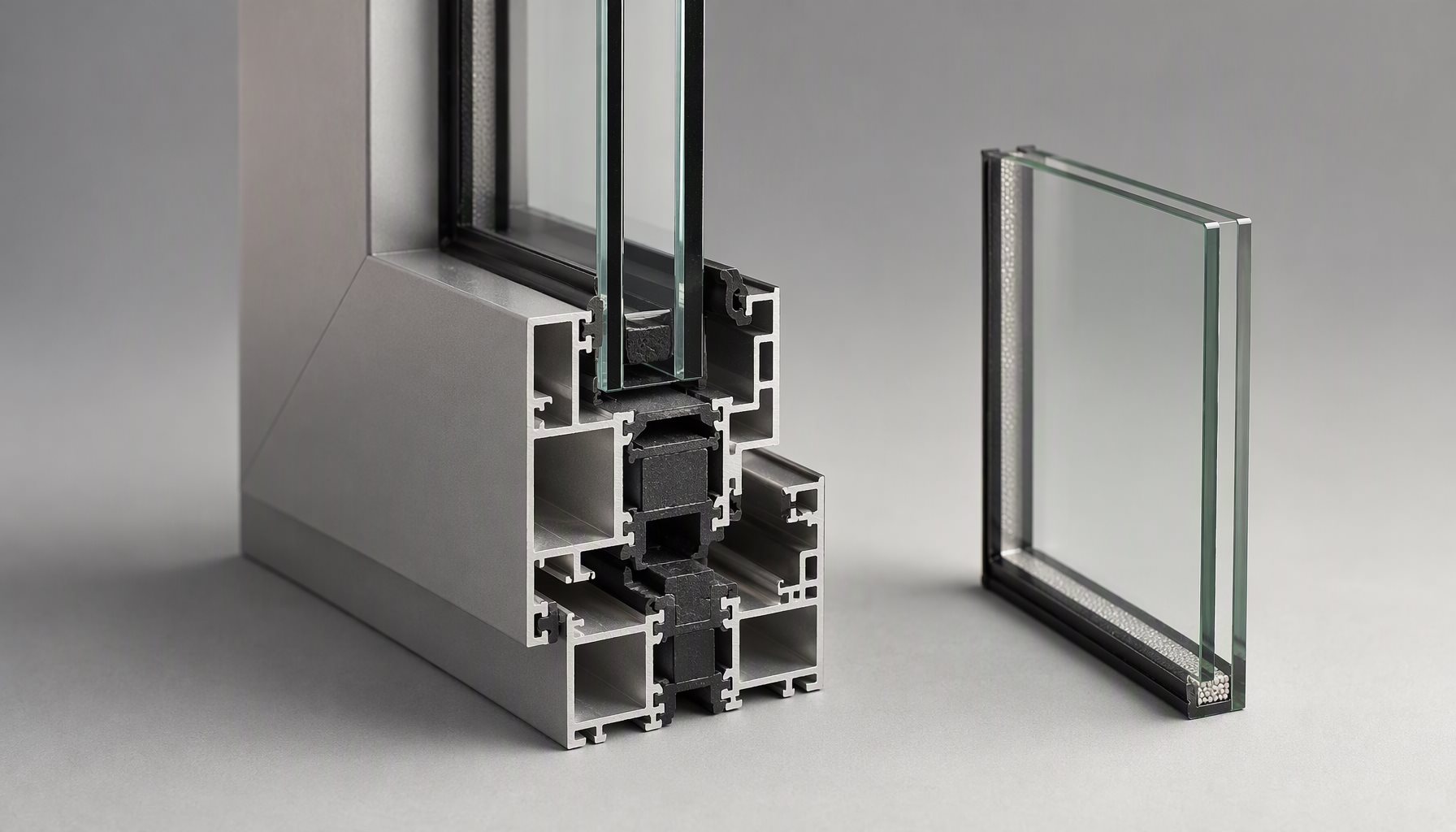
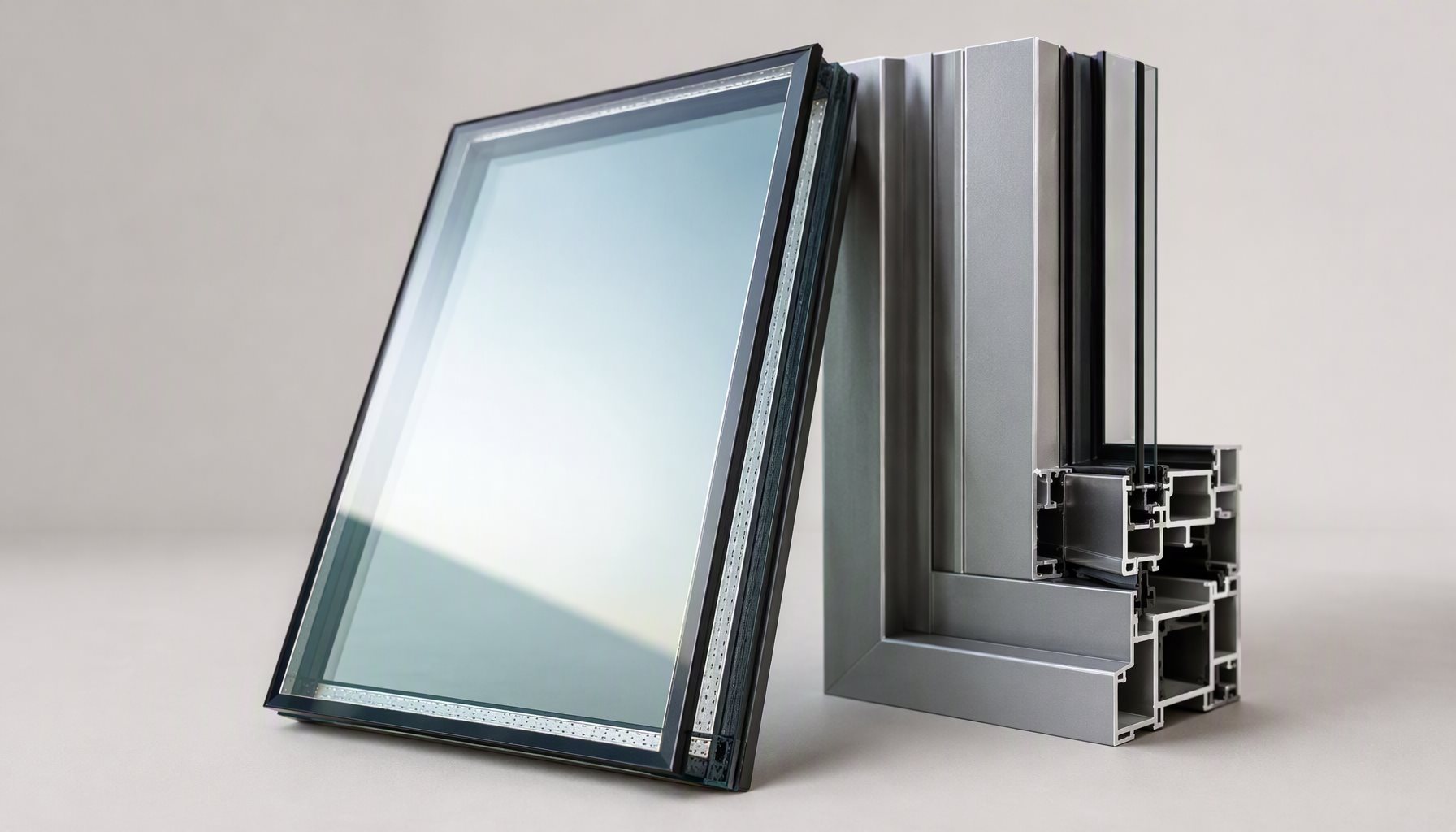
    Thermally broken aluminum window profile cutaway showing the polyamide thermal bar beside an insulating glass unit with warm-edge spacer

    How Aluminum Window Energy Efficiency Is Actually Measured

    Four different U-factor values circulate in this market; confusing them is the most common specification error:

    RatingWhat It CoversWhat It Leaves OutWhere You See It
    Ug (center-of-glass)Heat flow through the IGU center: panes, coatings, gasThe frame and spacer edge entirelyGlass vendor datasheets
    Uf (frame)Heat flow through the profile, including any breakThe glazing choiceThermal simulations of a standalone profile
    Edge-of-glass / spacerLinear thermal bridge at the IGU perimeterCenter or frame bulk performanceComponent of a whole-window calculation
    Uw (whole window)Area-weighted result of glass, frame and edgeNothing — this is the certified valueNFRC certified label; basis of code compliance

    In North American practice, the number that counts is Uw, rated through National Fenestration Rating Council procedures: NFRC 100 for U-factor and NFRC 200 for solar heat gain and visible transmittance. These are calculation-and-certification procedures applied to a specific configuration — sash arrangement, glass build-up, spacer, gas — within a manufacturer’s certified range. A thermal break changes Uf; it does not entitle anyone to quote a whole-window figure, because Uw still depends on frame geometry, glazing, spacer and dimensions.

    As an illustrative ladder, a thermally broken double-glazed system can carry an NFRC-rated Uw near 1.8 W/m²·K (about 0.32 Btu/h·ft²·°F), while unbroken frames in comparable glazing sit near 5.8 W/m²·K (about 1.0); triple-glazed dual Low-E argon builds move rated configurations toward 1.2 W/m²·K (about 0.21). Imperial figures are approximations, and every rating belongs to the sizes and model families printed on the certificate.

    Why Aluminum Frames Need a Thermal Break

    Aluminum is chosen for structural spans, slim sightlines and durability, but it conducts heat roughly 1,000 times more readily than wood. In a non-thermal frame, interior and exterior surfaces act as one continuous thermal pathway that also drags the interior frame surface down — on a cold day below 4°C (about 39°F) — which is where condensation and comfort complaints begin.

    A thermal break physically separates the two aluminum rails with a structural polyamide bar, typically glass-fiber reinforced. Our thermal break windows article covers the details; two points matter for energy specs. First, break width and mechanical interlock — not the words “thermally broken” — determine how much Uf improves. Second, reinforcement protects long-term performance: PA66 GF25 (polyamide 6.6 with 25% glass fiber) resists the creep that slowly compresses unreinforced bars and degrades the barrier year after year.

    Frame improvement matters most where frame area is largest — small and medium operable units. On a large fixed lite, glass dominates the weighted result, which is why our FX-500 fixed window schedule reads almost entirely as a glazing decision. Compression-sealed openings also limit infiltration loss — see casement vs awning windows and tilt-turn windows.

    Triple glazed insulating glass unit with two low-e surfaces, argon cavities and warm-edge spacers beside a thermally broken aluminum frame section

    The Glazing Package: Low-E Coatings, Argon Fill and Warm-Edge Spacers

    The glass package is where most of the engineering happens. A Low-E (low-emissivity) coating is a microscopically thin metallic-oxide layer that suppresses radiant heat transfer between the panes, dropping surface emissivity from the clear-glass norm near 0.84 to roughly 0.15 or below. Coating type and its surface position within the unit — surface #2 versus #3 — steer both U-value and solar gain, and that choice should follow orientation and climate, not a catalog default. Our companion article on Low-E and argon glass breaks the build-up down.

    Argon, denser and less conductive than air, curbs gas-phase conduction and convection across the cavity. Two caveats for submittals: production insulating glass never achieves a 100 percent initial fill, and gas slowly diffuses out through the edge seal, so ask about gas-retention warranty terms rather than assuming the initial rating is permanent. Warm-edge spacers — polymer or structural silicone rather than bare aluminum at the IGU perimeter — cut the edge-of-glass thermal bridge and raise the interior glass-edge surface temperature, improving both weighted Uw and edge condensation.

    Glazing ElementWhat It ControlsWhat to Verify on a Submittal
    Low-E coatingRadiant transfer across the cavity; SHGC by coating familyCoating type (high solar-gain vs solar-control) and surface number, per elevation
    Argon / krypton fillGas-phase conduction and convection per cavityNominal fill rate and gas-retention warranty
    Warm-edge spacerEdge thermal bridge and perimeter surface temperatureSpacer material: structural silicone vs aluminum
    Number of panes / cavitiesInsulating layers; also mass and hardware demandTriple-glaze rating at the scheduled size; sash weight vs hardware class

    SHGC and Climate Zones: Manage Solar Gain, Not Just Heat Loss

    U-factor describes unwanted heat leaking out. SHGC (solar heat gain coefficient) describes how much solar radiation the glass admits and re-releases inward, a value between 0 and 1. They are independent numbers, and priority depends on where the building stands. In heating-dominated climates, a higher-SHGC build on solar-oriented facades can offset part of the heating load while a low-U package holds the winter boundary. In hot, sunny climates, solar gain usually drives the cooling load, and a solar-control Low-E coating with a lower SHGC — plus external shading — does more work than chasing the lowest possible U-factor alone. For the underlying physics, the U.S. Department of Energy’s window guidance is the clearest public reference.

    Two frameworks encode this climate logic differently, and mixing them up causes submittal friction. Model energy codes such as IECC 2021 and the IRC set fenestration thresholds by climate zone; adoption and amendment vary by state and locality, so confirm the edition enforced by the authority having jurisdiction through ICC’s code resources. ENERGY STAR maps the United States into climate regions whose certification criteria change with each program version — verify current requirements on the ENERGY STAR windows and skylights page rather than relying on remembered thresholds.

    Coastal and hurricane-prone projects add a coupling that surprises buyers: laminated impact glass changes the thermal and solar character of the build-up, so the energy rating must be certified with the impact glazing actually scheduled, not a lighter standard unit. See impact-rated windows.

    Condensation Resistance: The Metric Most Submittals Skip

    Condensation is a surface-temperature problem. Moisture forms where interior surfaces fall below the room-air dew point — and in an aluminum window the coldest surfaces are the non-broken frame and the glass edge near the spacer. A thermally broken profile and warm-edge spacer raise those surface temperatures, which is why condensation complaints on converted projects often track the frame and IGU perimeter rather than mid-glass.

    The NFRC label reports a condensation resistance value (CR) — derived through the NFRC 500 procedure and shown as an advisory rating on a 0-to-100 scale, higher being better — but many projects specify U-factor and SHGC and never look at it. CR is comparative guidance for evaluating options, not a warranty that a given room will never fog, because indoor humidity sources, airflow at the sill and radiator placement all matter. Where surface moisture is a real risk — cold-region multifamily, humid coastal interiors, pool rooms — compare CR across rated configurations and design the interior detailing around the worst case.

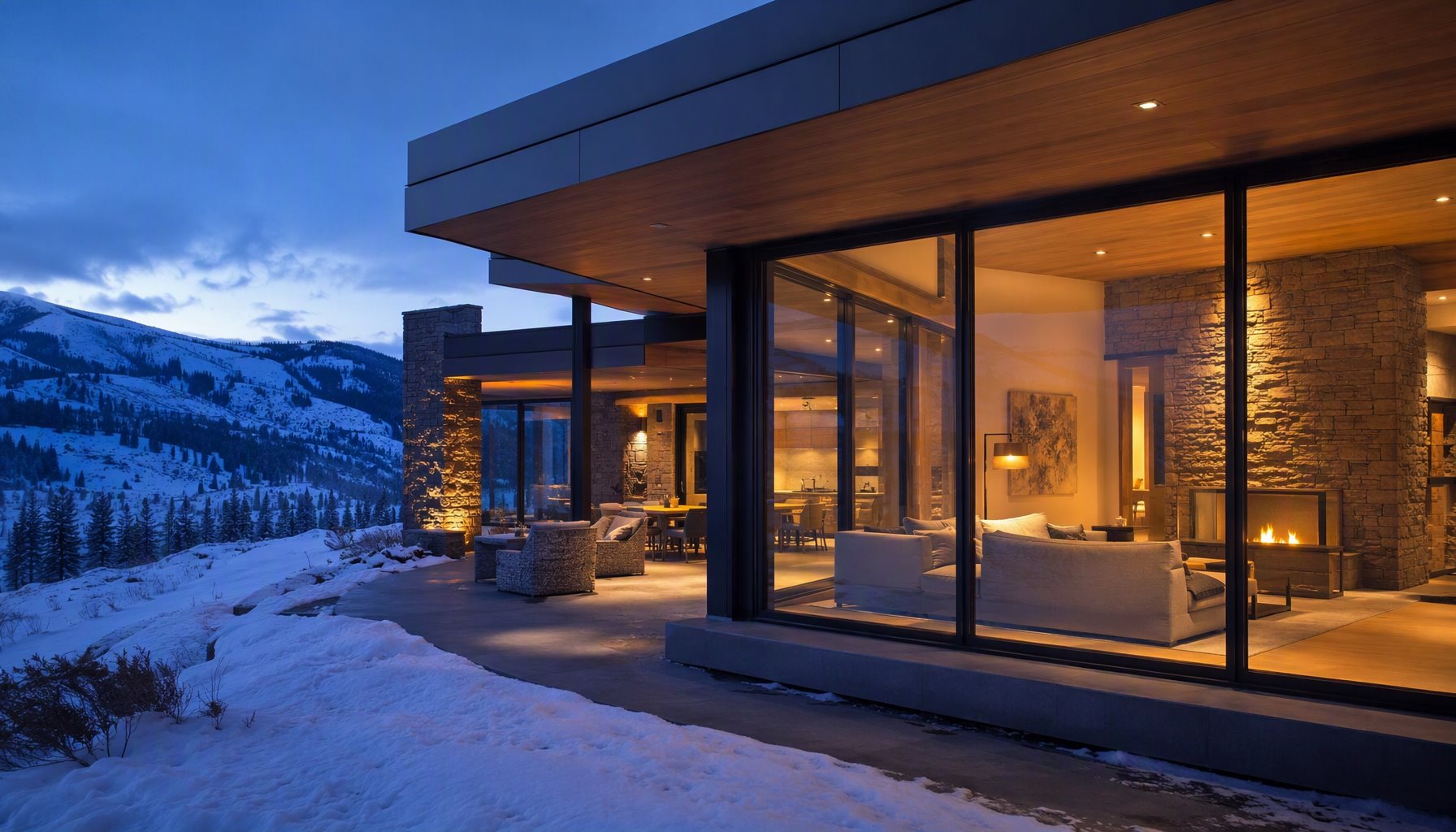
    Cold-climate home exterior with thermally broken aluminum windows glowing warm at dusk, snow outside and no frame condensation

    What to Verify on a Submittal: A Specifier’s Checklist

    Procurement then becomes an evidence review. A submittal that legitimately proves aluminum window energy efficiency should show: an NFRC certificate covering the exact scheduled configuration (model family, sizes, glass build-up, spacer, gas) with a valid certification date; whole-window Uw and SHGC on the label, not center-of-glass datasheets; condensation resistance where the climate warrants it; and air leakage performance from the NAFS testing framework. NAFS — formally AAMA/WDMA/CSA 101/I.S.2/A440, administered through NAMI certification — draws on ASTM test methods including E283 (air leakage), E330 (structural performance) and E331 (water penetration). Those grades protect the insulation you paid for, because a leaky sash undermines whole-wall energy behavior regardless of a good Uw. Remember too: a test report for one specimen does not prove every size in the schedule.

    The matrix below translates project conditions into the specification decision they should drive:

    Project RequirementRecommended ChoiceWhy
    Cold, heating-dominated site with a code U-factor focusThermally broken frame, triple-glazed dual Low-E and argon build; higher SHGC on solar-facing elevationsLowers whole-window Uw and keeps frame surfaces warm; solar gain offsets heating where the climate rewards it
    Hot, sunny, cooling-dominated siteSolar-control Low-E with lower SHGC, moderate Uw, external shadingPeak cooling loads are solar-gain driven; U-factor alone cannot fix a high SHGC schedule
    Recurring condensation complaintsThermally broken frame plus warm-edge spacer; compare rated CR valuesKeeps the coldest interior surfaces above the room dew point
    Large fixed openings on a facadeFixed windows rated as their own configuration, not borrowed operable ratingsGlass dominates the weighted result; ratings differ by sash arrangement
    Coastal or hurricane-prone site with an energy targetImpact-rated, thermally broken system NFRC-rated with the specified impact glassLaminated glass shifts thermal and solar performance; ratings must match the tested build-up
    Tight-envelope multifamilyCompression-sealed operations with low ASTM E283 air-leakage gradesInfiltration is a separate energy-loss path; sash and perimeter sealing decide it

    For factory-side documentation, see our quality documentation and the full aluminum window range.

    FAQ

    What is a good whole-window U-factor for aluminum windows?

    There is no single good number — the bar is set by your climate zone and the code edition enforced locally. Judge a product against the requirement table for your location and the NFRC-rated configuration it will be delivered in, not against a marketing figure quoted for another size or glass build.

    Do thermally broken aluminum windows cost more, and is the premium worth it?

    Pricing varies significantly by size, glazing, finish, hardware and installation scope, so published per-unit premium claims rarely match project conditions. In general, the thermal break is the least expensive way to move a cold-climate schedule from marginal to comfortably compliant, while a triple-glaze upgrade buys extra margin at higher weight and cost.

    Does ENERGY STAR certification apply to commercial aluminum window projects?

    ENERGY STAR product certification is written for residential windows, doors and skylights, and its criteria differ by climate region and program version. Commercial projects are normally documented through the code path — IECC-style prescriptive tables or an ASHRAE 90.1 compliance route — using NFRC-certified whole-window ratings.

    How long do argon fills and Low-E coatings last?

    Low-E coatings are sealed inside the IGU and degrade only if the edge seal fails and moisture reaches the cavity, which is why seal-failure terms are the warranty metric that matters. Gas fill declines gradually as argon diffuses through the seal, so long-term performance trends slightly below the initial rated value.

    How much does installation affect aluminum window energy efficiency compared with the product itself?

    Product ratings assume installation to plan: correct rough opening, drainage maintained, and a continuous air seal at the perimeter. A certified window installed with gaps underperforms its NFRC number at the assembly level, because infiltration bypasses the insulating stack. Put perimeter sealing scope in the specification, not a verbal handshake.

    Is triple glazing worth it on aluminum windows, or is the thermal break enough?

    Both can be worth it in different schedules. Once the frame is broken and the double-glazed unit is Low-E plus argon, a third cavity mainly helps in very cold climates, low-Uw targets, or where acoustic mass is wanted. Where frame area dominates the unit mix — small operables — the better break often buys more.

    How do I compare NFRC certificates from two manufacturers fairly?

    Match configurations first: model family, sash layout, glass build-up, spacer type and gas. Confirm both certificates are current and cover the scheduled sizes inside their certified ranges, then compare whole-window values. If one vendor quotes center-of-glass data while the other submits a label, you are not looking at the same metric.

    Put Your Schedule Against the Ratings That Count

    If your project is specifying thermally broken aluminum for an energy-compliant envelope, send your drawings, window schedule, location, and the U-factor and SHGC targets your code path must meet. Our engineering team can map each mark to NFRC-rated configurations, flag frame-dominated sizes, and review glazing, spacer and sealing details before production. Start a performance review with Lansen.